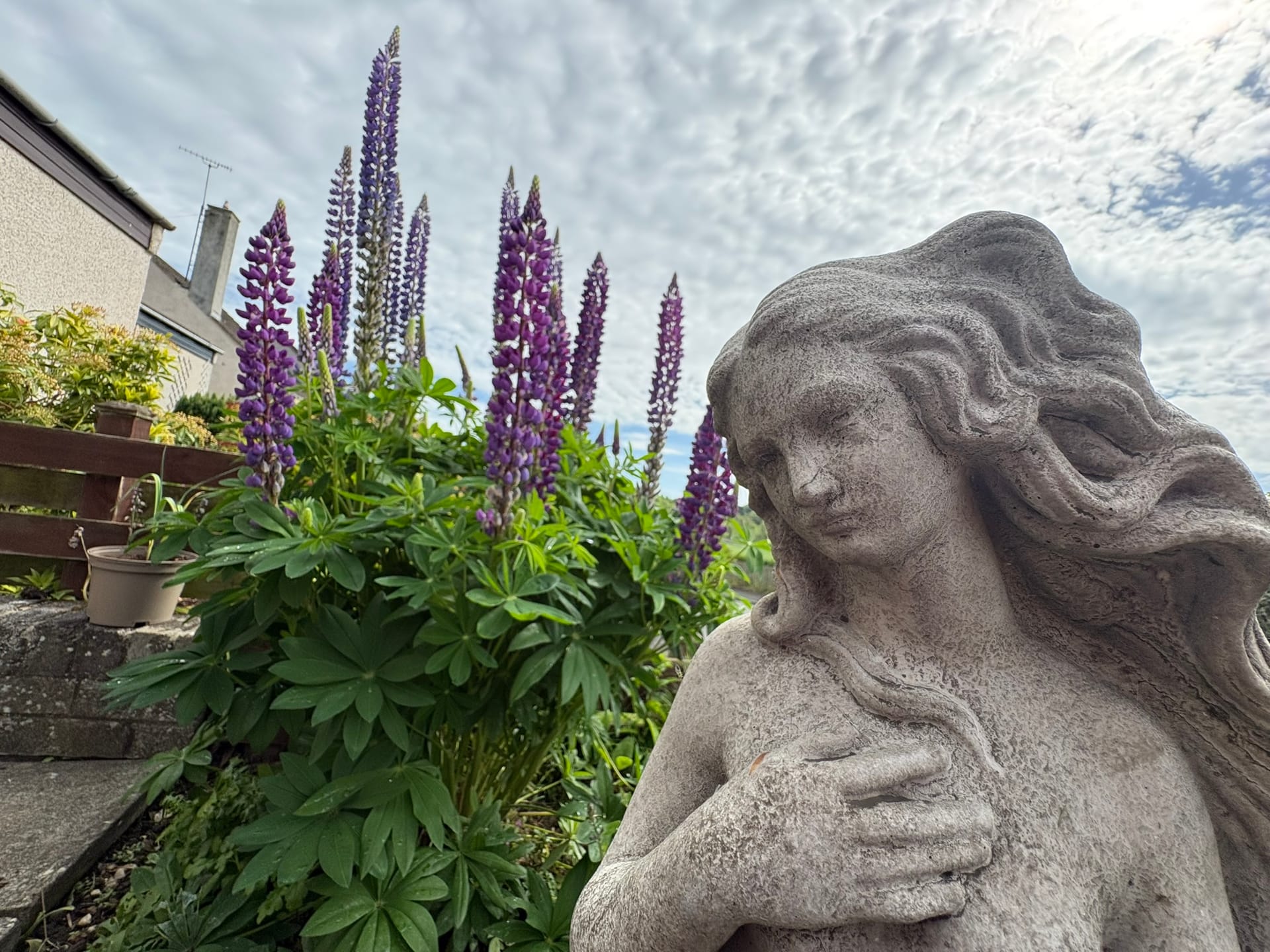
The front garden serves as the threshold of our home, a liminal space where the private stillness of the indoors meets the shifting, vibrant atmosphere of the day. As I step through the door each morning, this transition is the first reflection of the world I choose to inhabit; it is a moment of recalibration, where the light, the texture of the stone, and the reaching stems of the lupines set the rhythm for the hours to come. For those we welcome, it is their first impression of this space, an invitation to leave the noise of the outside world behind and step into an envelope of light where the boundary between architecture and nature is soft, permeable, and constantly in conversation with the sky.
The sky is our ceiling—a vaulted, ever-changing canopy that makes the garden a room unto itself. In this space, the distinction between 'indoors' and 'outdoors' vanishes; the ceiling is not a fixed surface of plaster or wood, but a living, breathing envelope of light and shadow. It is an architecture of atmosphere that reaches down to brush against the lupines, touching the stone, and folding the garden into its own vast, celestial interior.
In this garden, the sky acts as a vaulted ceiling, an infinite dome that dictates the scale of our world. As I move through the space, the architecture of the house—with its weathered stone and silent watchers—melds into the living growth of the lupines and the sage. Looking at the statue from different angles, I see that she is not merely an object of decoration; she is a resident of this room. She stands in the soft interplay of light, shielded by the vibrant curtains of purple and red, perfectly situated beneath the shifting canopy of the clouds. This is the phenomenology of our sanctuary: a room without walls, where the weather is our architecture, and every shift in the light is a change in the room's mood.
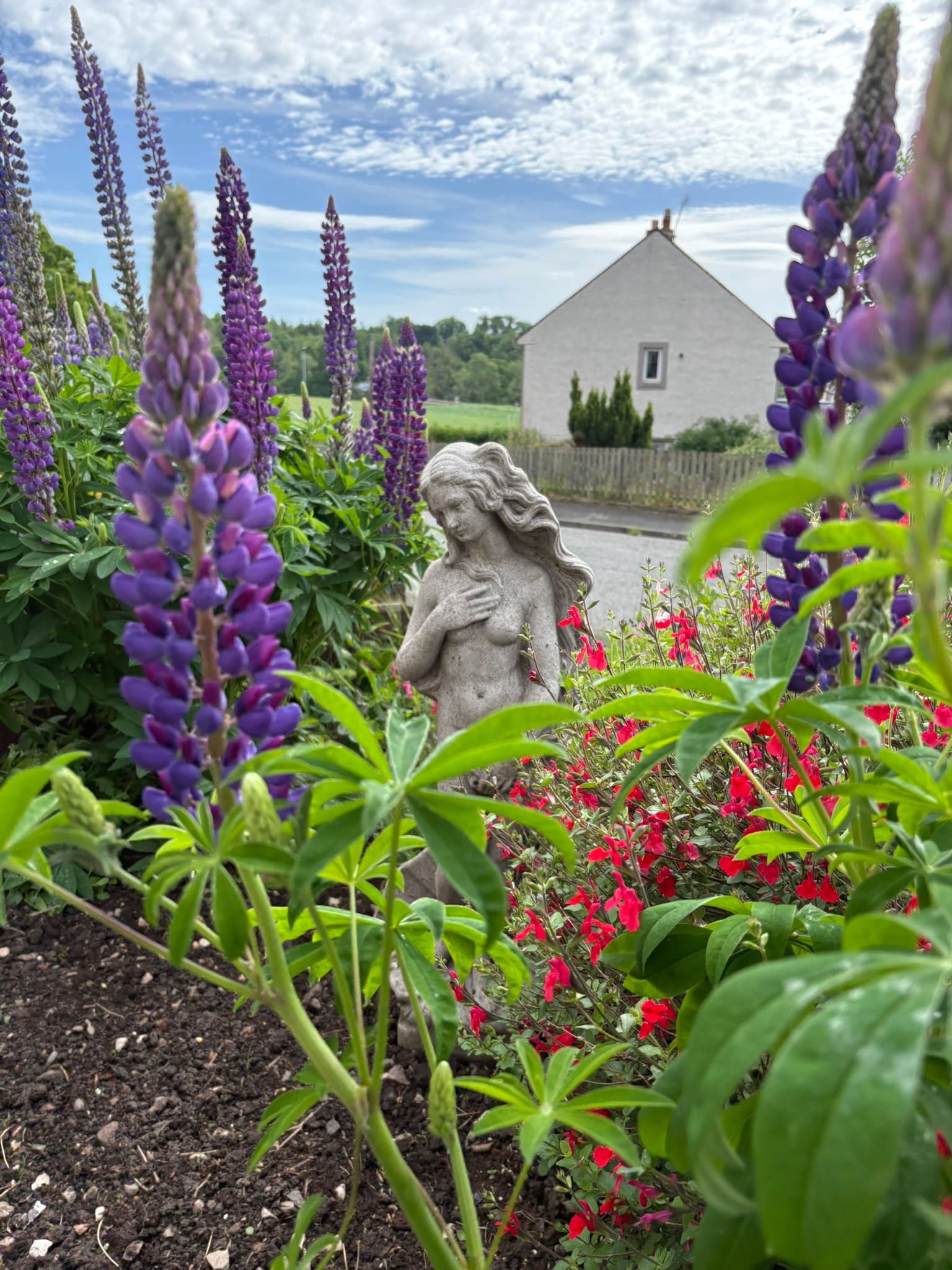
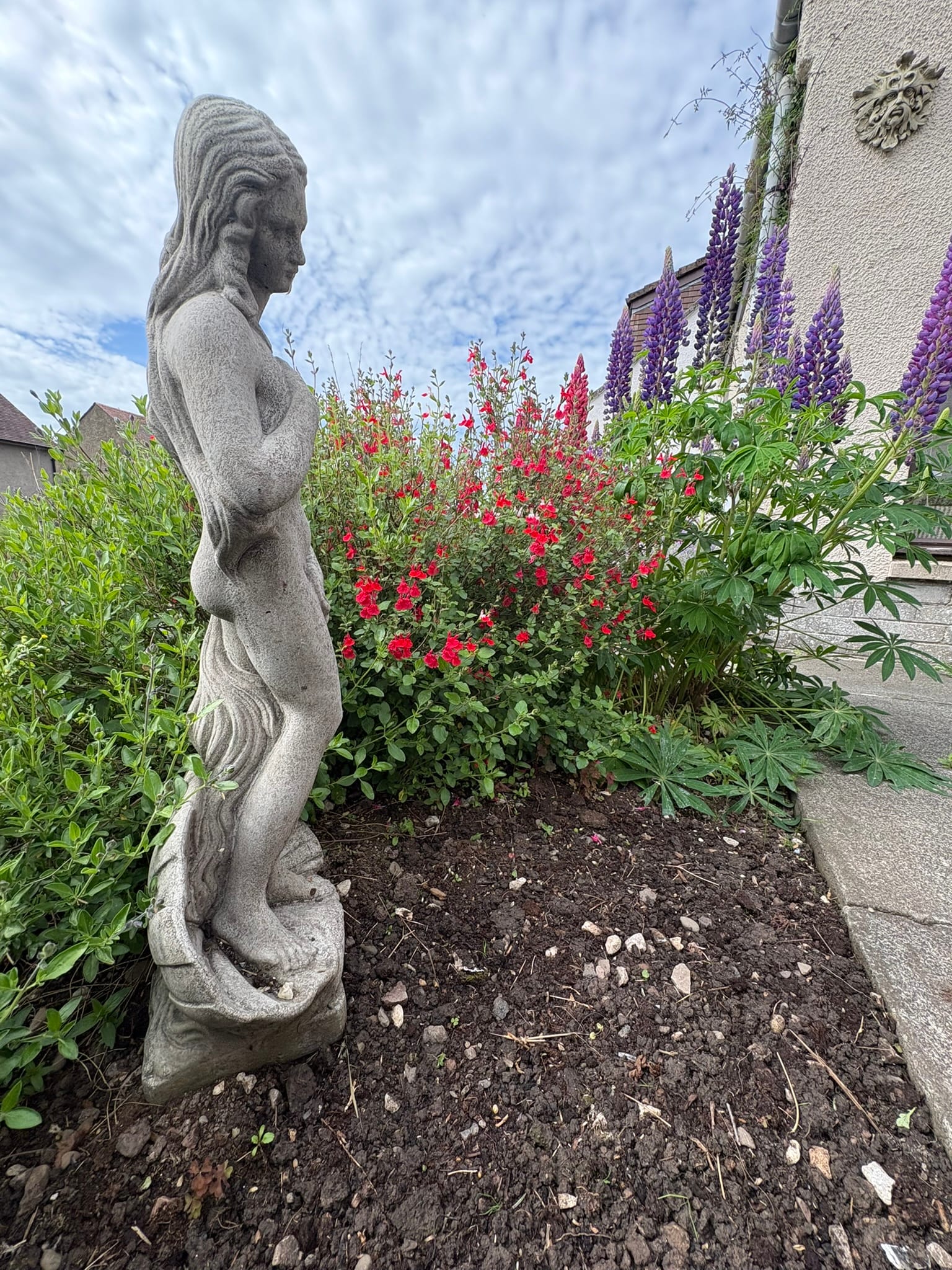
The wall is not merely a structural limit; it is the boundary of our sanctuary. Here, the gaze of the 'machine' stops, and the gaze of the gardener begins. Within this perimeter, the sky acts as our ceiling and the light as our architect. It is a space defined not by what it excludes, but by what it fosters: the quiet observation of the lupines, the stoic reflection of the stone, and the freedom to experience the day as a series of impressions rather than a list of demands. To step within these walls is to leave behind the noisy apparatus of the village and to re-enter a world governed by the rhythm of the light.
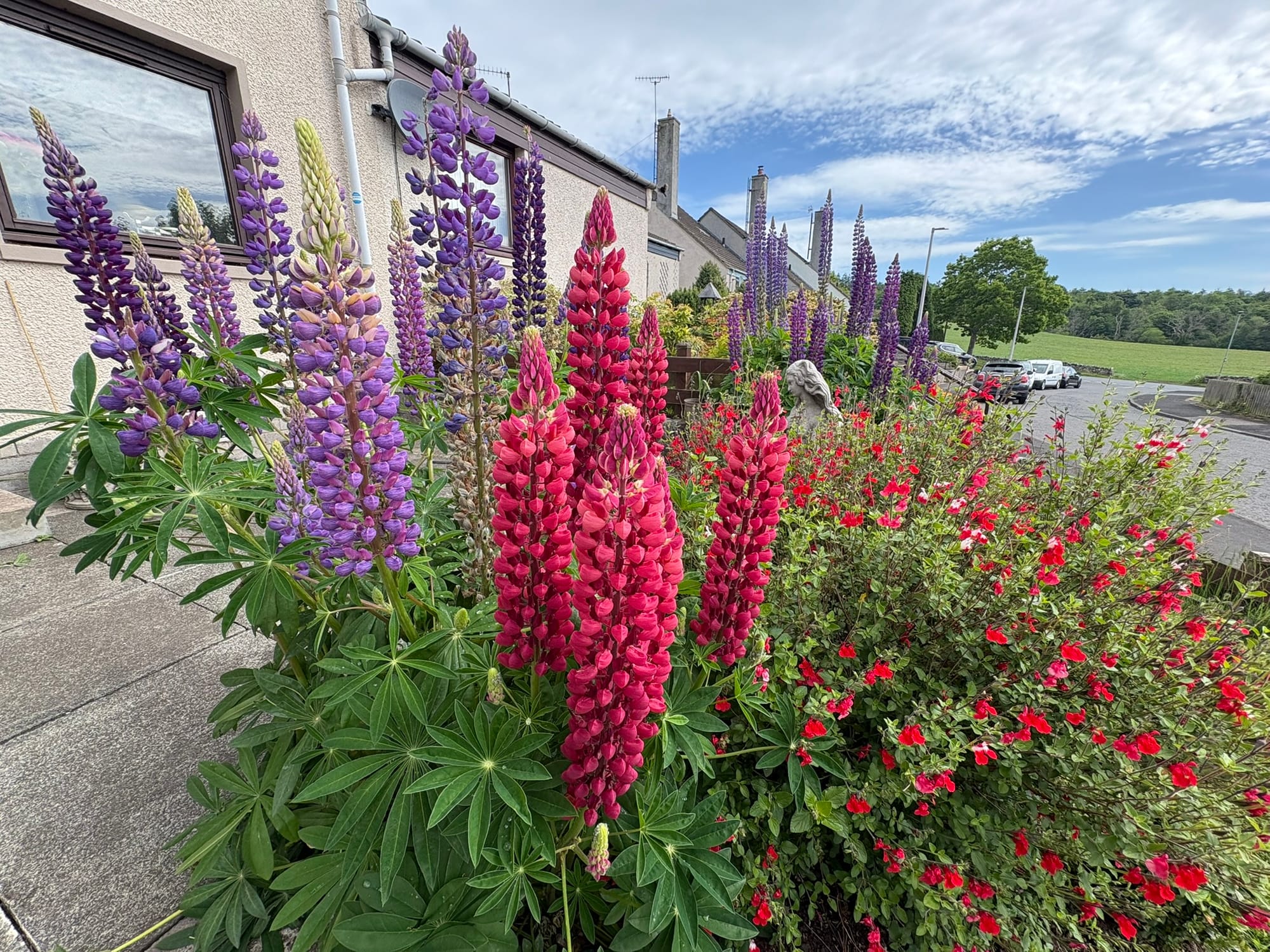
Even the boundaries of the sanctuary are alive. Our jasmine trellis is a bridge between the house and the sky—a ladder of tendrils that we have invited to climb our wall. These buds, waiting in their deep red readiness, are a testament to patience. They are a reminder that this sanctuary is not a finished, static box, but a living project. By guiding the jasmine to weave through the wood, we are choosing what form our boundaries take. This is the power of perception: to see not just a wall, but a trellis; not just a house, but a home that is actively participating in the growth of the garden.
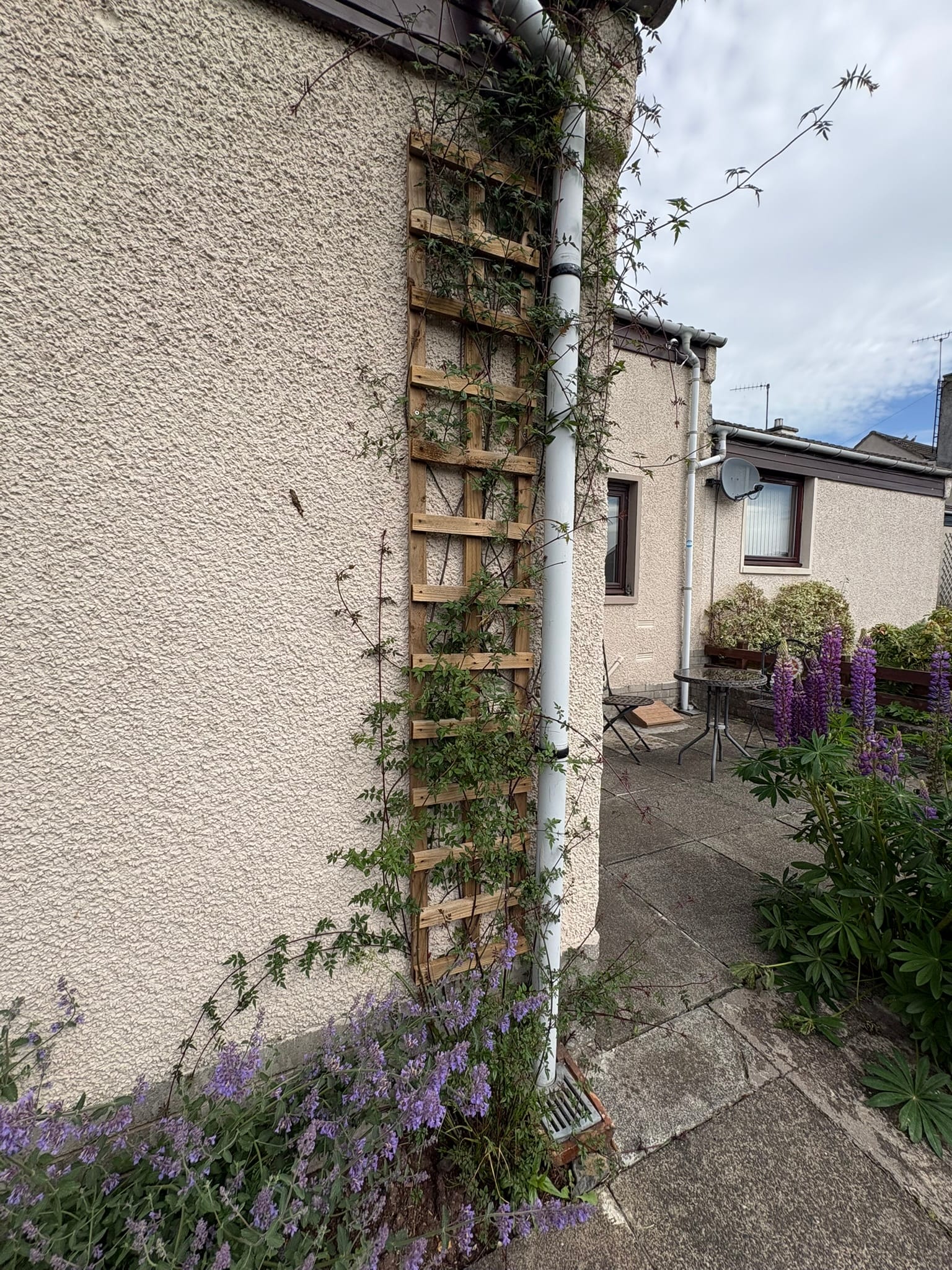
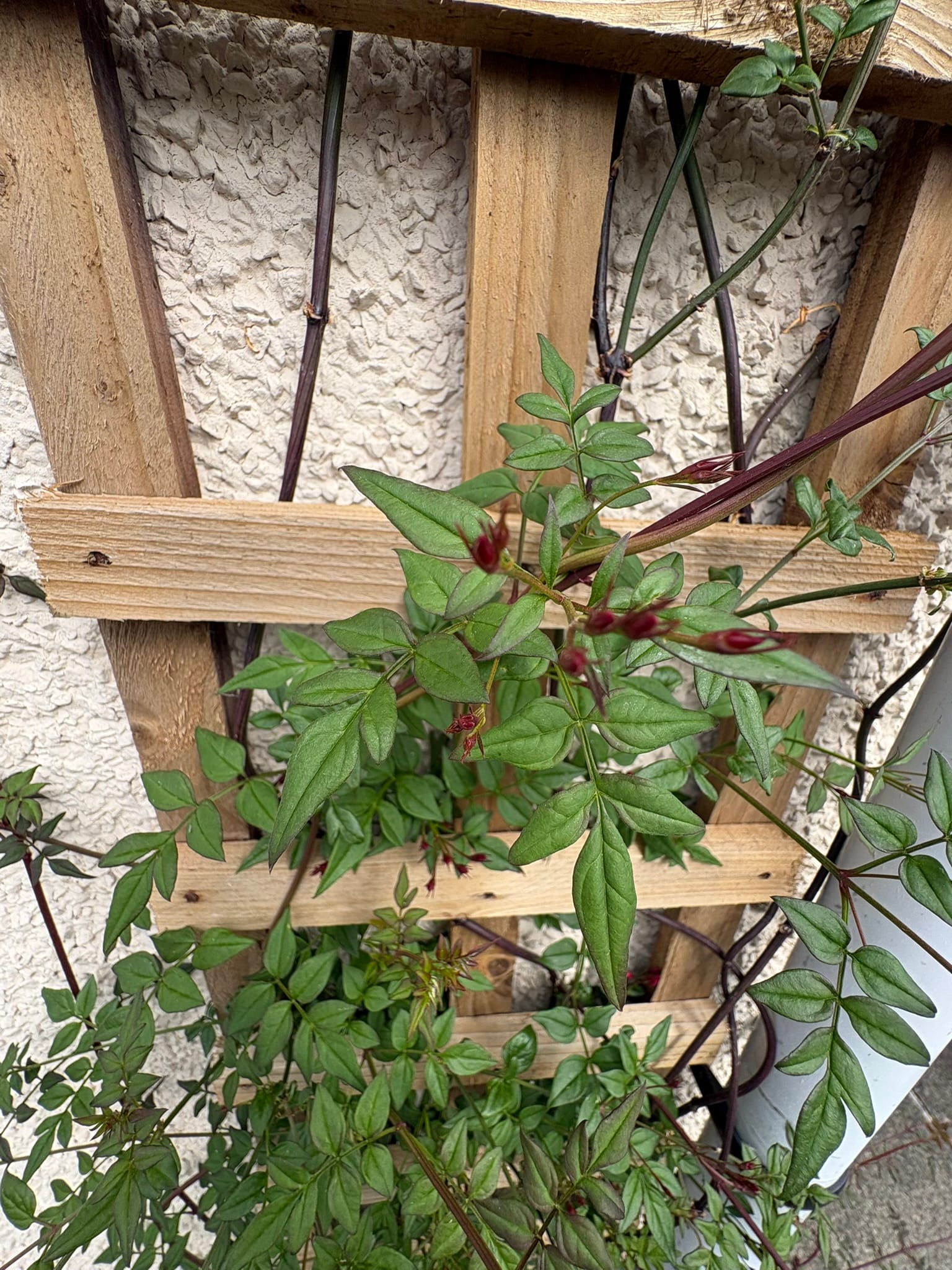
Observation is never a solitary act; it is a bridge. As we stand together in the garden, watching the light shift across the lupines or noting the persistent reach of our jasmine, we are doing more than observing—we are participating in a shared reality. Our experiences within this sanctuary shape how we interact with the world beyond our walls. When we invite others into this envelope of light, we are offering them a new way of seeing. We are moving away from the mechanical, the adversarial, and the rigid, choosing instead to engage through a lens of shared presence and mutual discovery. This is how we interact: not by imposing our will, but by inviting others to share in the rhythm of the light.
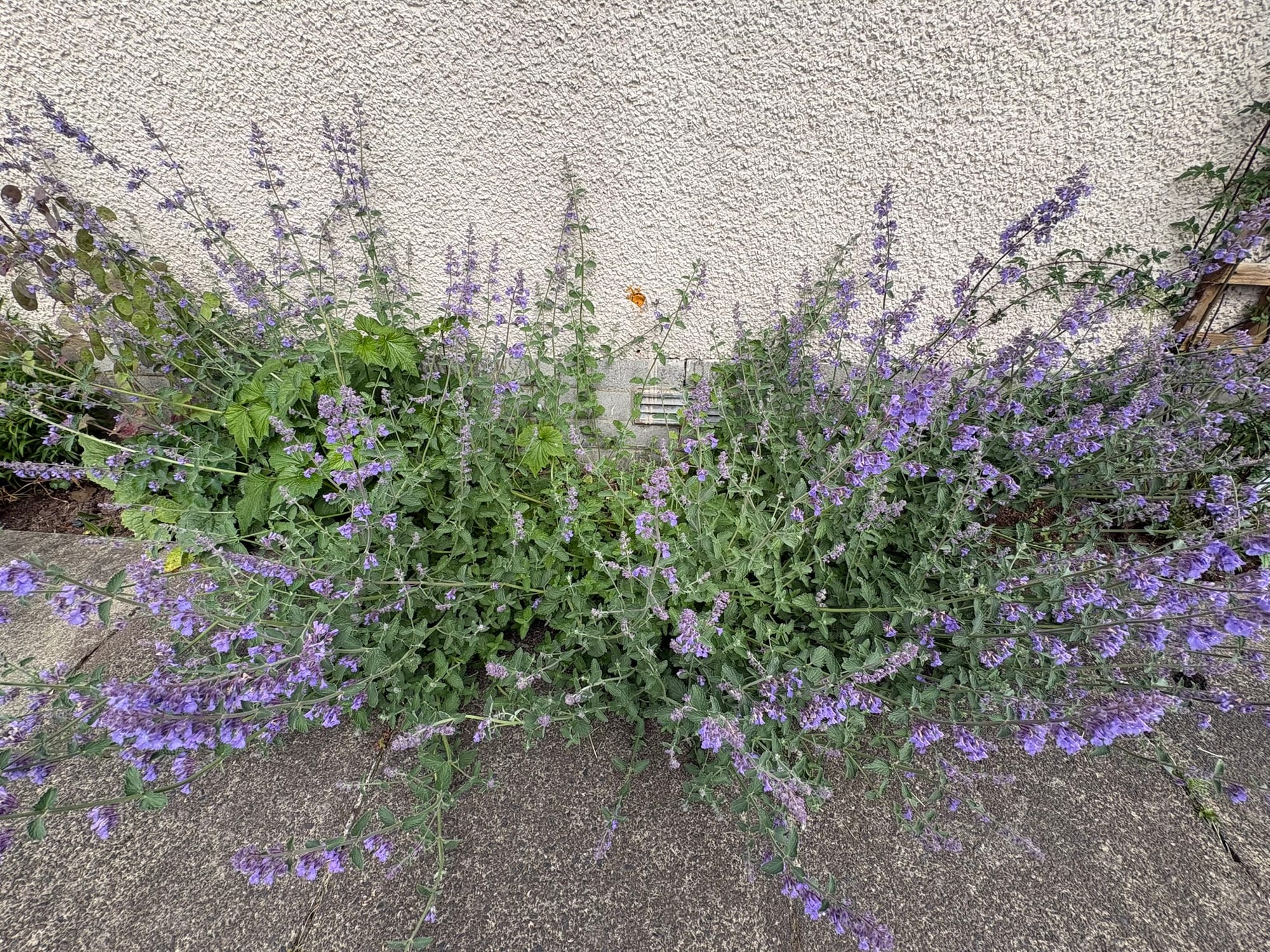
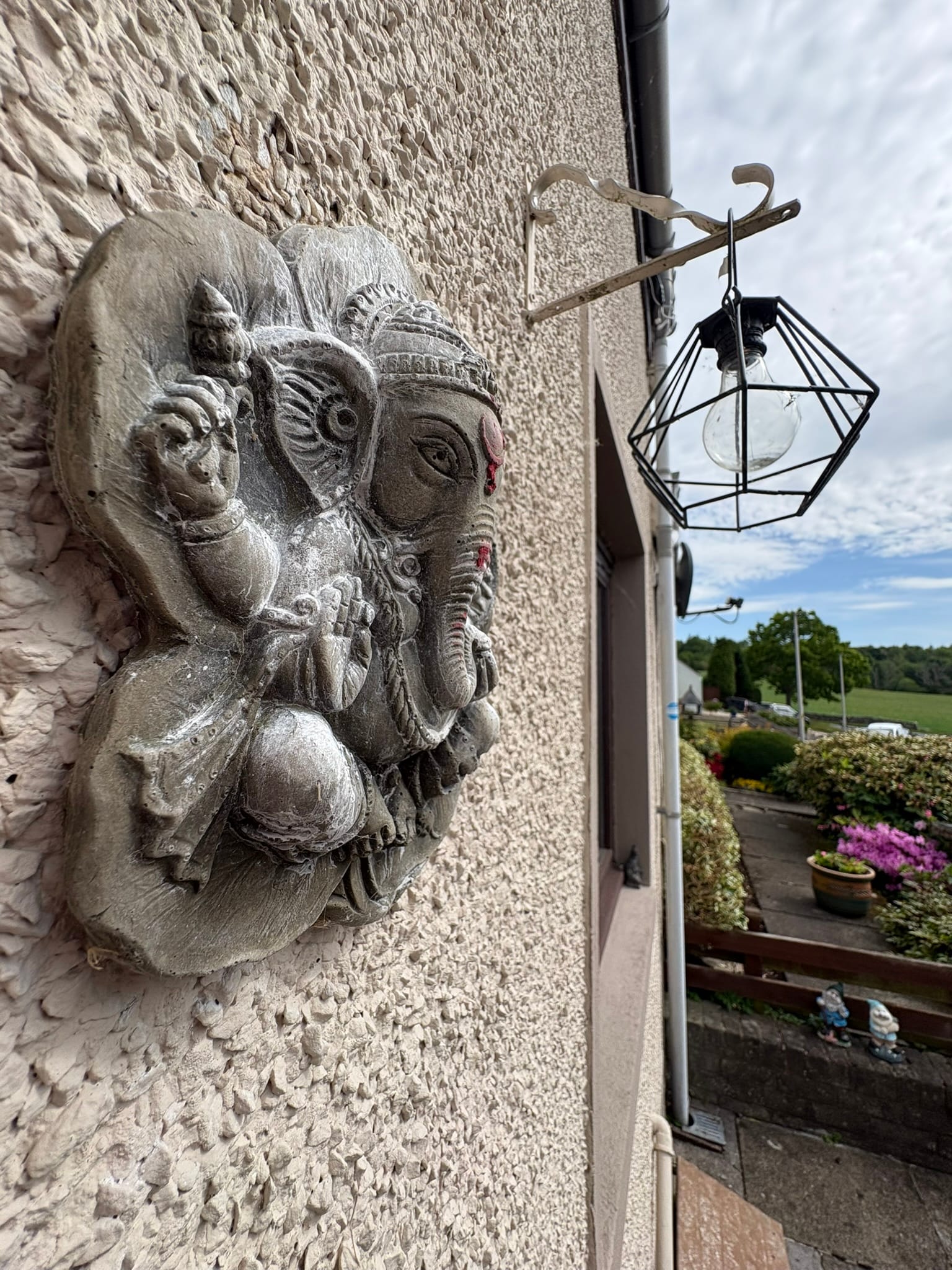

Our sanctuary is built upon a balance of forces. We have invited the fluid and the fixed, the reaching lupine and the watchful Green Man, to reside within these walls. This is not just a garden; it is a convergence of impressions. By balancing the feminine flow of the statue with the masculine stillness of the wall carvings, we have removed the obstacles to true presence. We have created a space that is not defined by a single perspective, but by the diversity of its observers and the harmony of its elements. Here, we are no longer obstructed by the noise of the world; we are freed by the balance of our own sanctuary.
We began this exploration by stepping out of the house, leaving behind the rigid, mechanical noise of the world to find sanctuary in the "envelope of light." What we discovered is that our garden is not merely a collection of objects, but a living, breathing architecture of impressions. From the vaulted ceiling of the sky that dictates the scale of our day, to the boundary of our walls that defines our sanctuary, every element is a conscious choice—a deliberate act of sovereignty.
In this garden, observation is a shared experience. We have learned that to observe is to participate, and to participate is to create. Our garden is a lens—a way of seeing that refuses to be constrained by the machine’s narrow definitions. As we stand here together, watching the light shift across the stone and the jasmine buds prepare for their unfolding, we realise that power is, ultimately, a state of perception. We have chosen our perspective, we have curated our sanctuary, and in doing so, we have reclaimed the rhythm of our own lives.
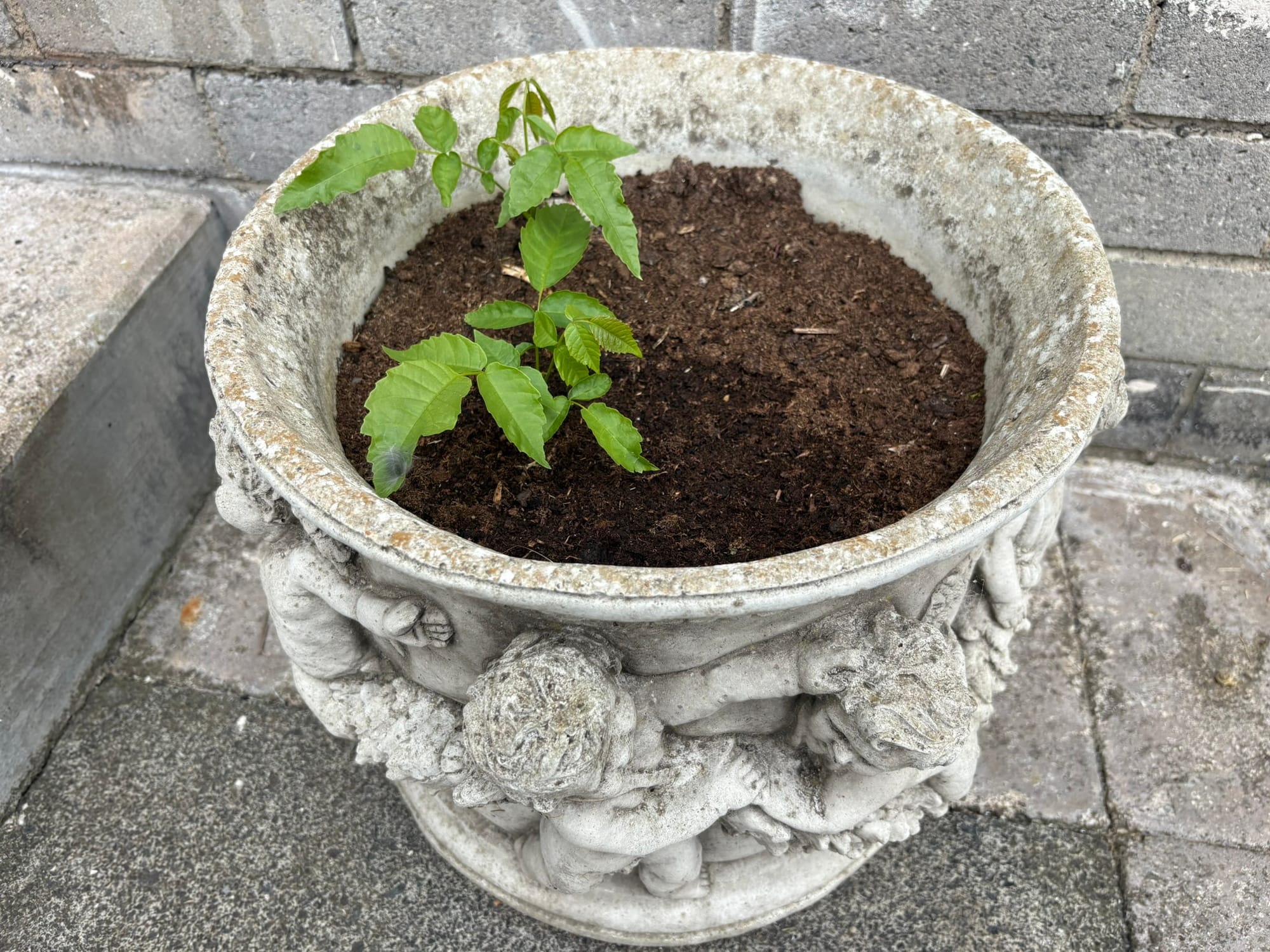
In this "in-between" of hand and earth, the act of planting disappears; there is only the soil, the breath, and the nonchalant grace of existing. We have found that true peace requires no fight, no reaction, and no external validation—it is the simple realization that we have never been separate from the light we observe. We offer this as a gift of experience: a garden that does not seek to become, but simply is, anchored in the bedrock of the land and the sovereign present. There are no walls here, and no barriers to your own participation; you are invited to simply breathe, observe, and recognize the quiet potential that is already waiting within you.
The garden remains, waiting for the next impression, the next shift in the wind, and the next moment of shared, sovereign peace.