When you point out the unspoken hierarchy of a closed rural parish, the people who benefit from it rarely argue with your facts. They don't need to. Instead, they reach for a far older, quieter power: the authority to decide what counts as valid evidence in the first place.
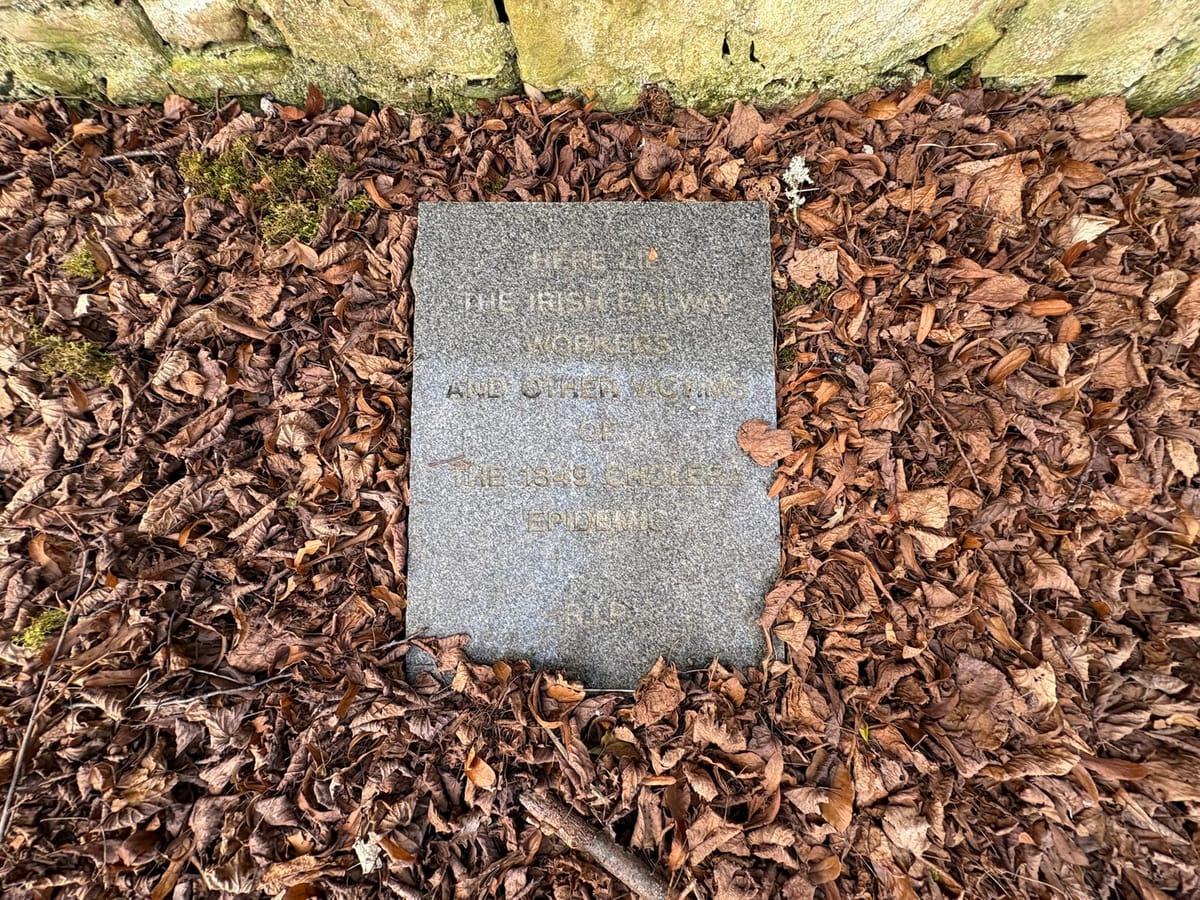
That assumption sits at the dead centre of the frontier fortress. The deepest form of local domination never announces itself as a rule; it disguises itself as common sense—turning a man-made hierarchy into something that feels as natural and unarguable as the weather [1]. Before a single word of critique is even heard, the parish has already sorted the world into admissible and inadmissible proof. What counts as real? A minute book kept behind closed doors, a surname carved into an upright headstone, a laminated notice pinned to a board, or the airbrushed rosette of a Village of the Year award. Those are treated as solid, objective truth. What gets ruled out of court? The lived reality of the street, the cold unreaction meted out to anyone outside the approved lineage, and the plain spatial fact of a flat granite slab laid horizontal against the kirk wall so transient workers remain below the sightline of established families.
In a court where the sociolords own the bench, the evidence never gets a hearing because the witness is stripped of credibility on arrival [2]. If you describe the weight of the parish gaze in plain, human terms, it is waved away as personal bitterness—reducing a structural observation to a psychological symptom. If you step back and trace the broader historical pattern, you are accused of overthinking ordinary village life, denying the street the very vocabulary needed to name its own trap. If you name the clique that hoards local leverage, they execute an old feudal sleight of hand—pulling the rest of the street in front of them like a human shield, pretending that an examination of the castle walls is an attack on the cottages below [3]. And if those dismissals fail, they play the birthright trump card: you're an outsider, so you don't understand how things work here.
Yet when the work itself is too solid to wave away as bitterness and too clear to dismiss as jargon, the clique reaches for its sharpest moral slur: showboating. In an environment where outsiders are expected to remain remarkable only in quiet, domesticated ways that serve the house, simply exercising your own craft in public is treated as an act of arrogance. You don't have to boast to be called a showboat; you only have to refuse to shrink. Calling independent work "showboating" allows the gatekeepers to dress up their own territorial insecurity as a defence of parish modesty—turning competence itself into a breach of the peace.
Notice how neatly the trap closes. Between "too bitter" and "too abstract," between "disloyal insider" and "ignorant outsider," and beneath the constant threat of being labelled a showboat simply for speaking in daylight, there is no approved vantage point from which an honest observation is allowed to stand. The fortress doesn't have to refute what you saw—it simply declares that your eyes don't have standing.
Familiarity Is Not Insight
At the root of the birthright dismissal lies a quiet confusion between tenure and vision. In a frontier parish, fifty years on the same street is treated as an automatic certificate of superior understanding—as though living inside a room for half a century makes you the sole authority on its architecture. In practice, the opposite is usually true. Familiarity is rarely insight; far more often, it is simply habituation.
Walk the same dyke or kirkyard path every morning for forty years and the stone stops registering as a deliberate human arrangement. The architecture of exclusion sinks into the background, mistaken for landscape, tradition, or simple common sense. You step around the drystane wall without asking who raised it, walk past the upright family headstones without noticing the sightline they command, and glance over the flat slab at the base of the kirk wall without wondering why transient labourers were laid horizontal in the leaves. When you have spent a lifetime learning where not to tread, the fence disappears from view. It becomes invisible precisely because you have organised your habits around it.
That is why the frontier fortress fears the unhabituated eye. An incomer—or a native who steps outside the valley long enough to lose the local reflex—does not see less of the village; they see the load-bearing walls that everyone else has been trained to walk around. They notice who falls silent when a committee chair enters the hall, whose history gets laminated and whose gets left in the damp, and how swiftly polite neutrality hardens into cold unreaction the moment an unspoken boundary is crossed.
To call that clear-sightedness "ignorance" is a convenient inversion. The insider knows every name on the deeds, every old feud, and every unwritten rule of deference—but knowing how to navigate a maze is not the same thing as seeing its blueprint from above. When the clique tells an observer that they don't understand how things work here, what they really mean is simpler: you haven't yet learned to stop looking.
The Unofficial Archive
If you wait for the sociolords to certify your observations, you will wait forever. A closed shop never grants standing to the person pointing at the lock, and a bench owned by the clique will never rule against its own title deeds. Attempting to persuade the gatekeepers—softening the language, appealing to their better nature, or asking permission to describe the street as it actually is—only hands them back the gavel.
Official local history is always curated by the winners, scrubbing out the friction of labour, migration, and class so that monuments look like birthrights rather than trophies [4]. The real purpose of naming the architecture is not to win a verdict inside the fortress, but to brush that sanitised story against the grain and break the clique's monopoly on the record. For as long as the heritage committee, the parish minutes, and the Village of the Year brochure are the only written accounts of the valley, the clique gets to pass off exclusion as harmony and cold unreaction as civic pride. The moment an honest, unairbrushed record exists outside their ledger—documenting the flat granite slab against the kirk wall alongside the upright monuments, recording the double bind of micro-serfdom in plain daylight—the official story loses its exclusivity. Stone and memory cease to be private property.
More importantly, that unofficial archive is never written for the people holding the keys. They already know where the boundaries are drawn; they built them. It is written for the quiet witnesses on the street—the incomers, the working residents, and the non-conforming locals who have felt the weight of the parish gaze for years and were subtly trained to doubt their own eyes.
In an insular village, silence is the fortress's strongest mortar. Every person who swallows a grievance to keep the peace, or dims themselves down to avoid being accused of showboating, is left believing they are the only one noticing the chill. Putting the plain physical facts on the table breaks that spell. It confirms that the wall is real, the sightline was deliberate, and the observer is not imagining things—leaving an honest mark in the ground that outlasts any laminated notice on the street.
Notes & References
[1] Pierre Bourdieu, Outline of a Theory of Practice (1977) Bourdieu introduces the concept of doxa to describe the point at which arbitrary, man-made social arrangements become so deeply taken for granted that they appear self-evident, natural, and beyond question. In a closed community, dominant cliques preserve power not merely by enforcing rules, but by making their own hierarchy look like unalterable common sense—so that anyone who questions it appears to be arguing against nature itself.
[2] Miranda Fricker, Epistemic Injustice: Power and the Ethics of Knowing (2007) Fricker identifies two primary mechanisms by which power silences testimony without refuting it: testimonial injustice, in which a speaker is given a deflated level of credibility due to social prejudice or outsider status, and hermeneutical injustice, in which a community lacks—or is discouraged from using—the shared concepts needed to make sense of its own lived experience of exclusion.
[3] Antonio Gramsci, Selections from the Prison Notebooks (1971) In his analysis of cultural hegemony, Gramsci demonstrates how a ruling group maintains authority by presenting its own narrow class or institutional interests as the universal, common interest of the entire community. Claiming that a critique of local gatekeeping is an attack on "ordinary neighbours" functions as a classic hegemonic defence—using the wider public as a shield for an entrenched minority.
[4] Walter Benjamin, "Theses on the Philosophy of History" in Illuminations (1968) Benjamin argues that official historical records are always composed from the vantage point of the victors, turning cultural monuments and curated heritage into instruments of ongoing domination. To resist that monopoly requires "brushing history against the grain"—recovering the unrecorded labour, marginal lives, and erased physical traces (such as the flat navvy slab at the base of the kirk wall) that official civic narratives scrub out.
 Léonie Blaire-Cooper