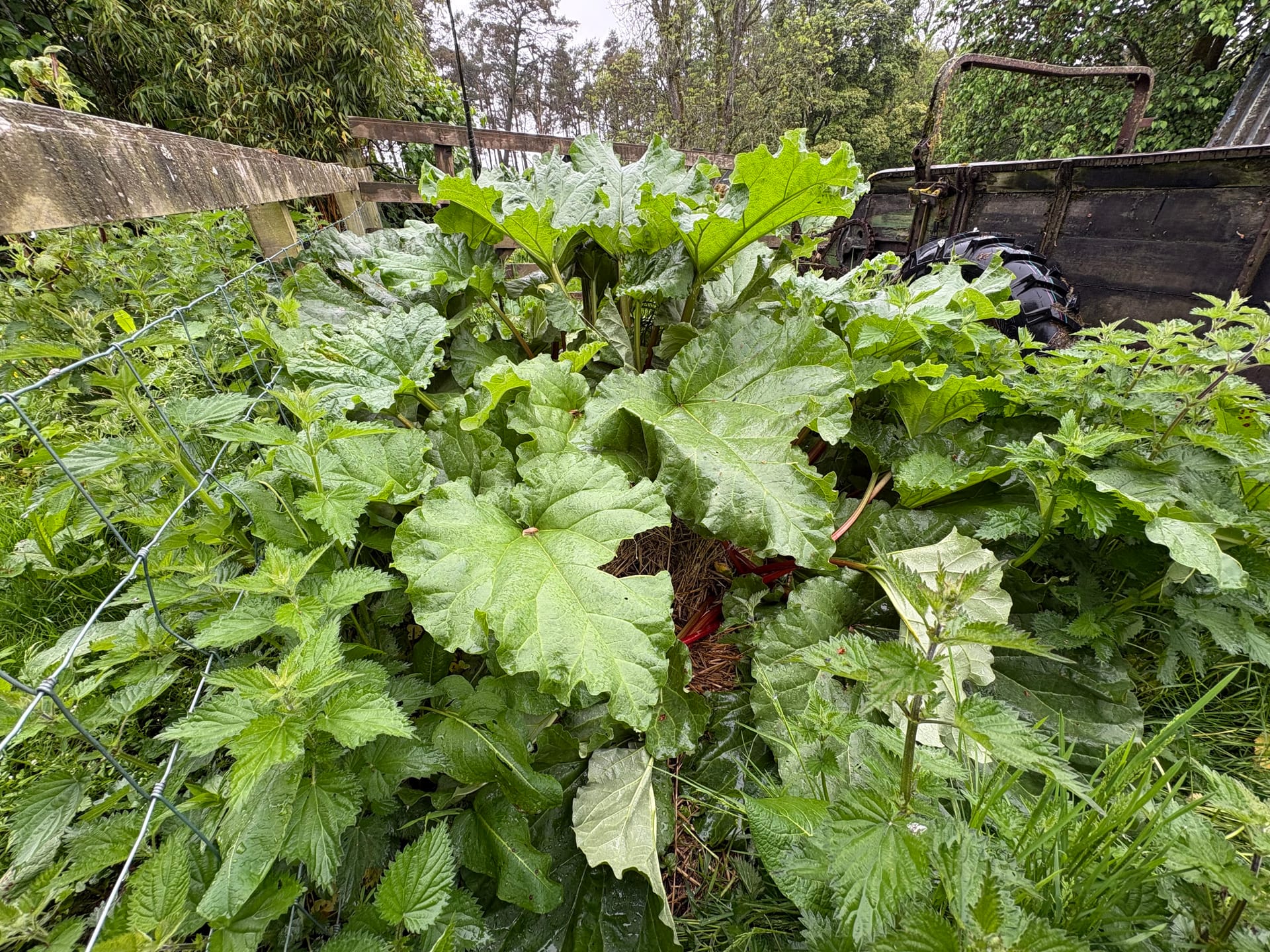
Long before it became a British comfort food, rhubarb was actually imported as a fiercely strong stomach medicine. In fact, its name literally translates to "the barbarian plant from the River Volga." Today, it’s completely lost its terrifying reputation and has become a staple of the British countryside. At Woodburn Farmhouse, our two huge clumps are an absolute fixture. Every year, when the patch goes into overdrive, it signals the start of a proper seasonal ritual.
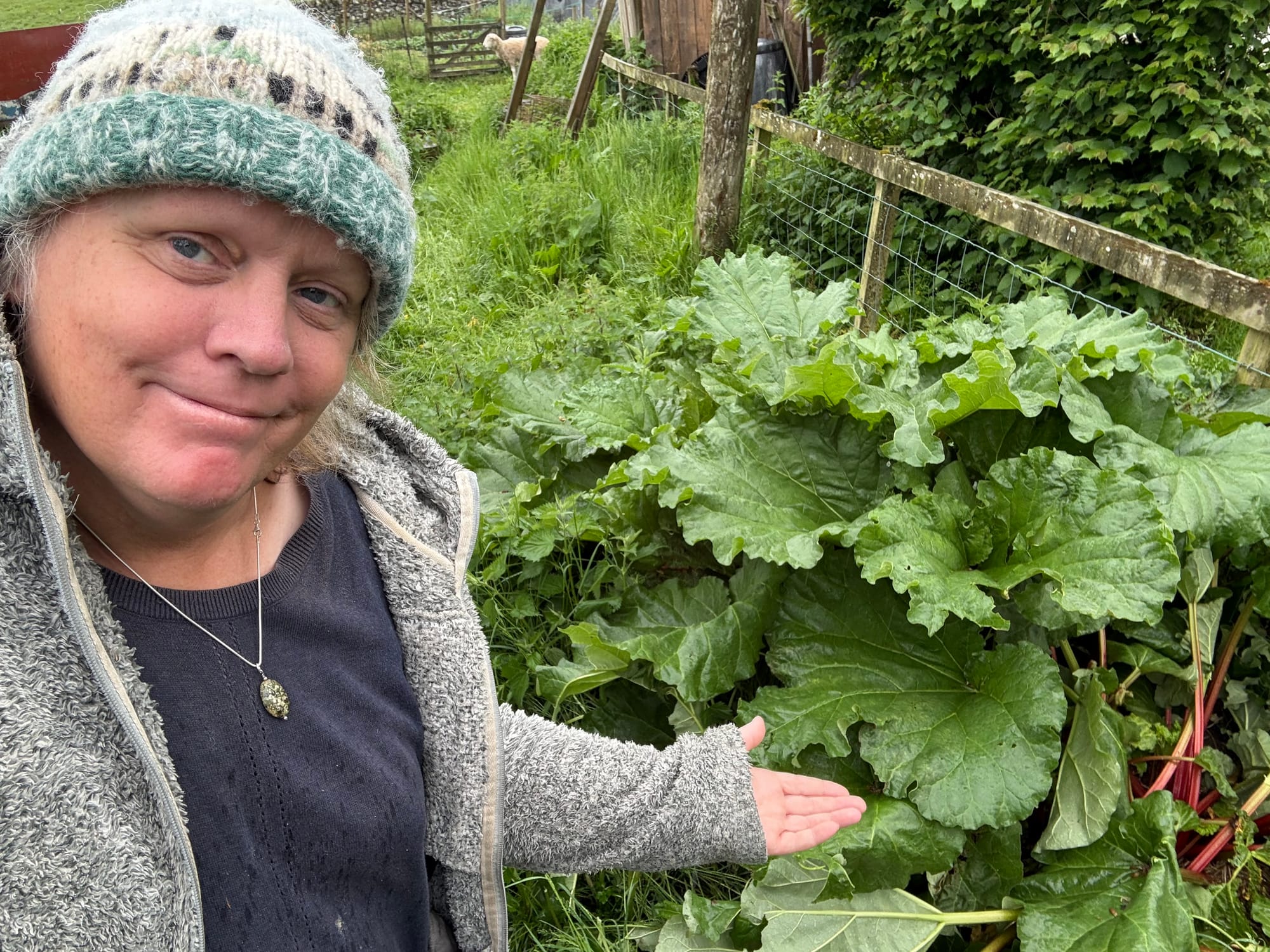
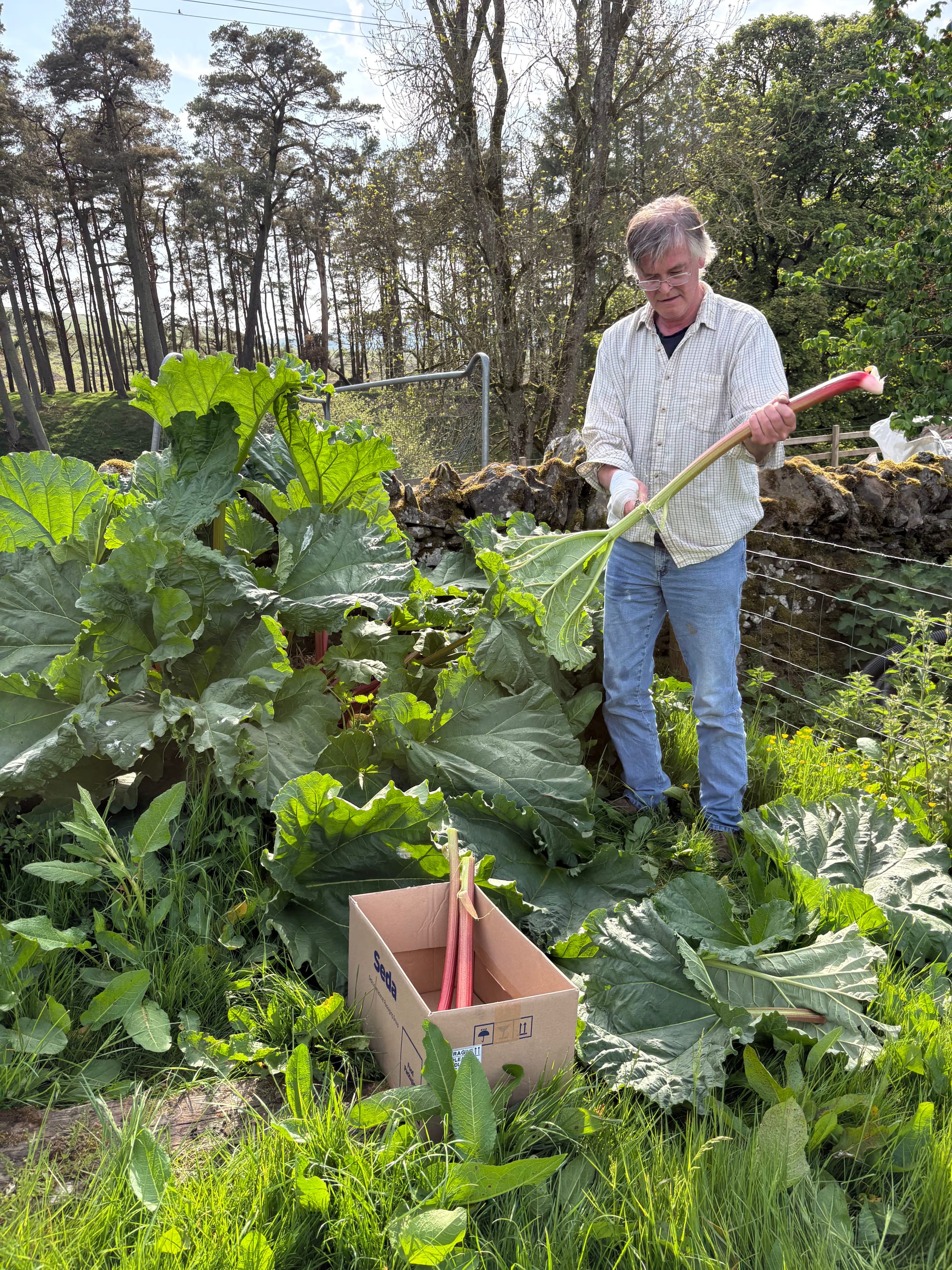
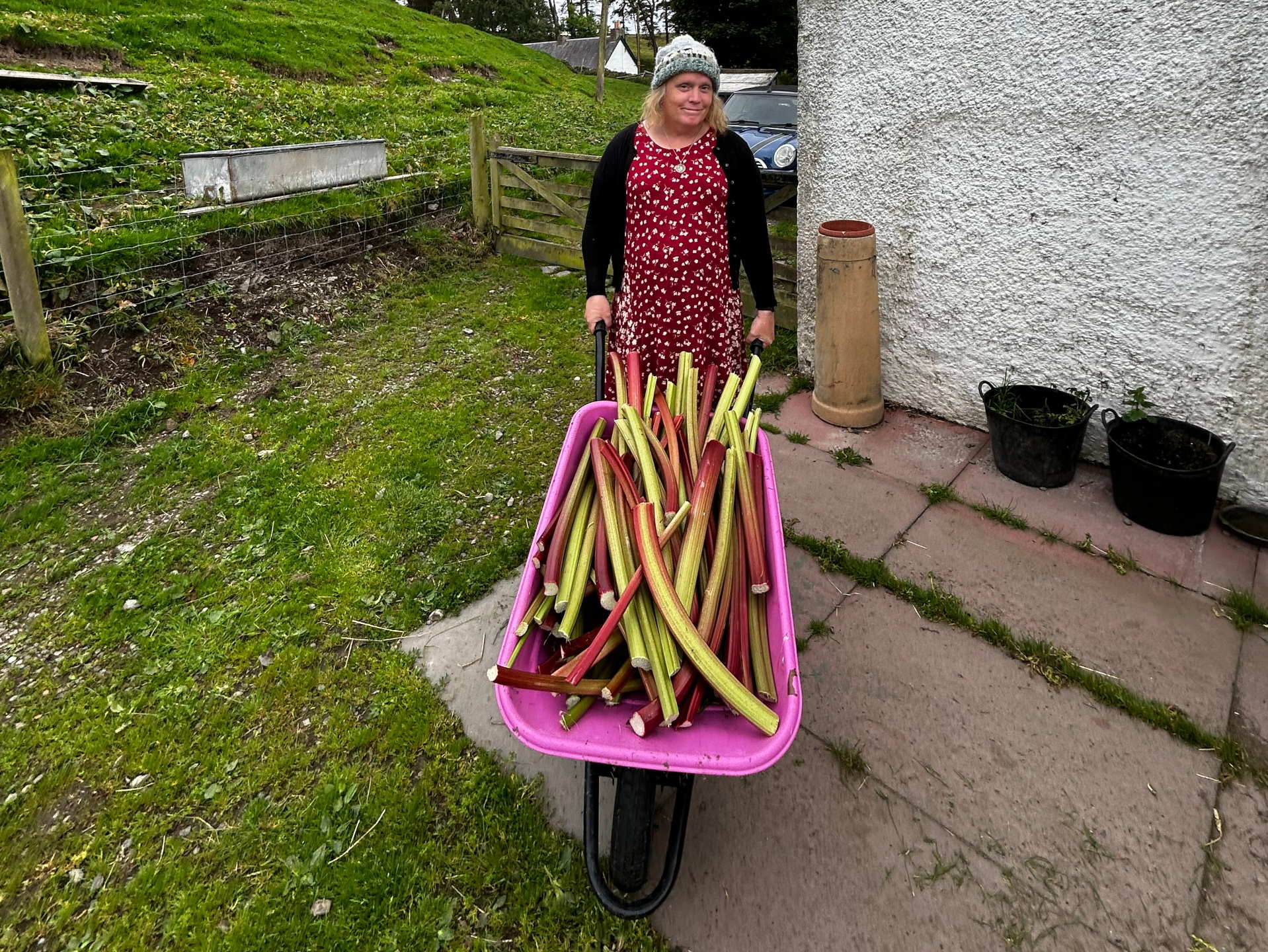
The best thing about a backyard rhubarb patch is that it produces way more than one kitchen can ever handle. It forces you to be neighborly. Every year, we cut a massive bundle of the crisp, thick stalks and offer them out to our neighbors so they can do their own thing with them.
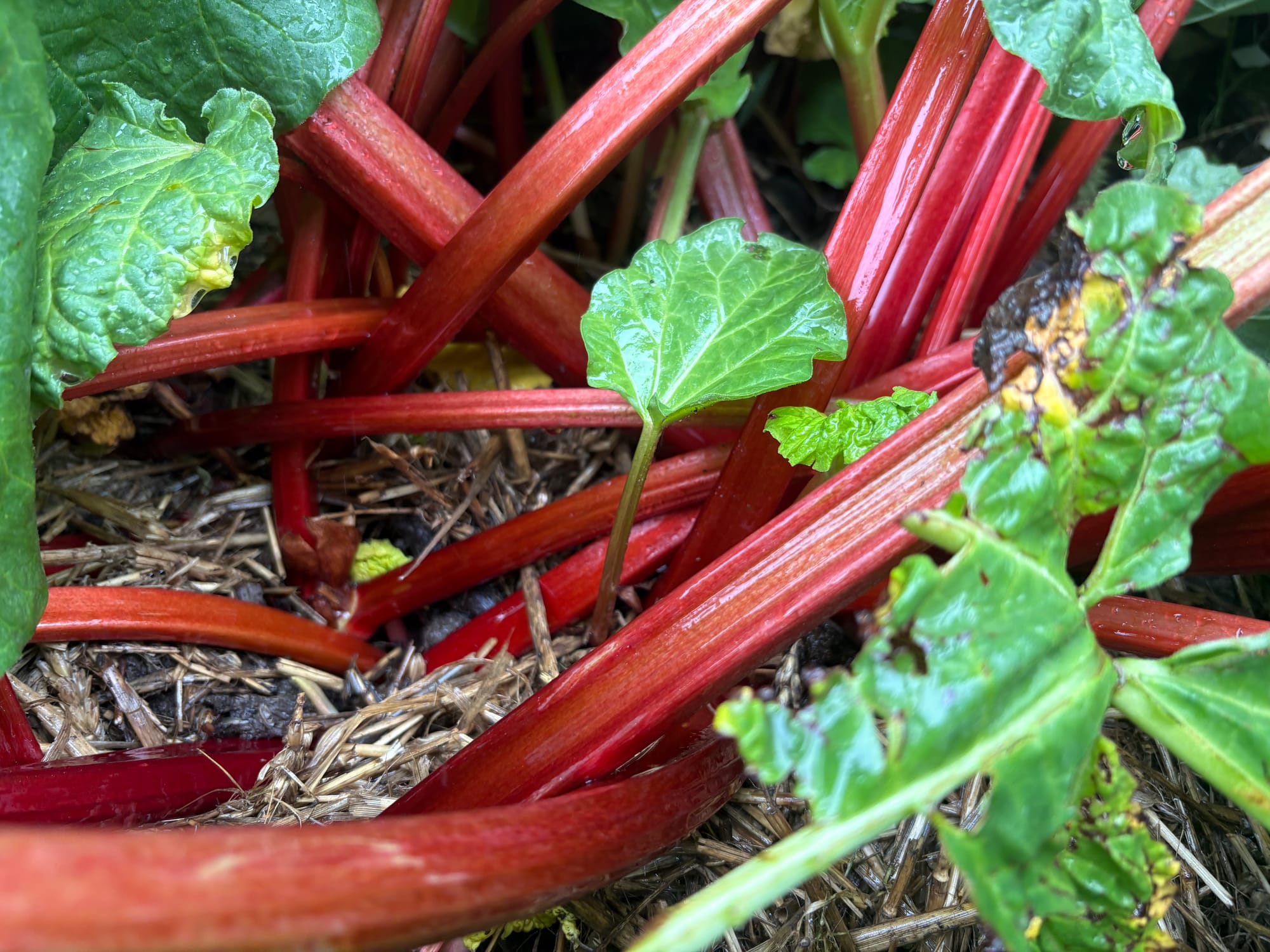
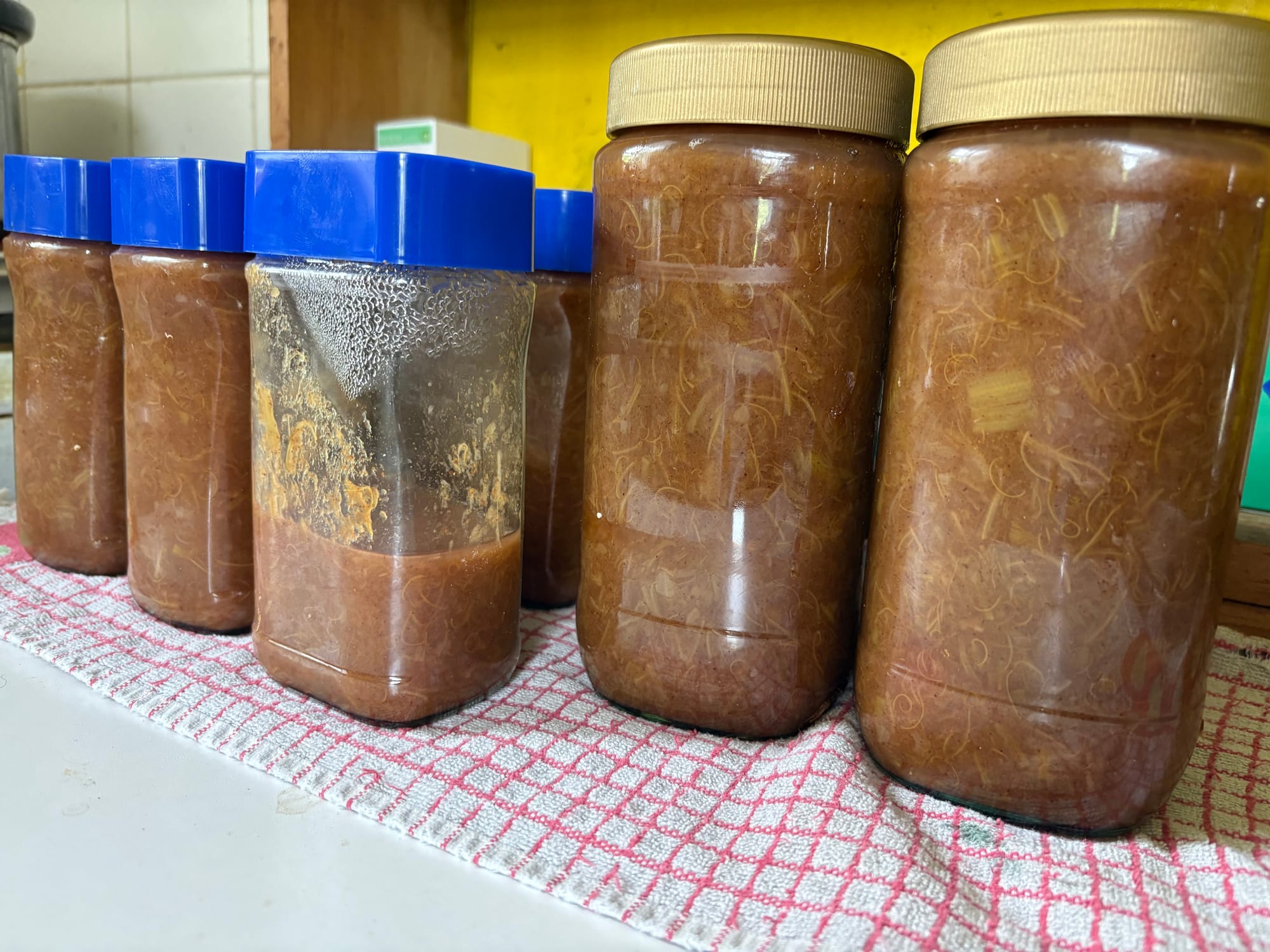
Once the neighbors have taken their share, the rest of the harvest gets split three ways in our kitchen. It’s amazing how much variety you can get out of a single plant. Charlie takes a savory route, turning the sharp, tart stalks into a rich, spiced chutney. Because rhubarb is naturally acidic, it makes a brilliant base for vinegar and spices, and it’s the perfect way to jar up the summer flavor so it lasts until winter.
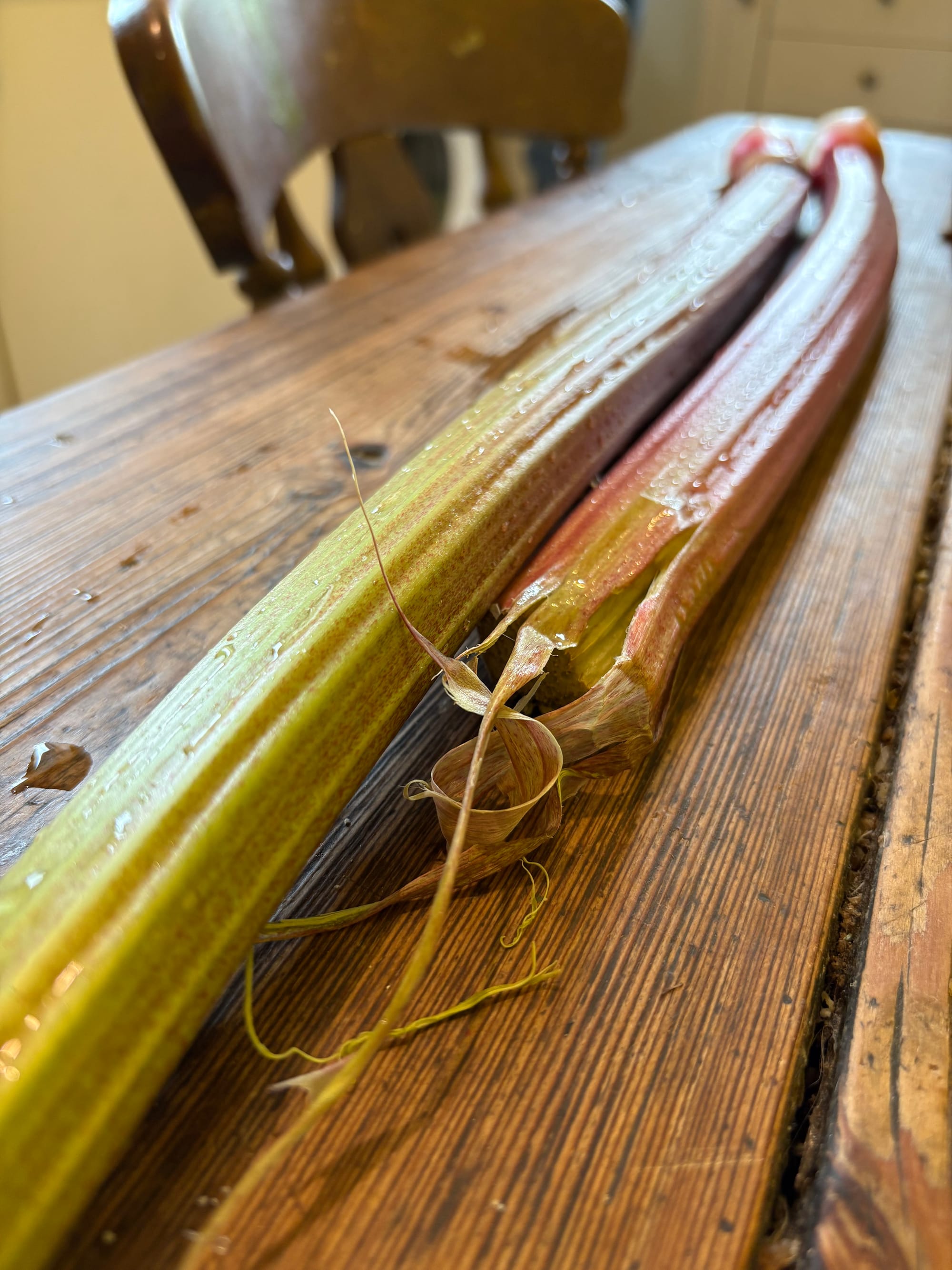
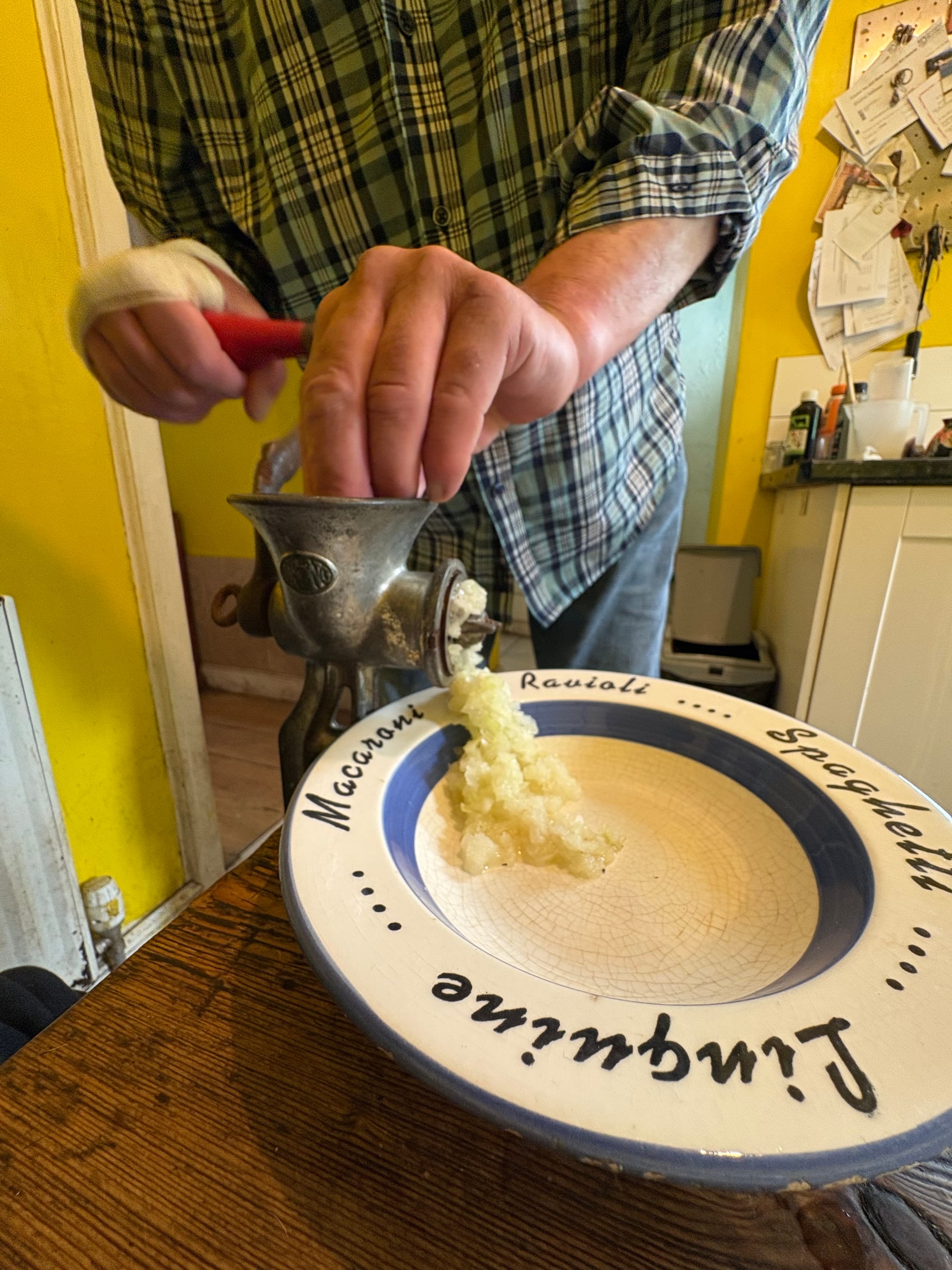
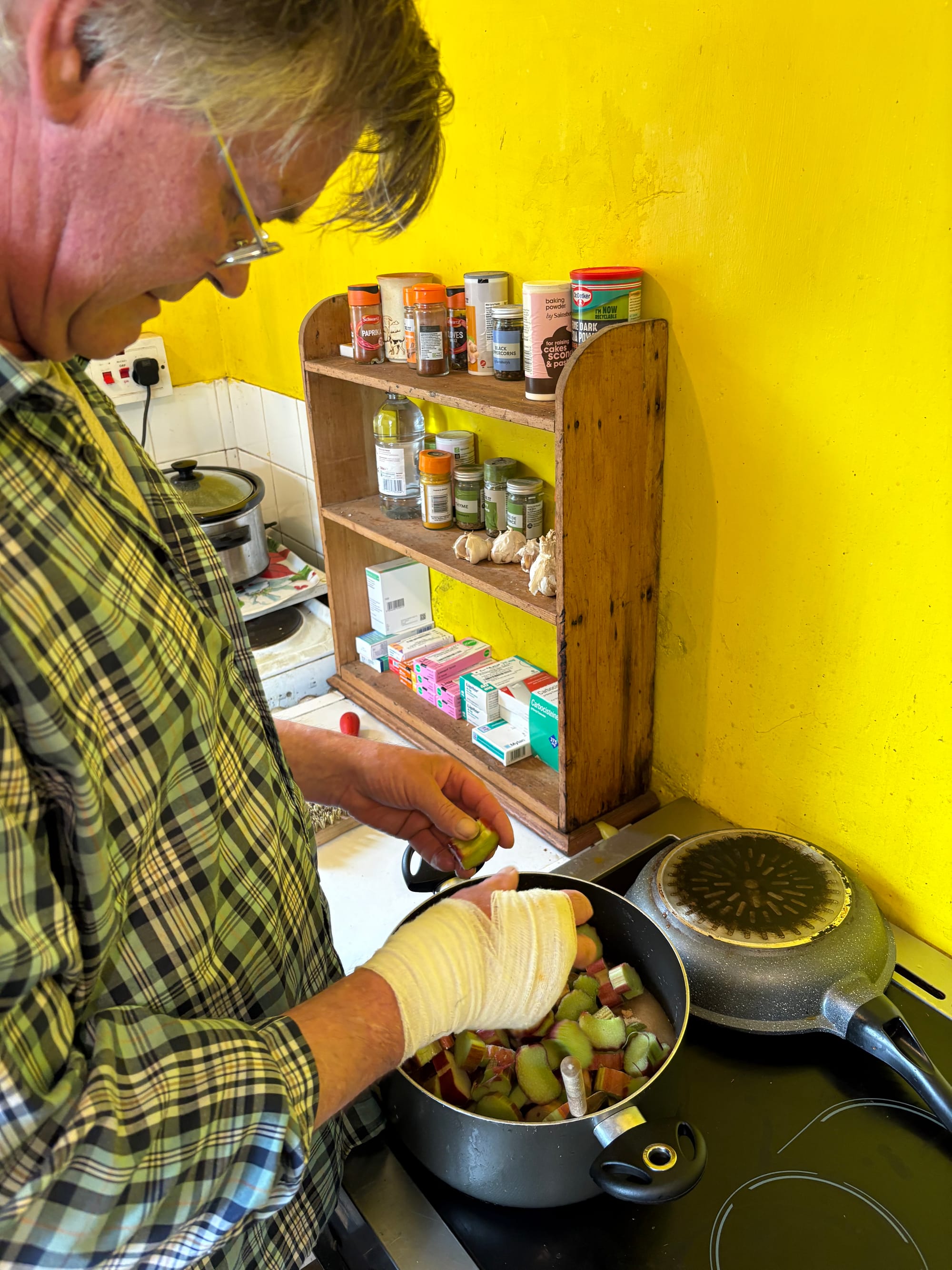
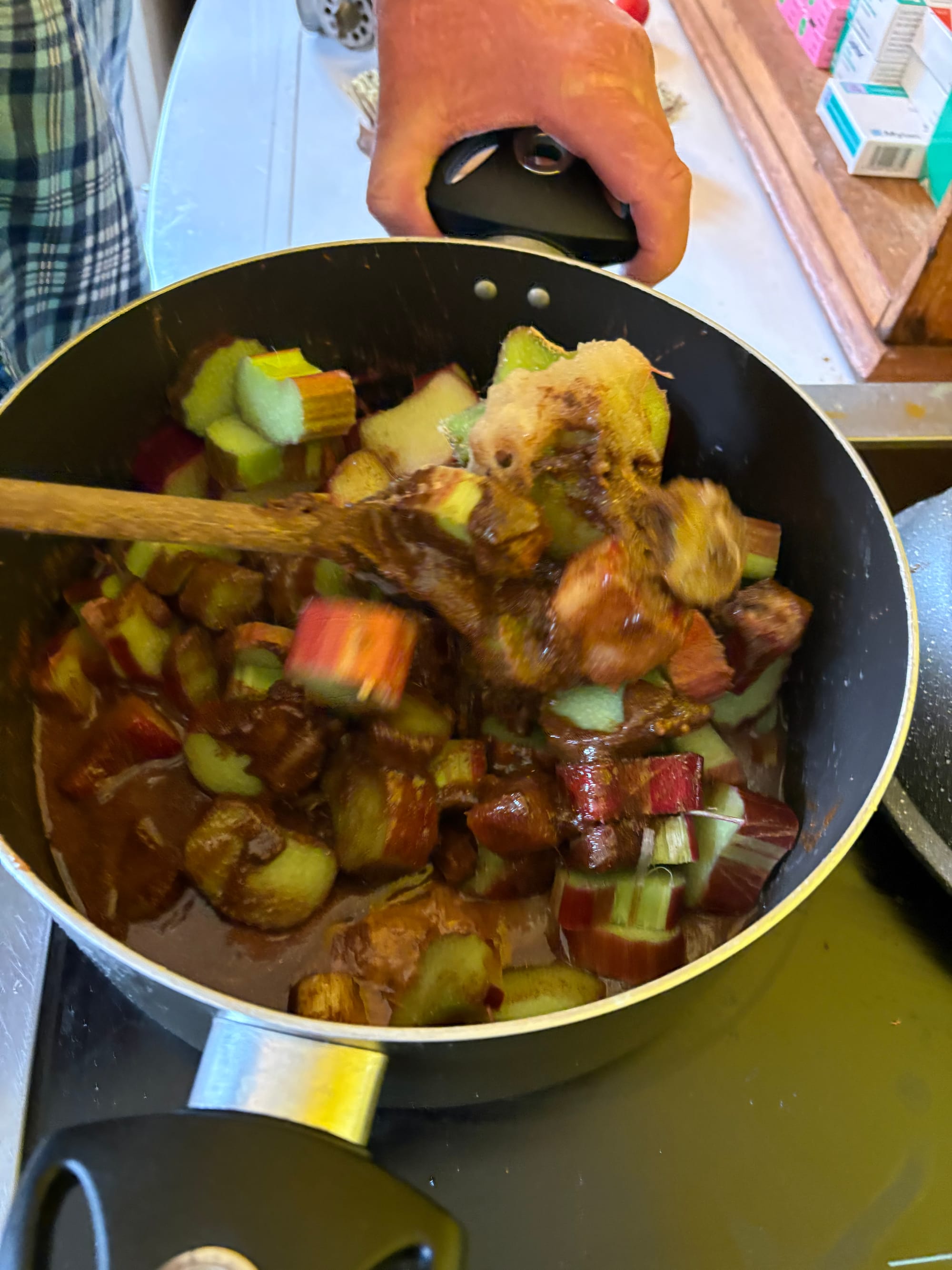
Charlie also handles the alchemical side of things, fermenting the fresh stalks into homemade country wine. It’s a brilliant nod to traditional country living—capturing the essence of the garden patch in a bottle that you can cork and enjoy months down the line. The Crumble is my department. I take the sun-grown, robust green stalks, chop them up, stew them down with plenty of sugar to cut the tang, and top it with a proper buttery crumble crust.
While our own harvest comes down to a few buckets carried into the kitchen and shared over the fence, rhubarb still holds a massive, almost mythic place in the wider British countryside. Just down the road in West Yorkshire sits the famous "Rhubarb Triangle"—a small pocket of land where traditional growers still trick the roots into early growth by keeping them in total, heated darkness.
It’s a place of incredible local folklore, where the plants grow so fast in the sealed sheds that you can actually stand quietly in the dark and hear the stems pop and squeak as they burst into life. It’s a wonderful reminder of the strange, hardy magic of this plant. Whether grown in the pitch black of a Yorkshire shed or thriving out in the rain by our own old farm machinery, rhubarb remains a true classic of the British garden—stubborn, remarkable, and always best shared.