The digital world was promised to us as a space of endless variety—a "long tail" of niche voices, independent research, and authentic documentation. But look at your feed today. Notice how certain institutions—the legacy giants—always seem to be waiting for you, placed front and centre, regardless of whether you actually asked to see them.
This isn’t an accident of the algorithm. It is the result of a deliberate, state-backed campaign to prioritise the "stale cake" of legacy media over the fresh, unvarnished reality of independent creators.
The Ministry of Truth’s Last Stand
In George Orwell’s 1984, the "Ministry of Truth" wasn’t just a broadcaster; it was the arbiter of reality. Today, our own legacy broadcasters are operating with a similar, albeit digital, imperative. With the 2027 expiration of their Royal Charter looming and their traditional funding model in terminal decline, they are in a state of existential panic.
They are no longer competing for your attention on merit. Instead, they are lobbying for "prominence" legislation—using the law to force their presence to the top of your feed. They know the audience has moved on, so they are turning to the State to mandate their visibility. It is a desperate attempt to maintain a monopoly on the national narrative by choking out the organic, independent voices that have rightfully replaced them.
Intimidation as Administrative Procedure
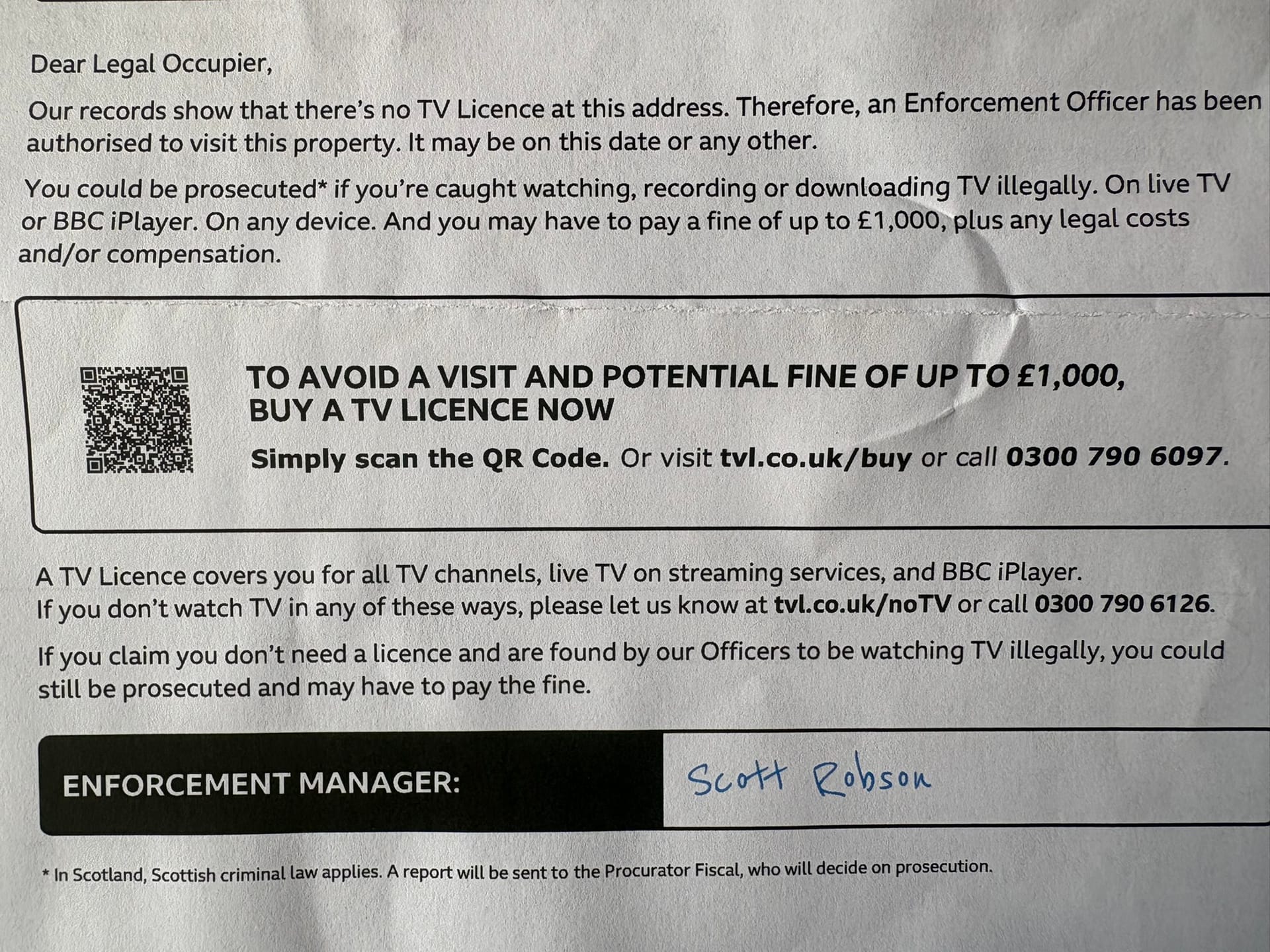
This control isn’t just happening in your digital feed; it’s being enforced at your front door. For years, the licensing authority has used the threat of "criminal prosecution" to extract fees from households, regardless of whether they consume the service.
It is an intimidation engine designed to keep the public in a state of compliance and anxiety. By framing non-compliance as a potential crime, they maintain a psychological tether between the citizen and the institution. They want you to believe that opting out is "evasion," when in reality, it is simply choosing not to pay for a product you do not use.
Mass Censorship by Other Means
We must call this what it is: mass censorship.
When a state-backed behemoth—with 21,500 staff and a £6 billion annual budget—uses its legislative influence to prioritise its own output, it is effectively silencing the rest of us. They aren’t deleting your content; they are burying it under an avalanche of state-sanctioned noise. They are ensuring that your first interaction with the internet is their performance, not the reality you seek to explore.
The Platform’s Own Critique
Even the platform itself has identified the absurdity of these "prominence" mandates. When pressed by regulators, a YouTube spokesperson offered a rare, candid admission:
"Prominence rules seek to distort that—forcing YouTube to prioritise government-picked channels over whatever viewers actually came to watch. That’s not fair on users, creators, or the wider journalism ecosystem."
By their own admission, the State is attempting to "distort" the digital experience. The platform recognises that forcing government-picked content into our feeds is an unfair burden on users and a direct blow to the meritocracy that allows independent creators to exist.
Hands Off Our YouTube
YouTube is a commons, not a government annex. The creators who have built this space have done so by fostering genuine relationships, not by leveraging state power. The "stale cake" is failing because the public has lost its appetite for it. We are not consumers to be force-fed; we are citizens of a digital space we have built ourselves.
Reclaiming the Commons
They win when we remain passive. We win when we opt out of their "circus" and build our own infrastructure.
- Deny them your attention: When you see mandated "prominence" content, ignore it. Do not click. Do not engage.
- Opt out of the intimidation: Understand your legal rights. You are not required to speak to enforcement officers, and they have no power to enter your home without a police warrant.
- Support the independent: Engage with platforms you trust, join independent research forums, and share the "real" content that the algorithm tries to hide.
- Build outside the Ministry: Support creators who host their own spaces. The more we build our own digital networks—like the Laboratory of Inquiry—the less power the "Ministry" has over our access to truth.
The future belongs to those who document the world as it is, not those who attempt to rewrite it to serve an institution in decline.
Hands off our YouTube.
Sources Cited:
- The Guardian, 2022-01-16, "BBC licence fee to be abolished in 2027 and funding frozen"
- The Guardian, 2026-06-22, "UK plans to give established media more visibility on YouTube and TikTok"
- Defund The BBC, Frequently Asked Questions (defundbbc.uk/frequently-asked-questions/)