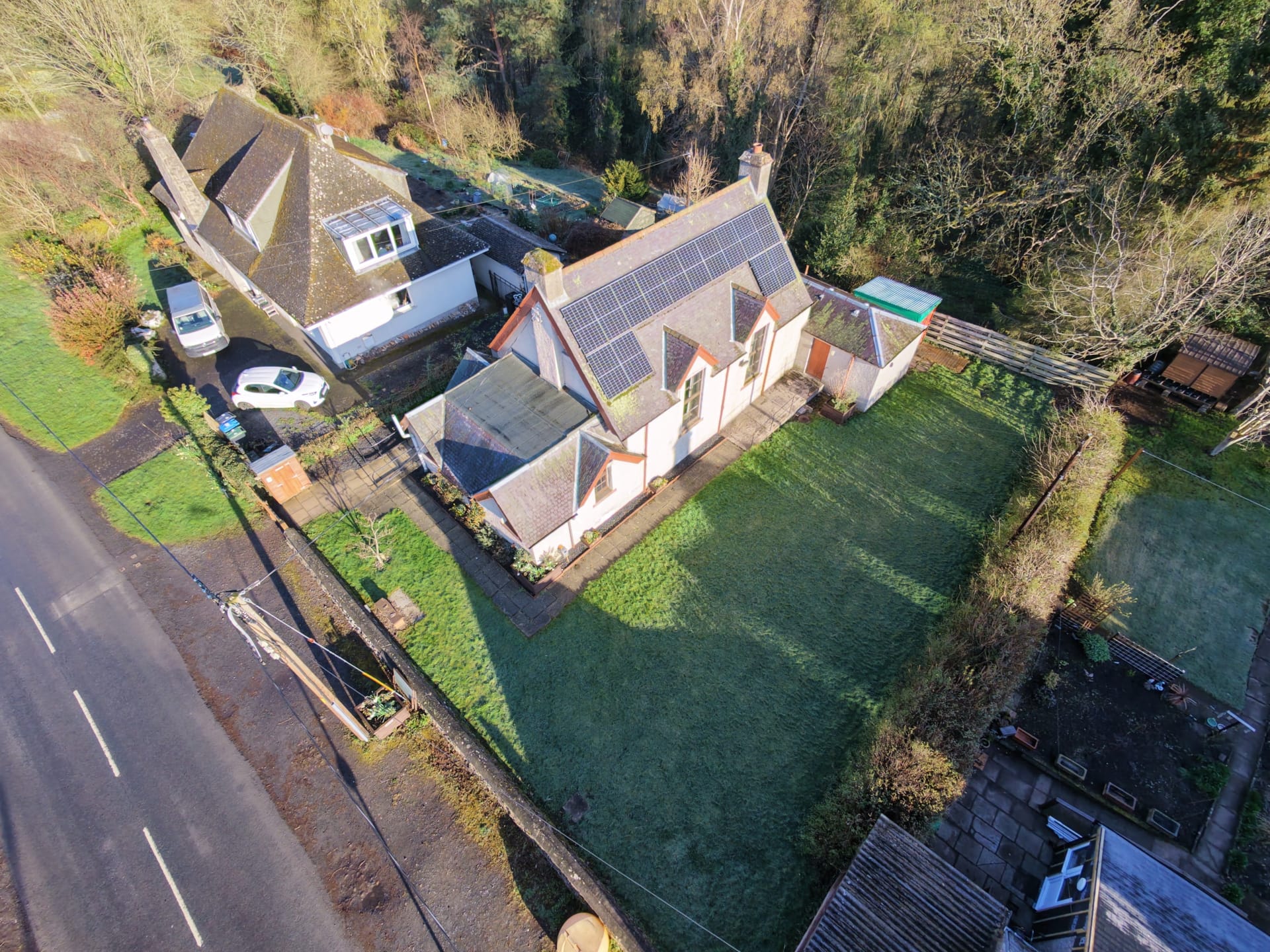
In the machinery of modern democracy, power is supposed to leave a paper trail. It requires statutory authority, legislative backing, an electoral mandate, and constitutional boundaries designed to protect the individual from overreach. Yet, drive down the rural lanes of the Scottish Borders or any dispersed rural parish, and you will find an entirely different sovereign body at work. It has no budget to speak of, no police powers, no legal duty to build or maintain anything, and no courtroom to try its grievances.
It is the community parish council. And precisely because it holds no formal authority, it wields an unchecked, informal power that is far more suffocating than the state it mimics.
I. Introduction: The Power Without Portfolio
In contemporary rural governance, the apparatus of social control rarely arrives with the dramatic sweep of state decree; more often, it arrives on a Tuesday evening in a village hall under the hum of fluorescent lighting. Across rural districts, community councils are formally codified as benign, hyper-local consultative bodies—voluntary sounding boards meant to reflect the immediate, everyday sentiment of a single village to regional planning authorities.
Yet, looking past the humanitarian and civic rhetoric reveals a striking sociological paradox. Holding no statutory police powers, no legislative backing, and no formal mandate to govern public space, community councils routinely punch far above their administrative weight. Unburdened by the constitutional checks, public transparency laws, or civil rights obligations that constrain actual municipal government, they operate as a shadow state.
II. The Architecture of the Village Hall: Epicentre of Social Capital
The physical architecture of rural governance reveals its true power dynamics not in municipal chambers, but in the draughty, tea-stained sanctuary of the village hall. Village halls hold virtually all the social capital in a rural parish, and it is no coincidence that most, if not all, community councils are anchored directly within them. The hall is not merely a meeting venue; it is the physical manifestation of the parish's collective history, wealth, and moral authority.
- The Monopoly on Belonging: In rural settlements, the village hall is the central node through which all community life passes—from the weekly yoga class and the historical society lecture to the local bake sale and the annual parish meeting. Control over the village hall committee is synonymous with control over the parish's social currency. Those who hold the keys, manage the booking calendar, and maintain the building hold an institutional monopoly on what activities are deemed "legitimate" and welcome in the community.
- The Architecture of Legitimacy & Closed-Loop Governance: When a community council holds its monthly meetings under the roof of the village hall, it borrows the building's historical prestige. In practice, the roster of the village hall management committee and the roster of the community council are often populated by the exact same small cohort of retirees, landowners, and long-term residents. This creates an incestuous loop of local power: the same people who decide who can rent the hall for a private function sit across the table during council sessions judging planning applications and lobbying Police Scotland, treating any dissent as a trespass against the sacred bricks and mortar of village heritage.
III. The Anatomy of Informal Power: Social Capital as Legislature
Without a legal code to enforce their will, community councils rely entirely on an unwritten constitution forged from local social capital. In sociological terms, this is hyper-concentrated "bonding" capital—creating intense insular loyalty within a tight group by defining itself against an out-group. Who has lived in the parish for generations, who owns the land, who runs the village hall committee, and who commands the ear of regional officials determines who holds weight within the parish ecosystem.
- The Ledger of Belonging: In villages where lineages, property ownership, and generational residency are tracked like a medieval peerage, social capital functions as a social credit system. Every contribution to the village bake sale, every attendance at a parish meeting, and every display of deference to established elders deposits credits into a resident's local account.
- The Liquidation of Dissent: When a newcomer or an independent-minded local challenges the council’s agenda—whether questioning a planning objection or pushing back against an overreaching "beautification" initiative—they are drawing against an account they do not possess. The council and its allies can instantly freeze a resident's social liquidity, cutting off access to the informal networks that make rural life function.
This absence of civil service neutrality transforms the council into a self-selecting enclave. Because positions are voluntary and meetings are often scheduled at times convenient only for the retired or independently wealthy, the demographic composition of these bodies skews heavily toward property owners and long-term residents with a vested interest in stasis. They operate without the rigorous transparency, conflict-of-interest disclosures, and formal appeal mechanisms required of statutory bodies, bypassing due process entirely in favour of informal consensus.
IV. The Architecture of the Veto: Weaponising "Consultation"
Because regional planning authorities and police commands routinely defer to community councils as the authentic "voice of the community," an un-elected clique is handed a de facto veto over local development. This structural deference turns the council into an engine of aesthetic conservatism.
When every proposed housing development, renewable energy installation, agricultural diversification project, or infrastructure upgrade must pass through the gauntlet of a community council consultation, the institution's entire operational logic calcifies into negative governance. It becomes a machine built exclusively to say "no." Under the protective smokescreen of "protecting village character" or "preserving rural heritage," these bodies block affordable housing for younger generations and stymie organic economic mobility, treating any structural change to the parish as an existential threat.
V. Social Ostracisation, Chilling Effects, and the Village Kangaroo Court
When legal authority is absent, compliance is enforced through social penalty. Because parish councils are embedded in tight-knit geographic webs, dissent cannot be neutralised through administrative fines; instead, it is managed through pre-emptive deterrence and informal adjudication:
- Engineering the Chilling Effect: The goal is to make the cost of speaking out so socially and professionally prohibitive that potential dissidents self-censor before they ever voice an objection. If a resident openly criticises the council, they are treated as an existential threat to community harmony. This manifests as sudden coldness at the village shop, unreturned greetings on the morning dog walk, and the quiet exclusion of the dissident’s family from local social circles. Ordinary residents, knowing the social fallout, simply stay home from public consultations—allowing the council to point to an empty room as "unanimous community consensus."
- The Village Kangaroo Court: When chilling effects fail and a resident persists in "unruly" behaviour—such as maintaining an unconventional property aesthetic, running an independent trade, or openly defying parish directives—the council and its informal enforcers resort to trial by gossip. Operating behind closed doors, an informal tribunal convenes without rules of evidence, minutes, or right of defence. Behaviour is judged under the vague banner of "protecting village character," with sentences executed through whispered campaigns and character assassination until the dissident conforms or quietly leaves.
VI. Co-opting the State: Police Coordination and ASBOs
When local social pressure and kangaroo courts fail to expel perceived nuisances, community parish councils leverage their privileged administrative ear to bridge the gap between neighbourhood gossip and state sanction. While instruments like Anti-Social Behaviour Orders (ASBOs) or community protection notices require formal legal thresholds, the parish acts as the informal intelligence engine that triggers them.
- The Parish as an Informational Clearinghouse: Councils encourage residents to log "suspicious" or "anti-social" behaviour—not just genuine disturbances, but unconventional lifestyles, unvetted traders, or persistent dissidents. This localised gossip is formalised into official complaint dossiers that, when presented to local police commanders, carry the artificial weight of an unassailable "community consensus."
- Co-opting the Local Beat Officer: In rural outposts, local police officers often rely heavily on parish councils for intelligence and community integration. This creates a cosy, informal operational pipeline where officers are co-opted to address aesthetic and social grievances—paying unannounced visits to unconventional residents or running off itinerant visitors flagged by councillors. The police become the blunt instrument of village respectability, validating the council's informal kangaroo courts through the intimidating presence of a state uniform.
VII. Conclusion: The Cost of Petty Sovereignty
The community parish council model exposes a dark underbelly of decentralised localism. When a voluntary body is granted informal gatekeeping powers without the counterbalancing obligations of transparency, rights protection, and democratic accountability, it inevitably curdles from community care into defensive parochialism.
Rural areas risk being held hostage by an un-elected caste of administrative busybodies hiding behind a tea-cosy democracy. True community resilience does not stem from an insular oligarchy policing the boundaries of respectability; it requires the openness, friction, and organic vitality that a shadow parish is fundamentally designed to crush.