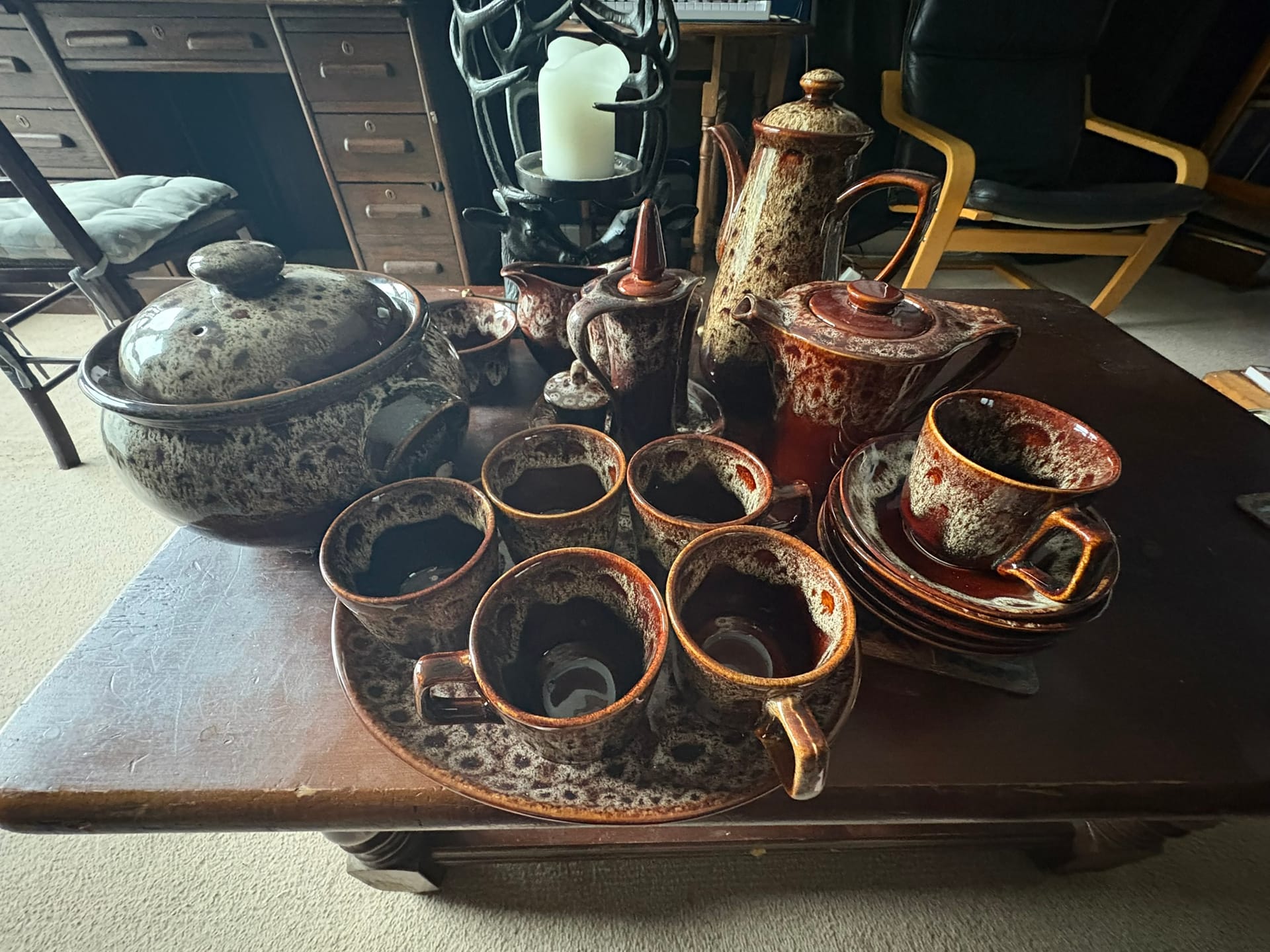
It is a basic truth of vintage hunting that sometimes you don’t find the object; the object finds you. Recently, I walked into a local charity shop and walked out with an entire, pristine 1970s tableware service for the absurd sum of eight pounds. Teapot, coffee pot, plates, bowls, cups, saucers, and even the matching salt and pepper shakers—the lot. It is a stunning set of Kernewek Pottery, featuring a heavy, high-gloss chocolate brown glaze topped with a thick, frothy "honeycomb" or "lava" drip rim. To find a fifty-piece earthenware set completely free of chips or scars after half a century is a minor miracle. It belongs to an era when kitchenware was built with an uncompromising, country-style permanence, meant to go straight from the oven to the family table.
But objects are never just physical matter; they are vessels for memory, geography, and what the philosopher Jacques Derrida called hauntology—the idea that the past persists as a spectral trace in the present. The word Kernewek means Cornish, and this specific pottery was born in Goonhavern, Cornwall, where it was manufactured at Churchtown Farm starting in the late 1960s. For most collectors, it evokes a nostalgic, idealised mid-century British craft boom. For me, however, the name Goonhavern triggers a much sharper, deeply personal ghost. During the chaotic frontline of the 2020 global lockdown, I found myself entirely alone and street homeless, emergency-accommodated in a caravan at Goonhavern’s Monkey Tree holiday park.
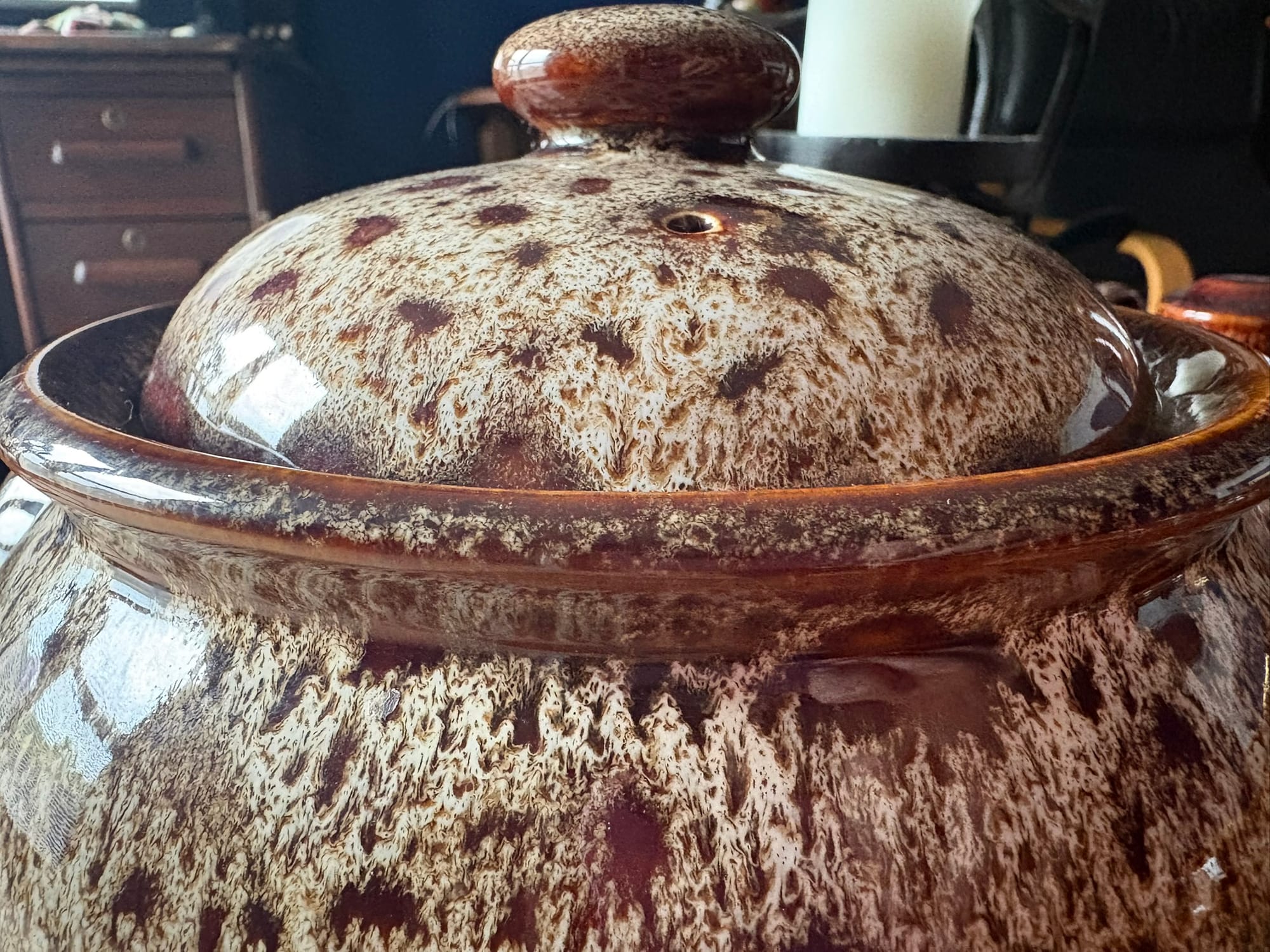
To encounter this complete service years later in the Scottish Borders creates a profound sense of existential vertigo. When I was in Cornwall, I had only the bare essentials for survival: a rucksack, a tent, a portable stove, and a sleeping bag. I was operating in a state of radical impermanence, pouring every ounce of energy into keeping the elements at bay. A fragile, heavy fifty-piece ceramic set is the absolute antithesis of survival gear. It is baggage; it demands roots, secure cupboards, and the architectural guarantee that the shelf it sits on today will still be there tomorrow. It is an object of luxury that was entirely invisible to the solitary version of me huddling in that caravan.
There is a beautiful, material justice in the itinerary of this clay. The pottery bypassed my time in Cornwall entirely because a transit point is no place for roots. Instead, it migrated across the length of the island, waiting on a shelf until I had completed the long, epic journey north—a journey I survived by reframing the precarity of homelessness as an active, purposeful expedition. It was on this road north, while hitch-hiking, that the solitary journey transformed, and I met my partner, Charlie. In a spectacular twist of cosmic irony, Charlie used to be an antiques dealer right here in Selkirk. The set waited to materialise until the process was complete, delivering itself into our hands only when the road had led me to a decorated house, a stable tenancy, and a partner who spent a lifetime understanding the value and preservation of old things.
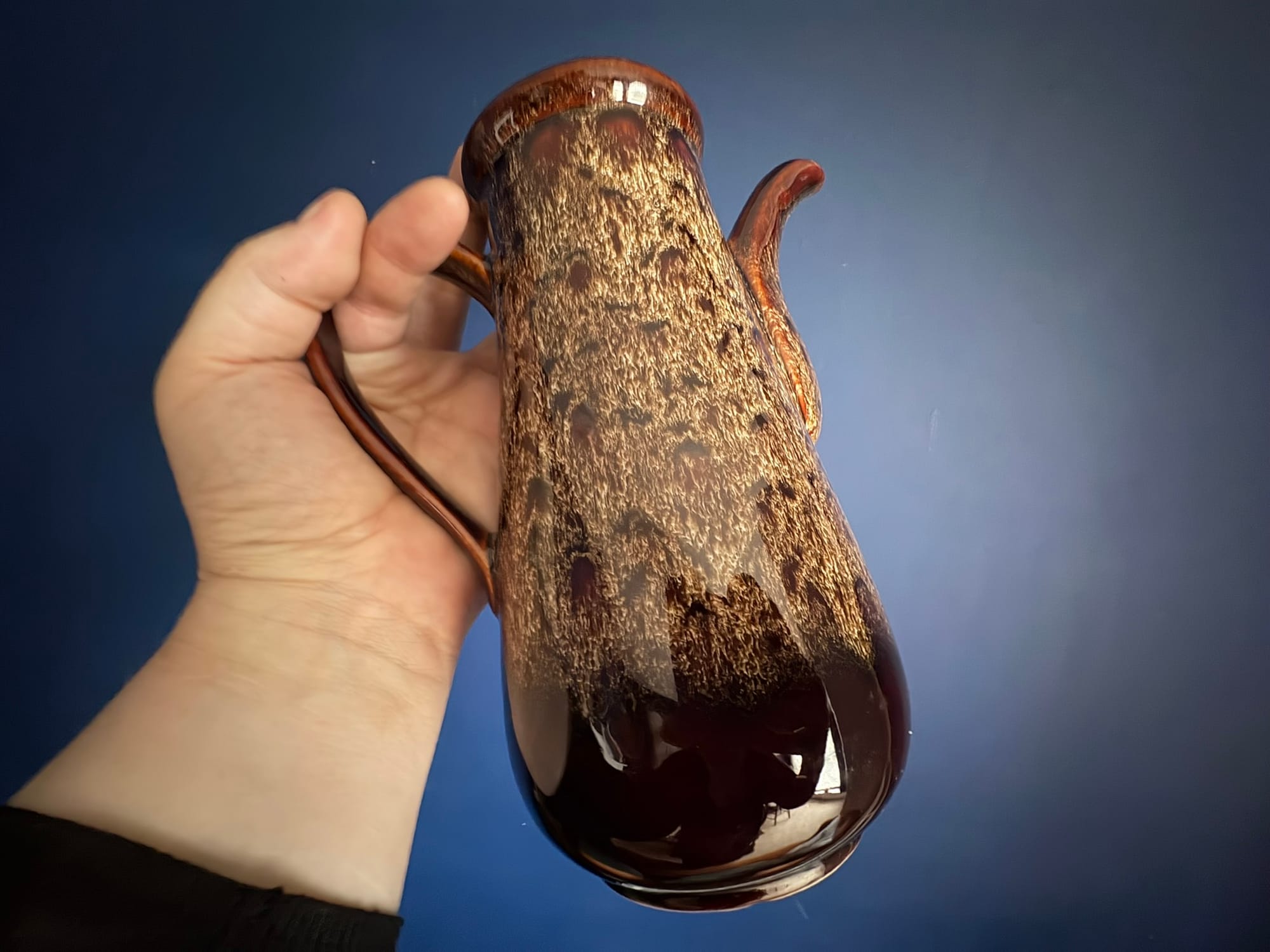
In a beautiful inversion of hauntology, I sometimes wonder if I have become the spectre haunting the pottery. For fifty years, this set existed in a sterile world of quiet domestic comfort. Now, my hands introduce a heavy history of survival into its pristine timeline. But this permanence is no longer a solitary burden or a fragile illusion that might shatter if life shifts again. It has become a collaborative project. Together, we have built four solid walls capable of holding this weight. We are no longer just keeping the cold out; we are actively enriching our lives, transforming separate, hard-won survival stories and professional histories into a single, shared foundation.
Ultimately, this eight-pound charity shop heist stands as a quiet monument to the road travelled. When we sit down to use this set, the room expands. We aren't just two people sitting in isolation; we are bringing the vast, crowded history of everyone we met along the way right to the table. Every soul who offered a flash of kindness, every vehicle that stopped to give a hitchhiker a lift, and every fellow traveller trying to survive the same freezing night travels within us. We carry them as traces in our minds, just as we exist as traces of resilience in theirs. This Cornish clay did not remain in Goonhavern, and neither did I. It sits rooted in the Borders now, a physical proof that the storm has passed, the process is complete, and the adventurer has finally come in from the cold.