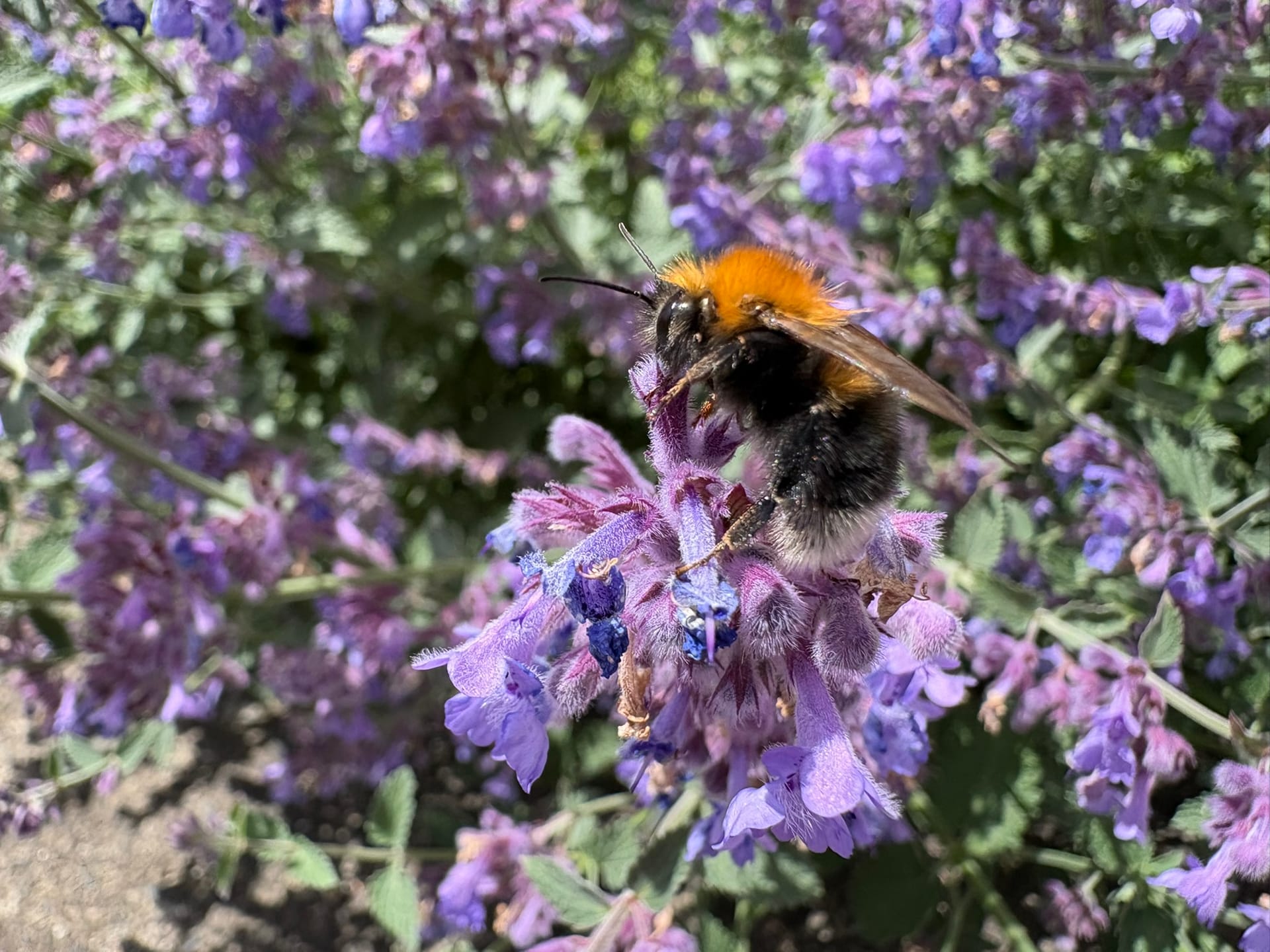
Every morning, I sit down at my desk, log onto my computer, and wait for my colleagues to arrive. They don't send emails or attend virtual meetings. Instead, they appear from around the back of my desk, trundling confidently up onto the window shelf. These are my daily companions: a thriving colony of Common Carder bees (Bombus pascuorum).
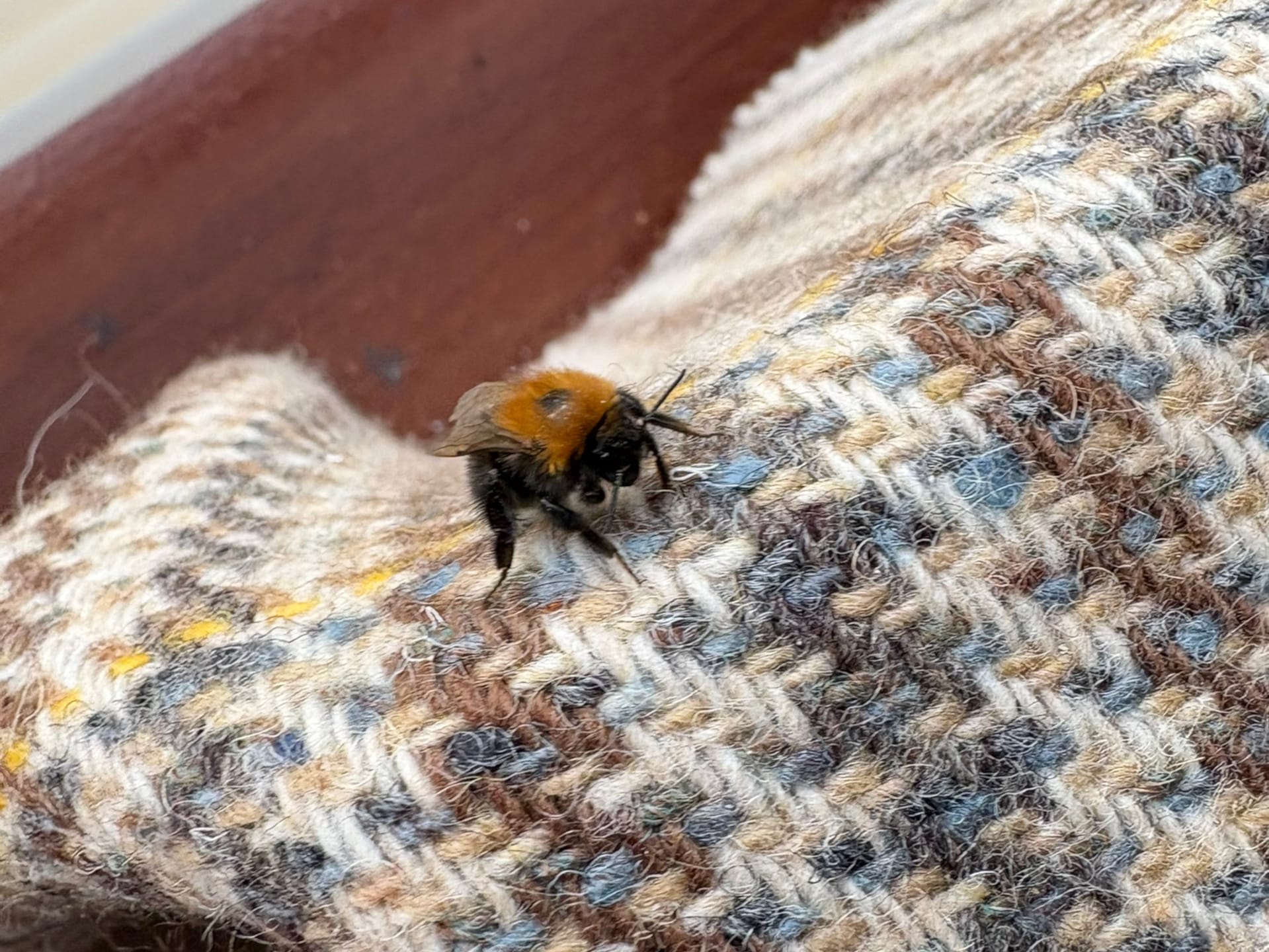
Sharing a workspace with a wild insect colony offers a rare, front-row seat to a miniature world. My window shelf has become their personal runway. From my desk chair, I watch them catch the morning light on the ledge, their distinct, richly coloured ginger-orange coats glowing as they prep for take-off. They are incredibly docile, gentle creatures, entirely uninterested in the human watching them, consumed entirely by the urgent, beautiful business of life.
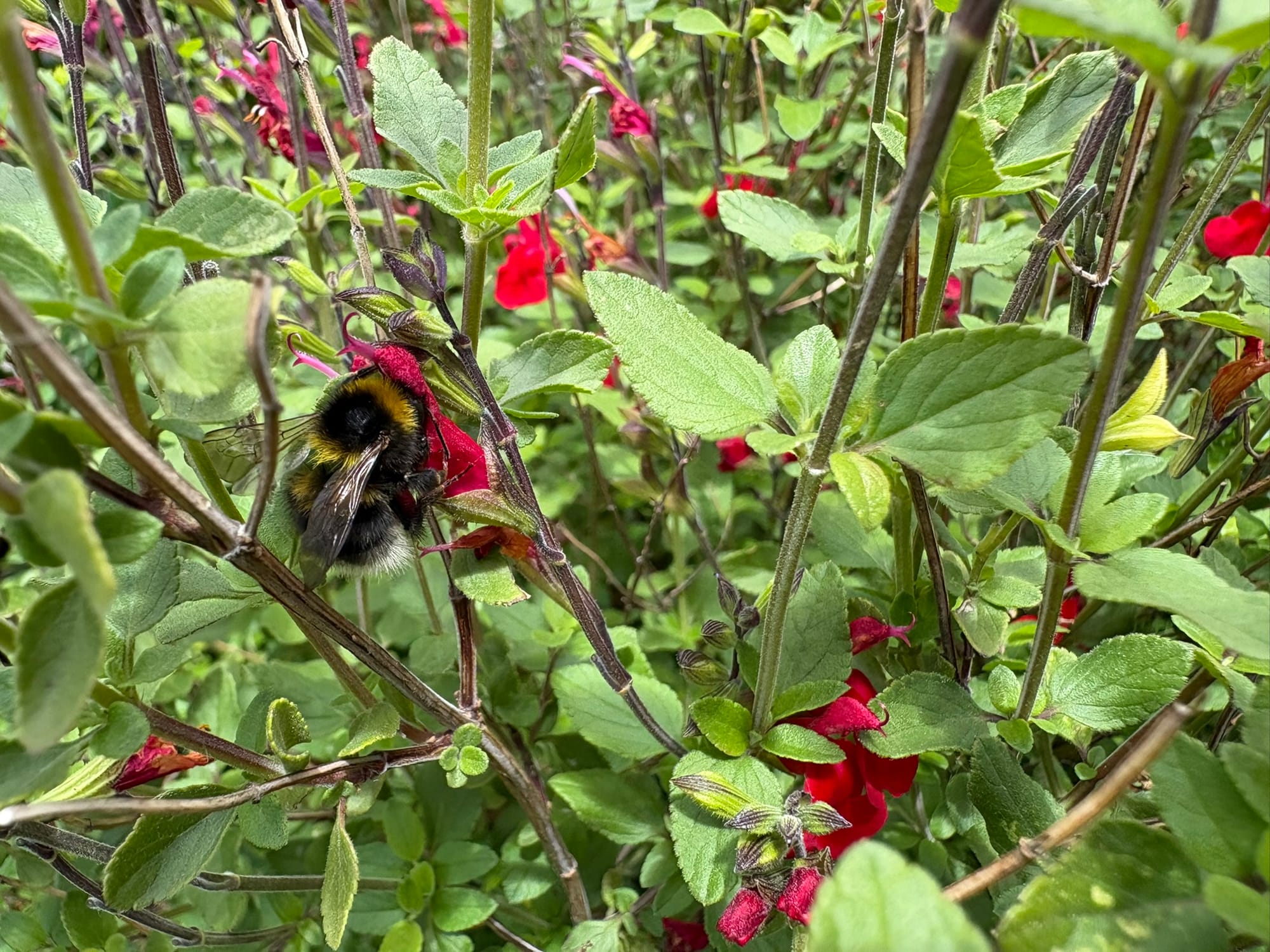
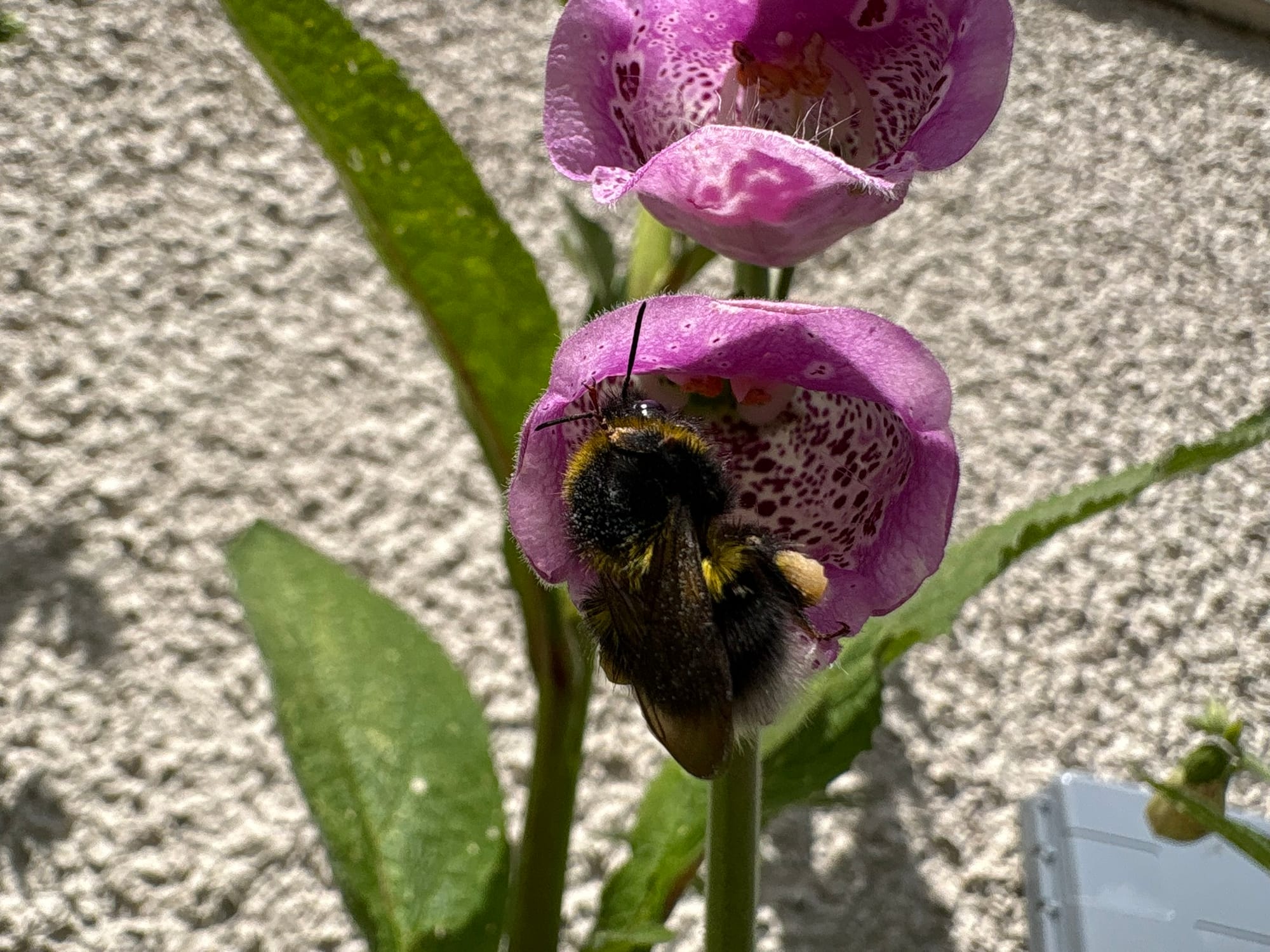
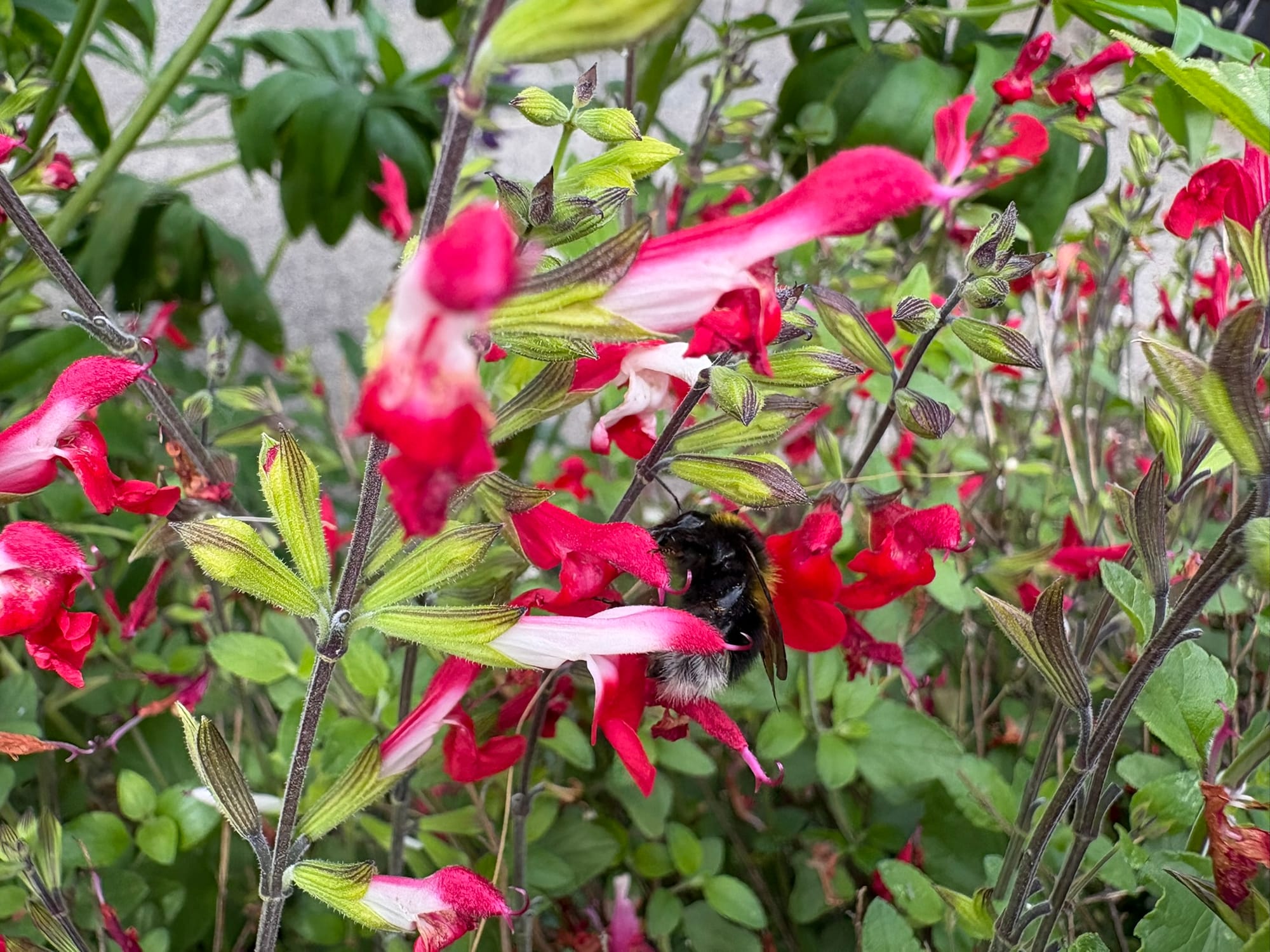
Their commute from my window shelf is a short one, as the garden just outside is a custom-tailored buffet for their specific talents. As medium-to-long-tongued bees, they are perfectly engineered to unlock flowers that other insects pass by. Their absolute favourites are a trio of summer classics: the hazy purple spires of Catnip, the striking red-and-white tubular blooms of 'Hot Lips' Salvia, and the majestic towers of my Lupins. Watching a carder bee work a lupin is a masterclass in insect strength; they muscle their way onto the petals, using their weight to force the tightly closed keel open, emerging dusted in golden pollen before heading back toward my window.
As the weeks slip by, it is hard not to look at these industrious workers without a pang of sadness. By autumn, this bustling runway on my window shelf will go quiet. Unlike honeybees, who store vast reserves of honey to survive the winter as a collective, a bumblebee colony is a single-season wonder. The old queen and her loyal workers will naturally pass away as the frost approaches. They will not return to this desk next year.
It is a bittersweet realisation. It feels unfair that a community so vibrant, which has brought so much life and companionship to my workspace, has such a fleeting existence.
But there is a quiet, profound comfort in understanding their cycle. The intense, frantic energy of these summer days isn't in vain. Right now, just out of sight, the colony is preparing its greatest legacy: raising the next generation of queens. Before autumn clears the stage, these new queens will emerge, mate, and leave the nest. While the workers I see today on my desk will perish, their daughters will find safe, secret havens in the garden soil and under leaf litter to hibernate through the cold months. When the warmth of spring arrives, they will awaken to build entirely new empires.
My window shelf may be empty next year, but the air in my garden will still hum with their lineage. Hosting them hasn’t just been a quirky feature of working from home; it has been a privilege. For one beautiful summer, I got to provide a sanctuary that ensured the cycle keeps turning.