Introduction
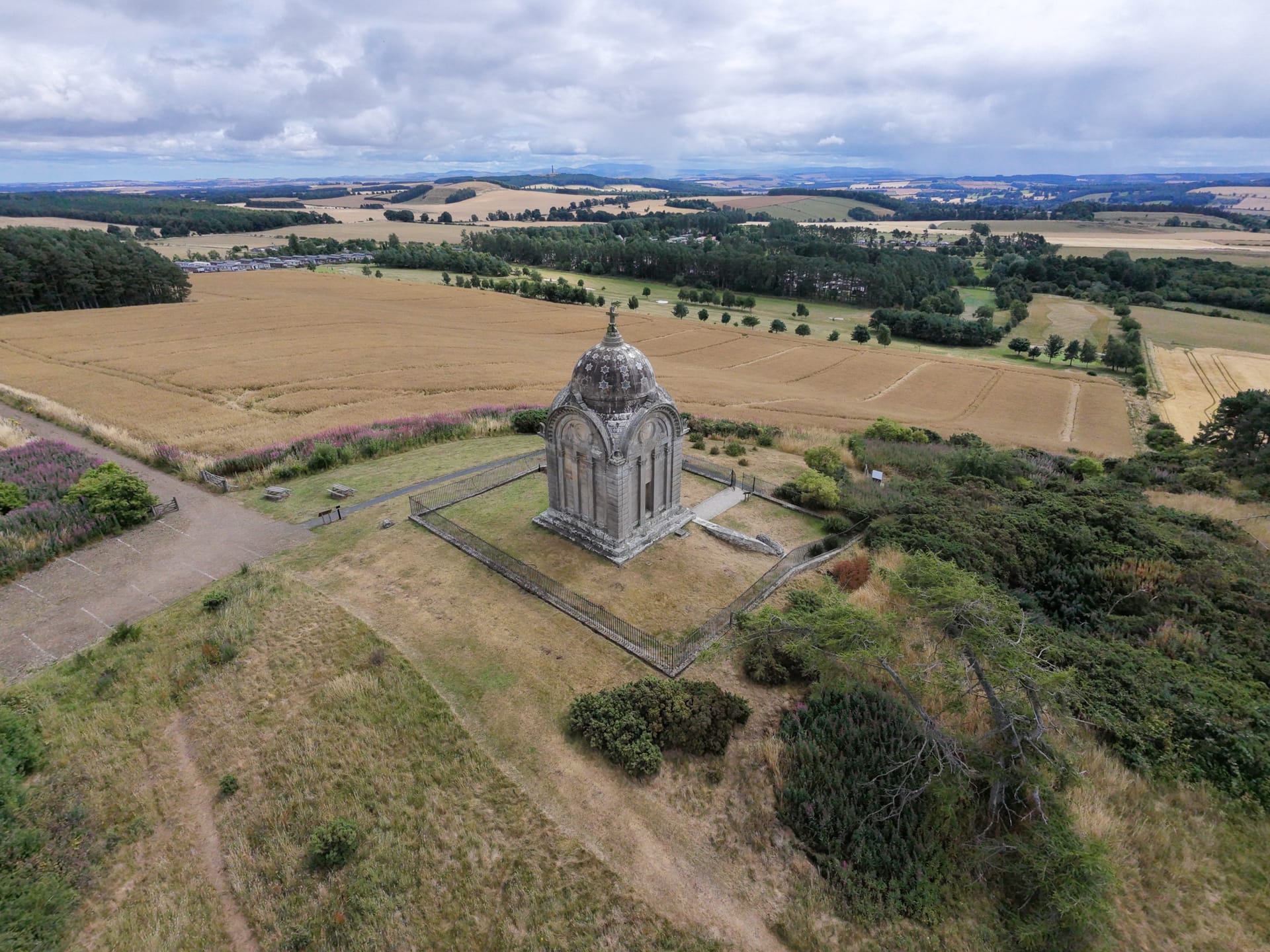
History is rarely just what sits at eye level. When you view a structure from the ground, you see the masonry, the weathering, and the immediate physical intimidation of the design. But monuments like the Monteath Mausoleum—built on the ancient geological ridge of Lilliards Edge above Ancrum to project permanence, status, and a ruling-class defiance against time—reveal their true sociological blueprint only when viewed from above.
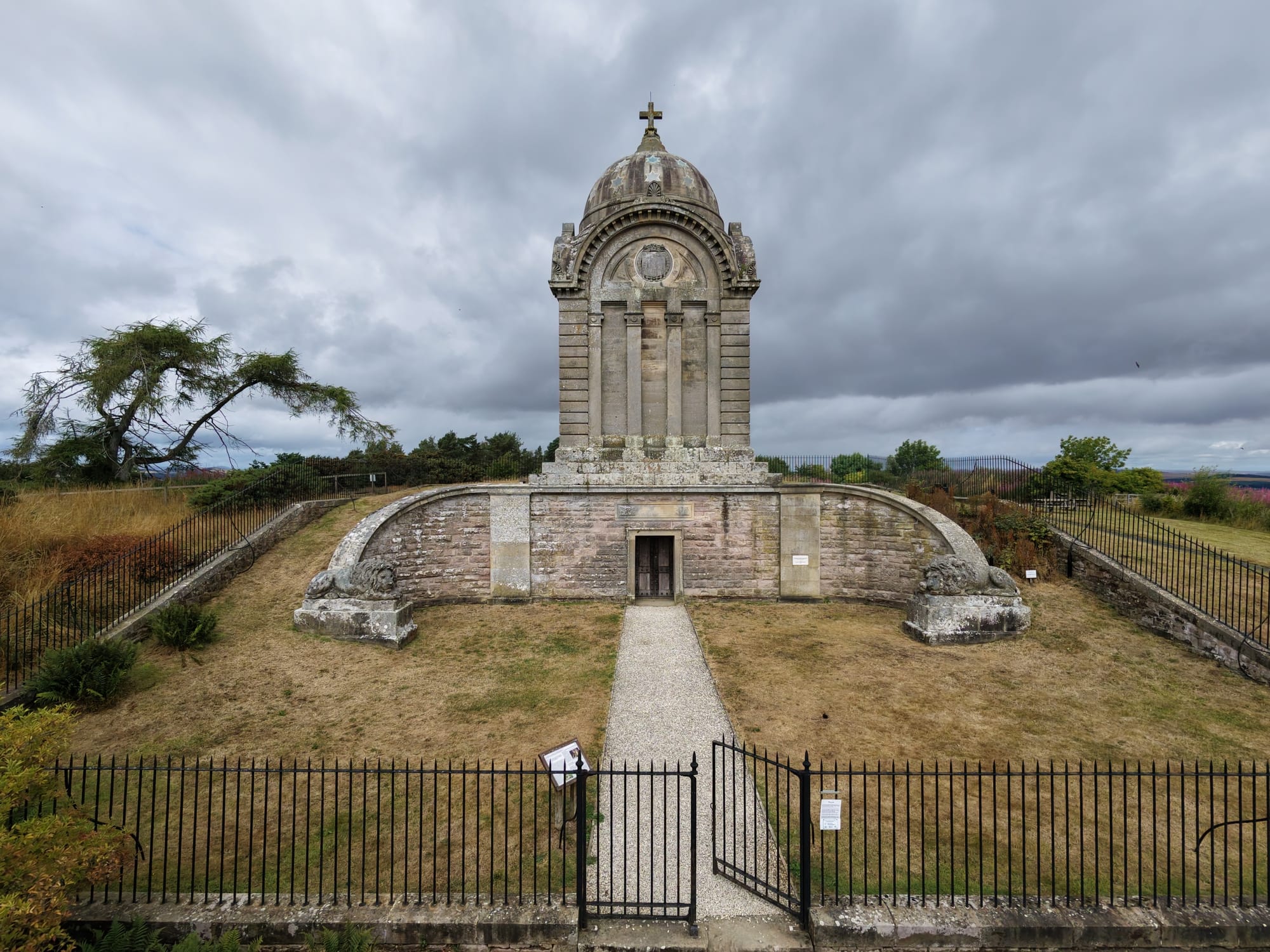
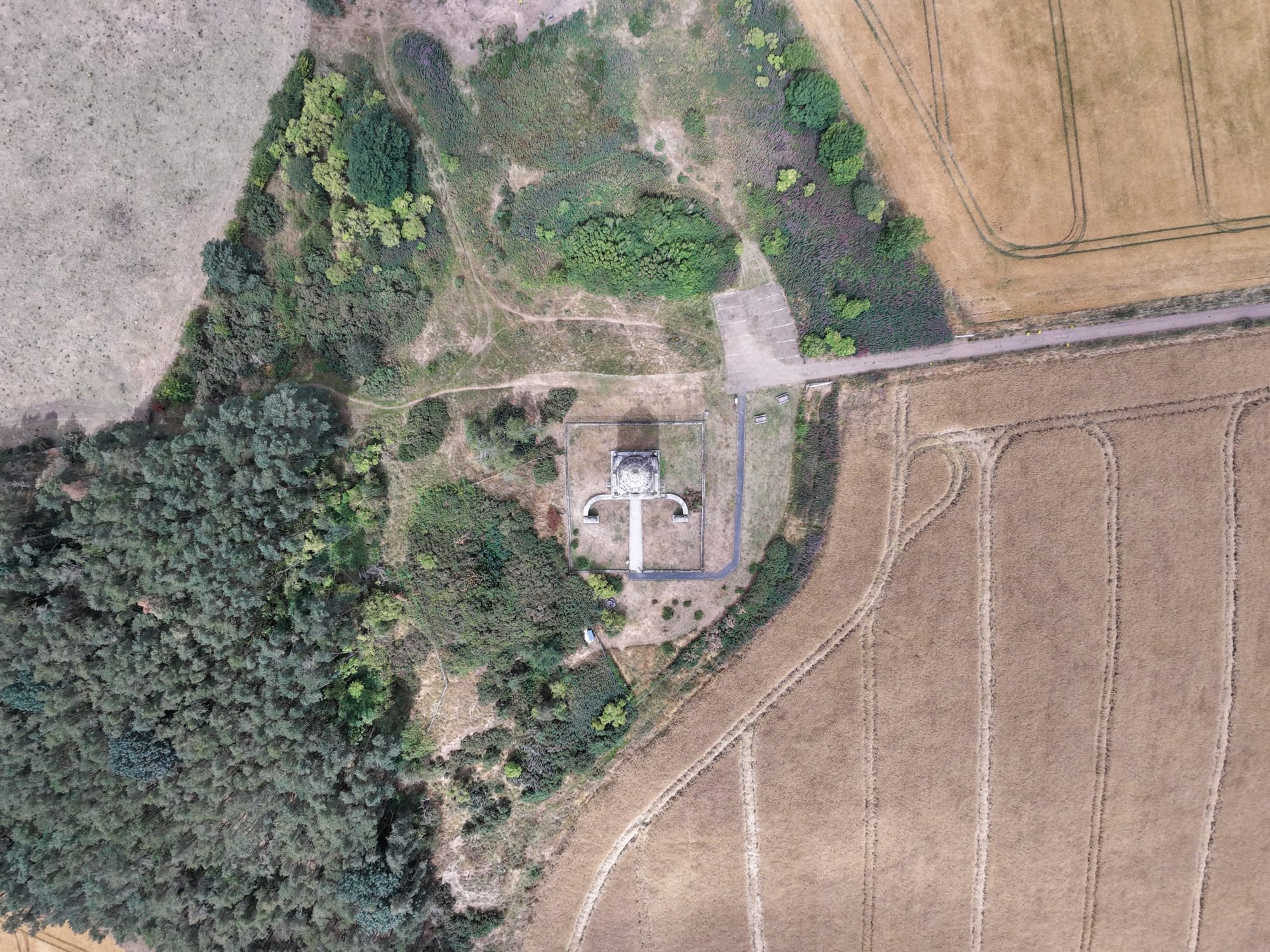
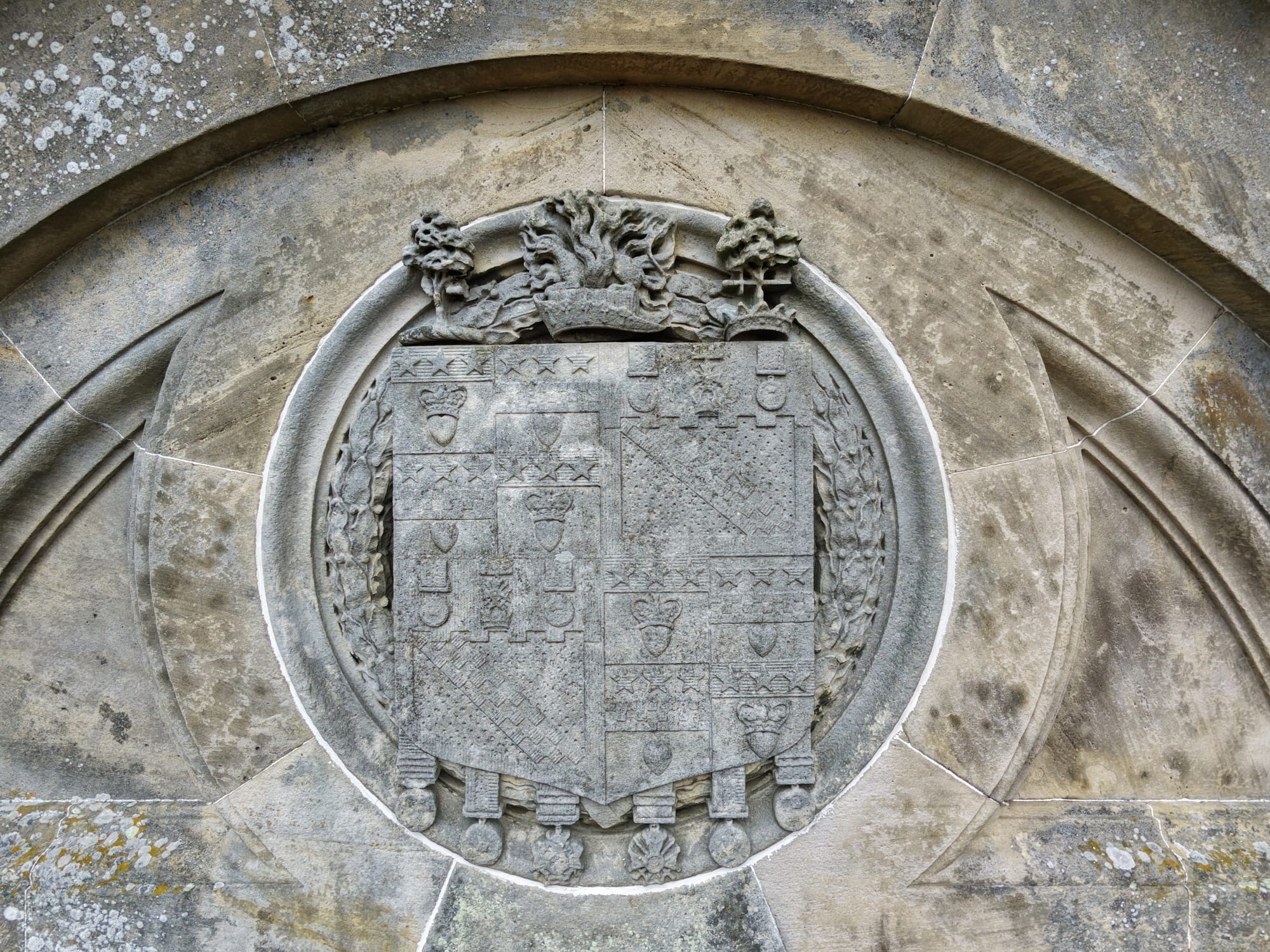
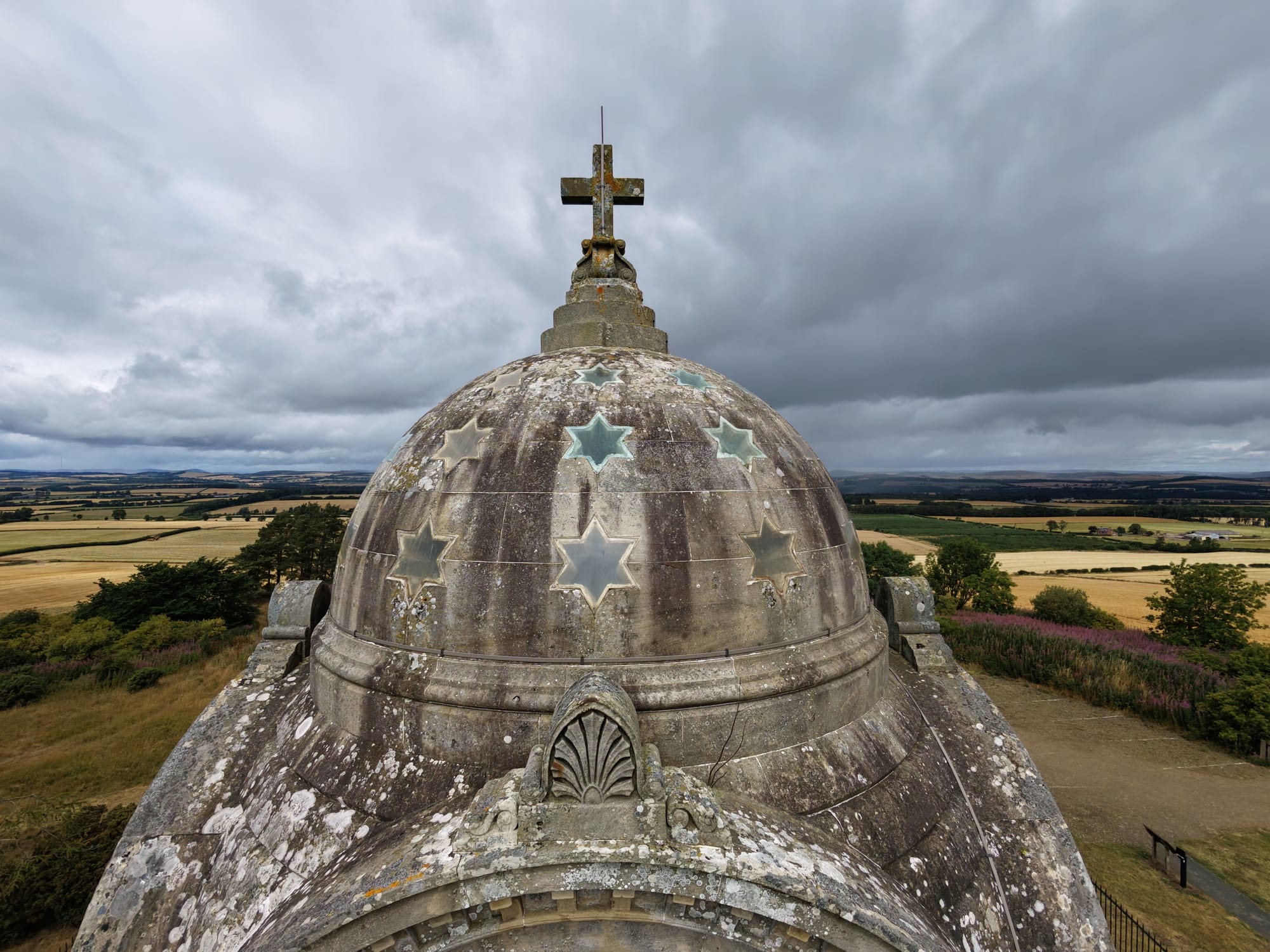
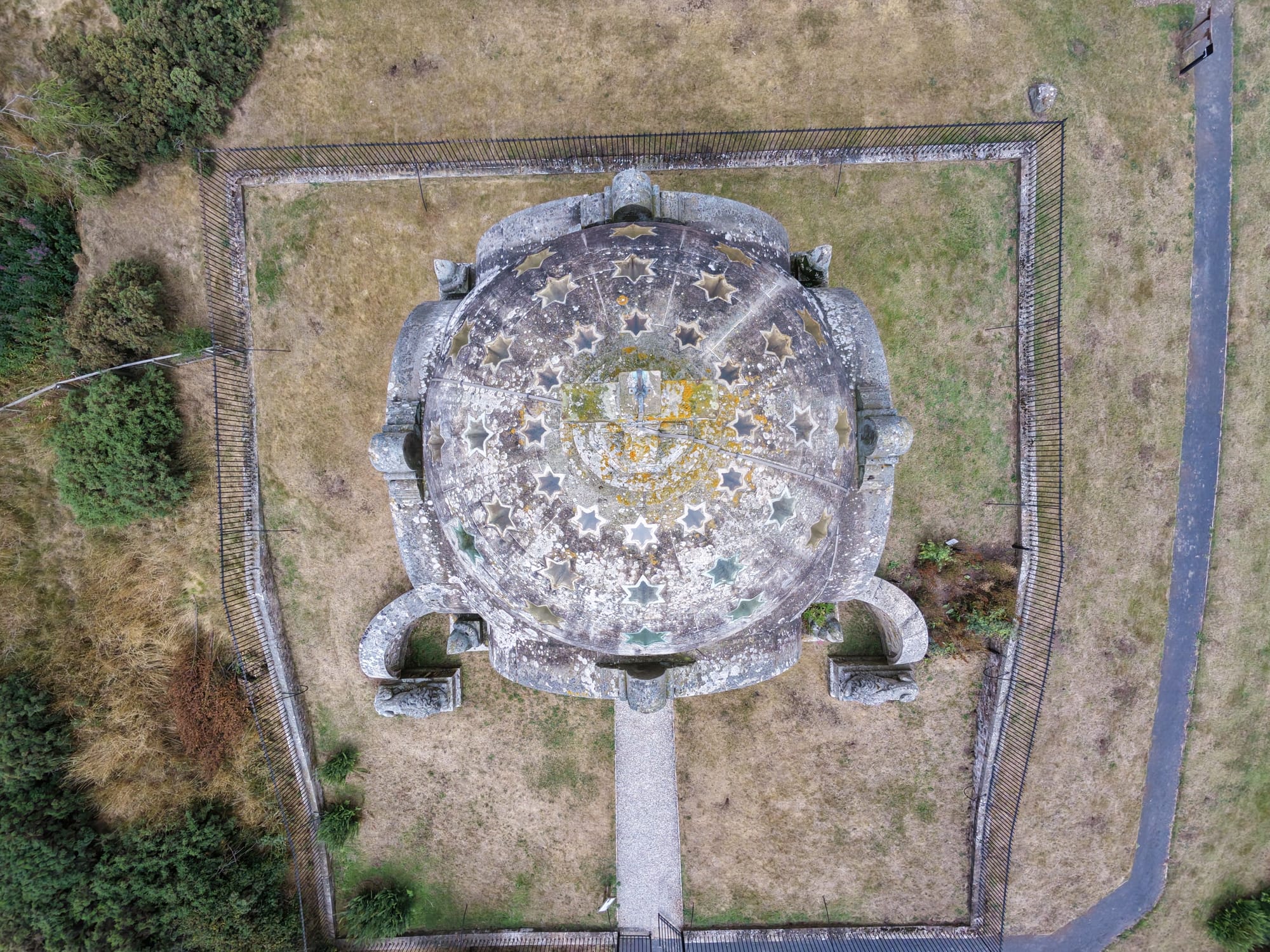
A recent drone flight across Gersit Law offered a stark reminder of how these structures dominate the topography, and how quietly the surrounding woodland and geography are reclaiming the ground right back.
The Landscape and the Monument
From an aerial perspective, the relationship between the monument and the earth shifts entirely. Standing alone on the skyline with stunning views stretching south to Peniel Heugh and the Cheviots, and north to the triple peaks of the Eildon Hills, the 20-meter-high structure acts as a deliberate, engineered intrusion into the natural contours of the valley. Nineteenth-century imperial commemoration wasn't just about marking a grave; it was about staking a permanent claim on the horizon, echoing the historic hierarchies carved into the borderlands where the Battle of Ancrum Moor was fought in 1545.
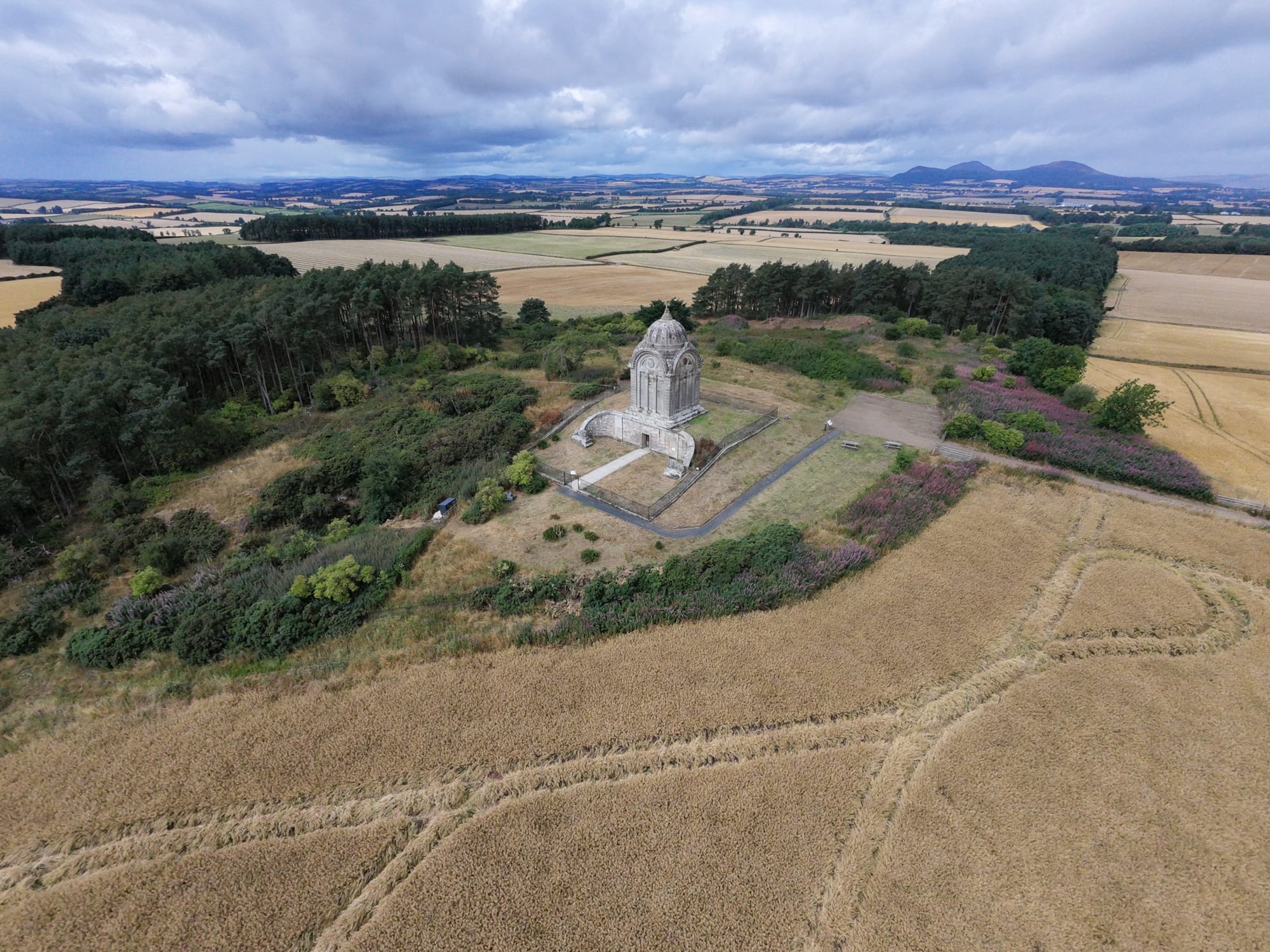
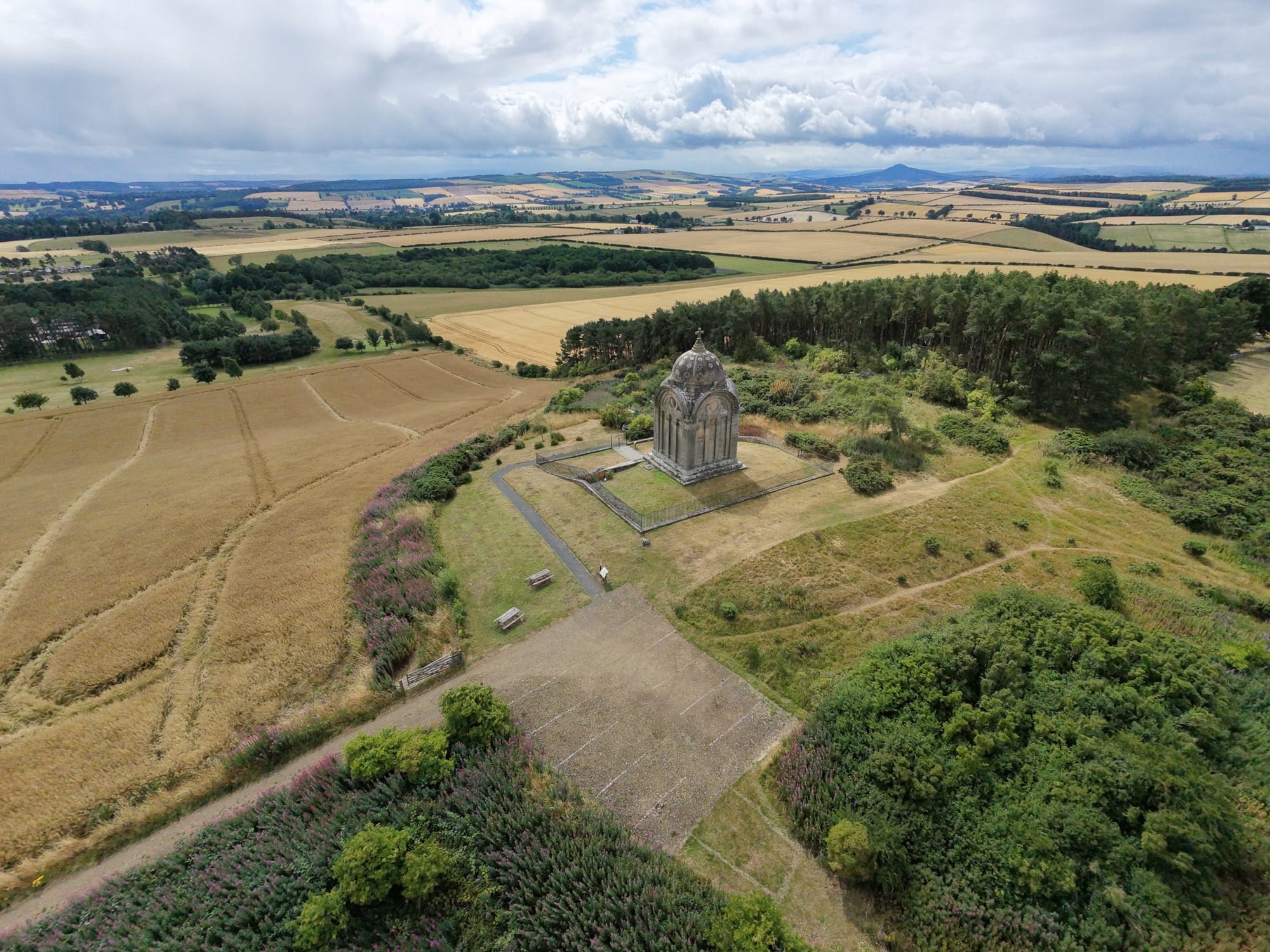
Yet, looking at the wider frame from the air, the surrounding trees and natural weathering tell a different story. The earth remains entirely indifferent to the posturing of the elite. Nature continues its slow, patient work, quietly softening the edges of stone permanence.
The Lion's Gaze and the Vacuum of the Man
At the threshold, the architectural narrative deepens: the entrance is guarded by two life-sized stone lions—one awake, and one, curiously, asleep. Inside the gloomy crypt, two huge sculpted angels stand guard by the tomb, beneath a star-studded, domed roof designed to filter pale green light into a chamber intended to be "locked for all time."
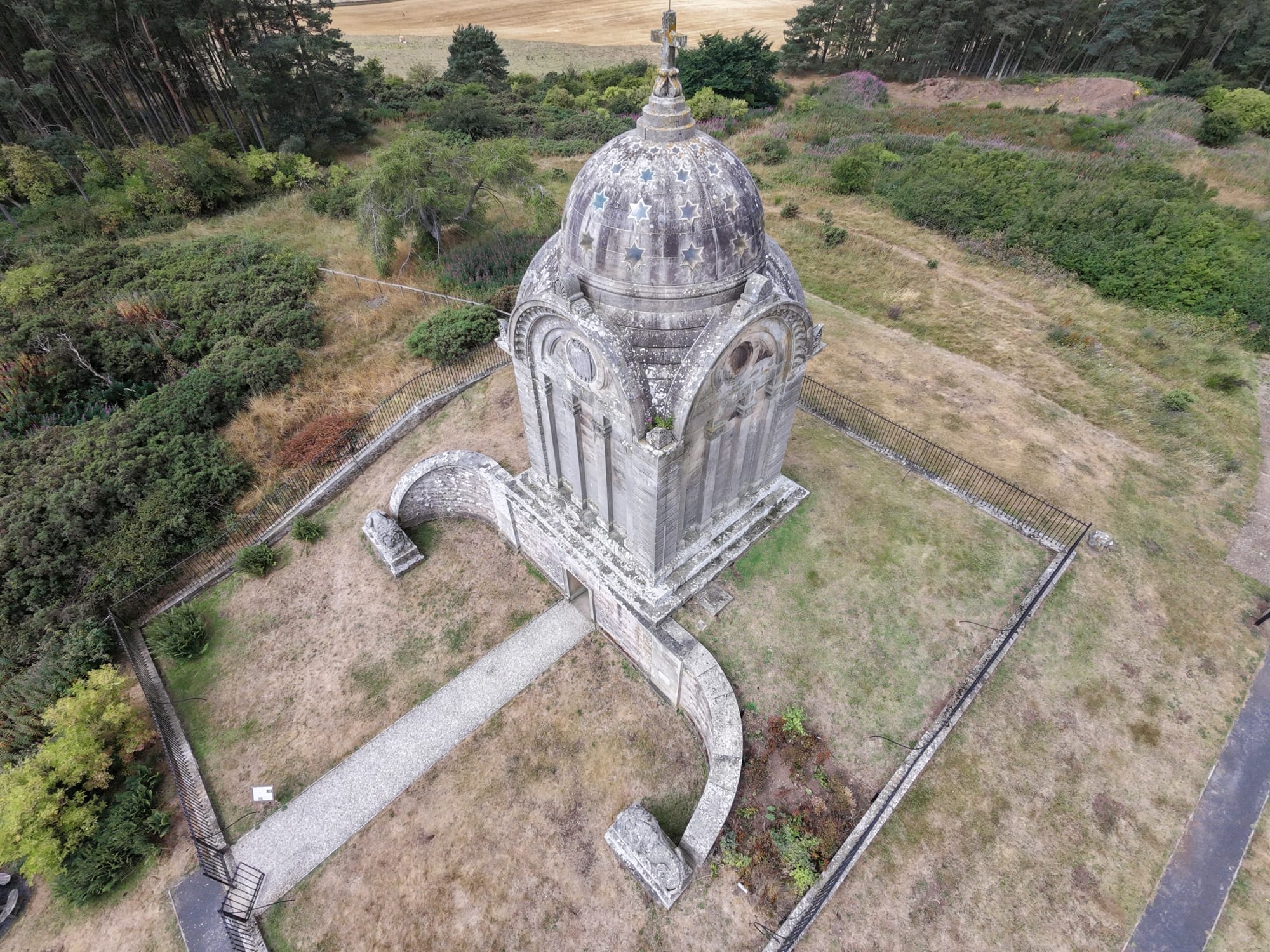
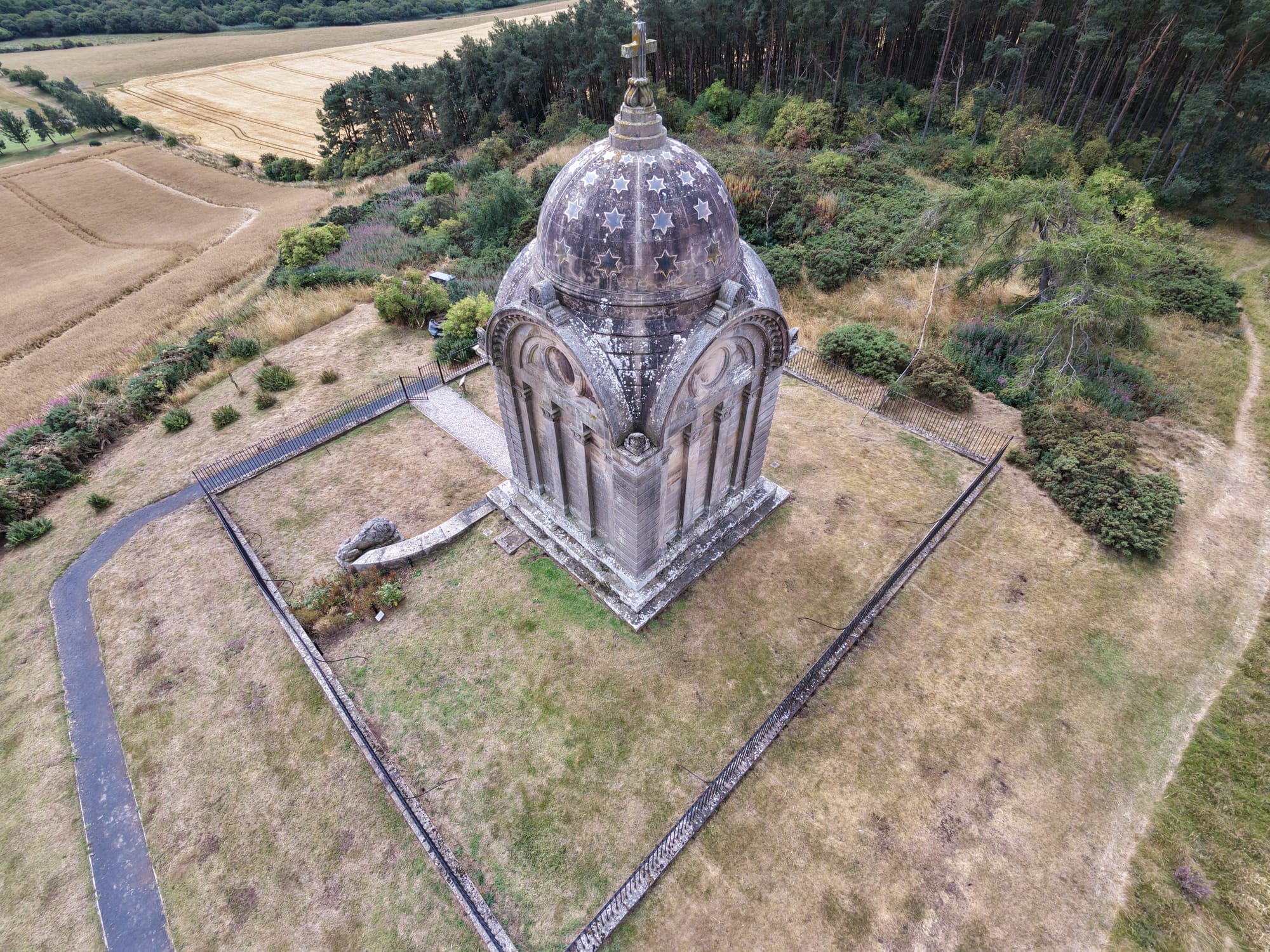
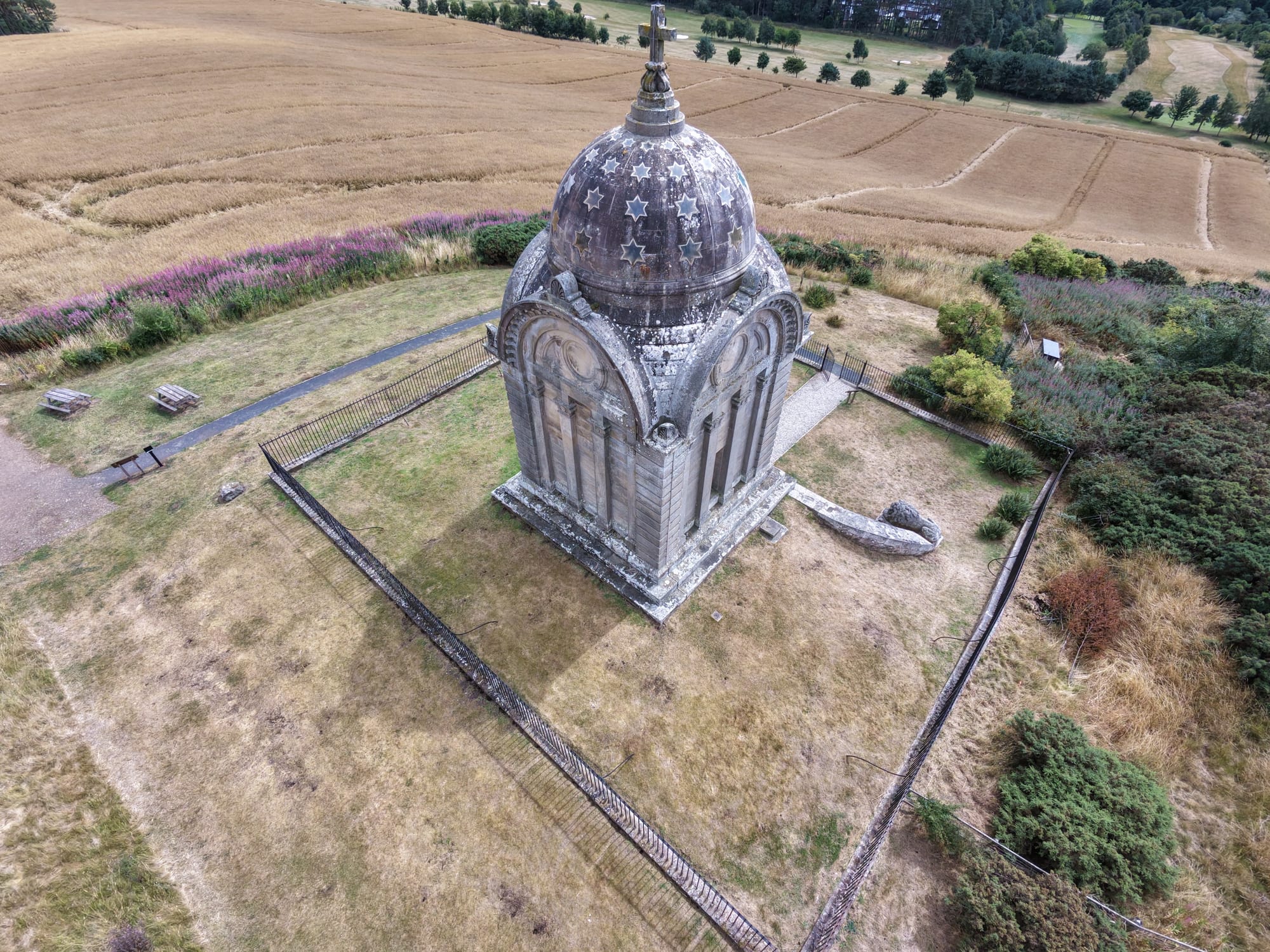
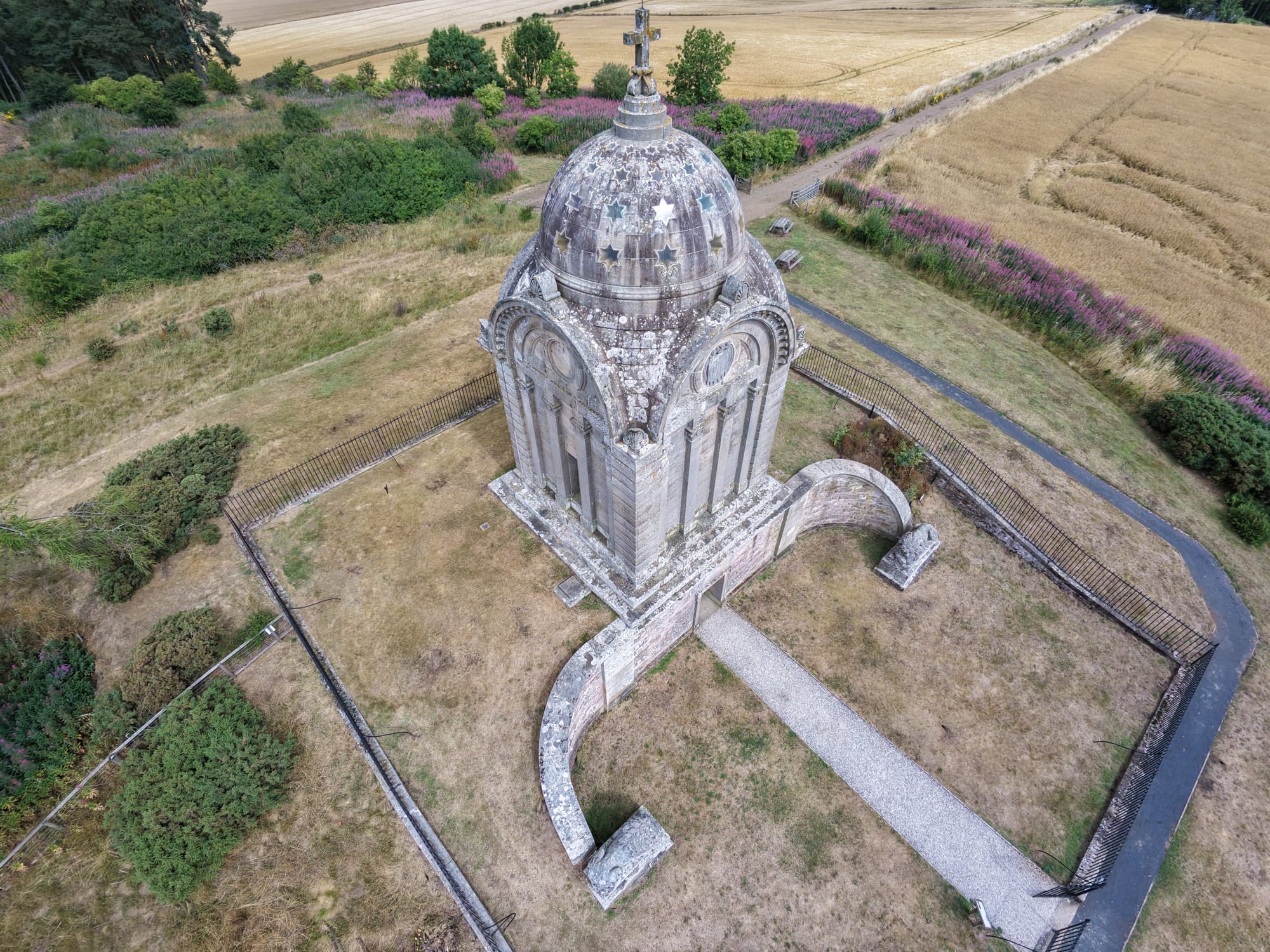
Meant to project unyielding strength and colonial authority, these details carry a profound irony. General Sir Thomas Monteath Douglas—the Bengal Infantry officer who amassed his fortune through labyrinthine colonial wills and was awarded the KCB—left behind no personal diaries, no memoir of his decades in India, and only a single formal portrait. He engineered an imposing stone fortress to project his legacy across the landscape for future generations to look upon with awe, yet the man himself remains an absolute vacuum.
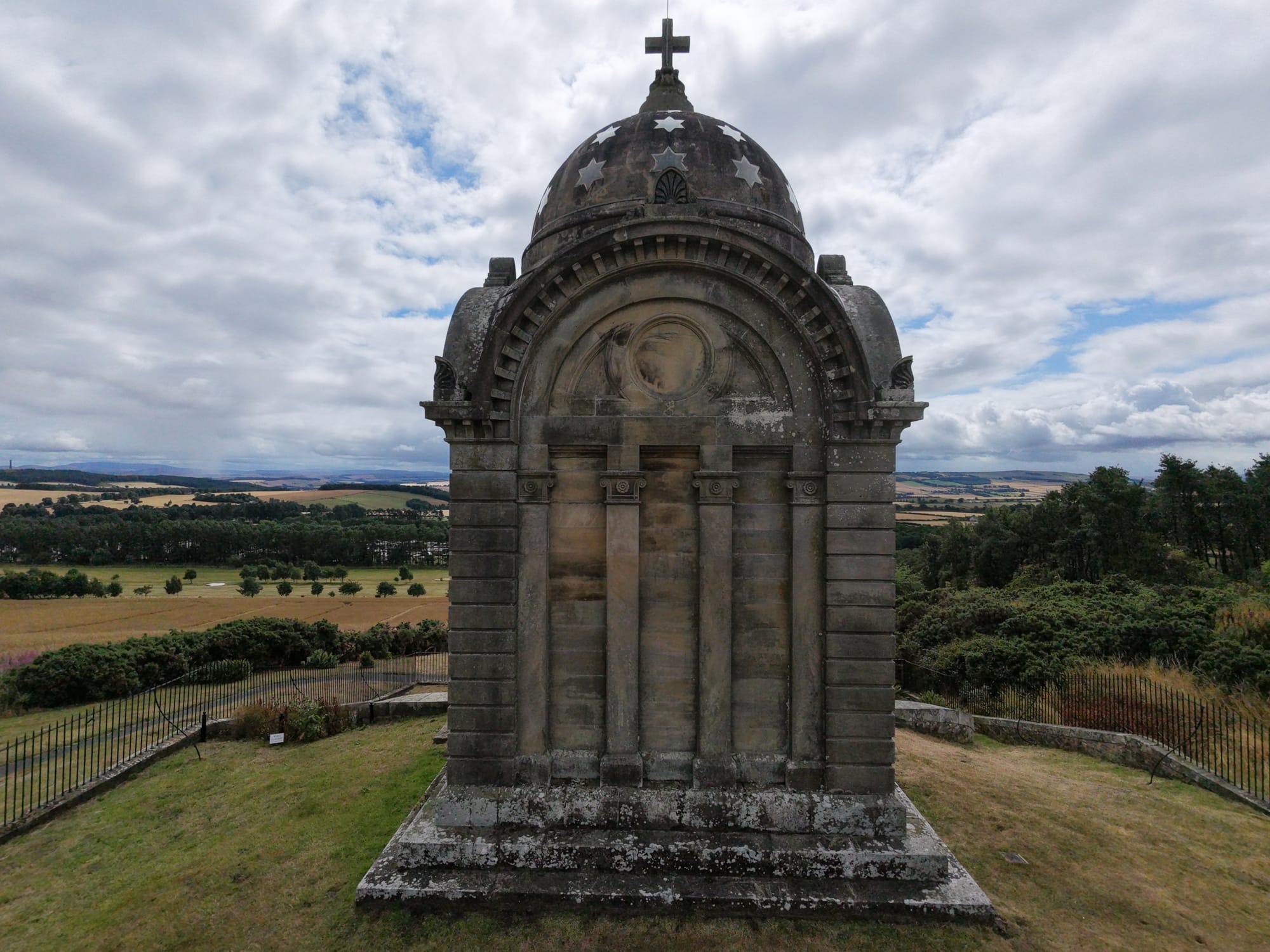
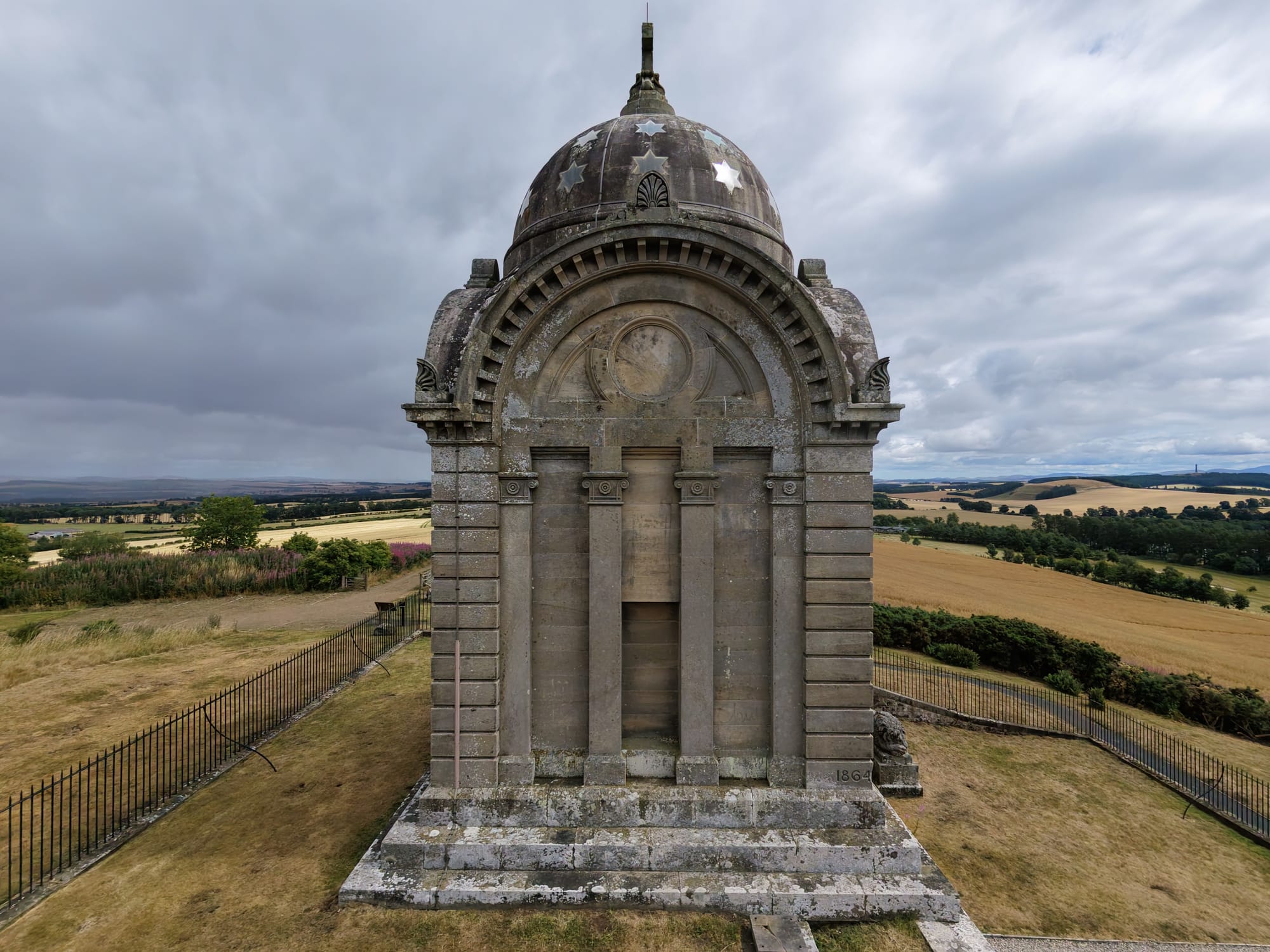
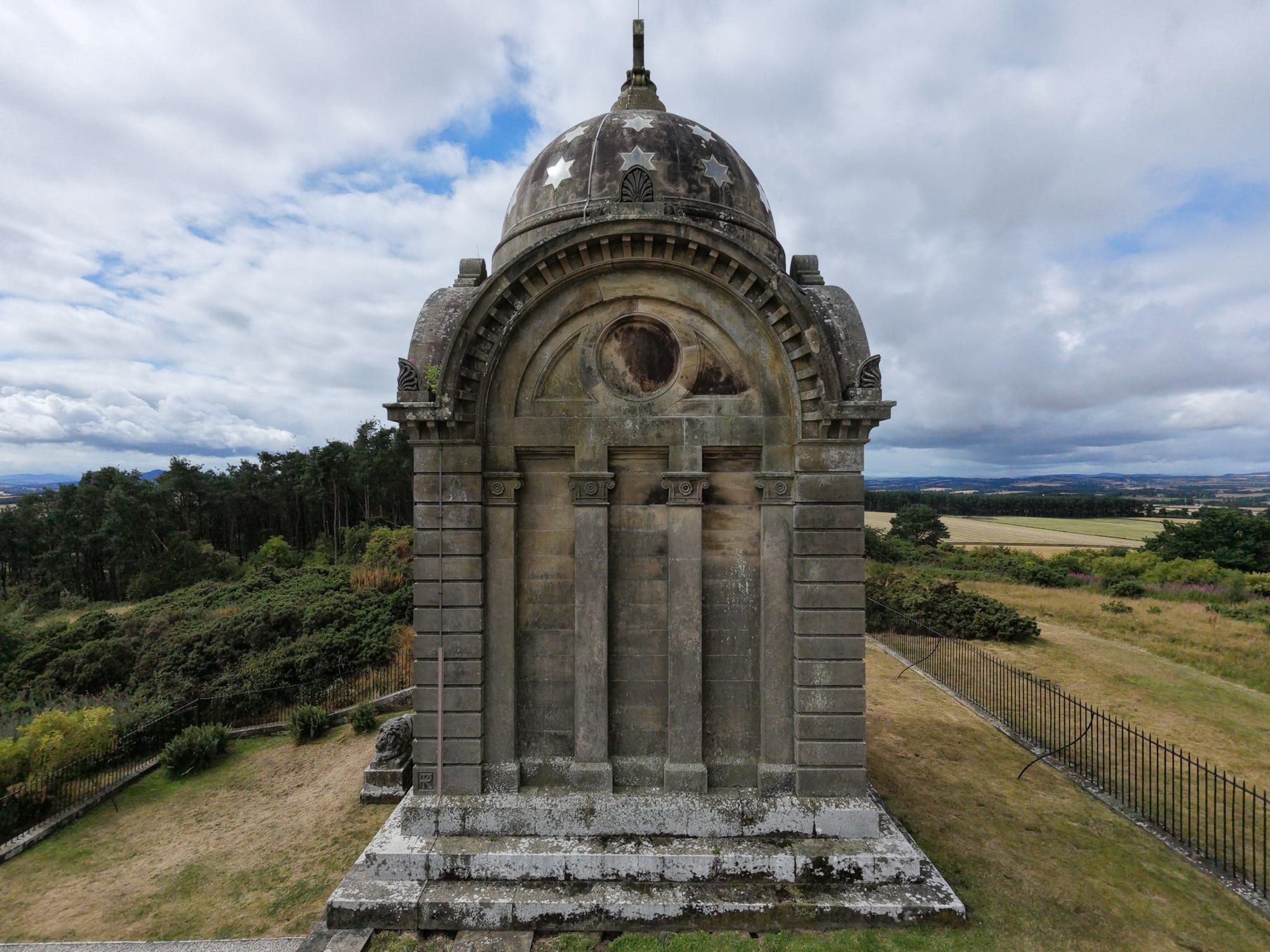
Even more striking is what history ultimately did to that sealed ambition: at some point, the tomb was broken into by intruders hunting for the fortune they assumed was buried with him, only to find the stone box empty and the vault stripped of any grand secrets.
Field Notes & Local Resonance
Standing at the site brings its own unscripted realities—navigating the weather, feeling the shift in the air, and recognising the layers of local folklore that cling to these stones. Thanks to the tireless restoration work by the Friends of the Monteath Mausoleum, who rescued the ivy-covered ruin from total obscurity and brought it back from the 'Buildings at Risk' register, the site has been given a second life. These architectural landmarks carry a dual weight: the explicit, heavy-handed intent of nineteenth-century imperial power, and the implicit, unintended poetry of their eventual decay and community reclamation.
Conclusion
As the infrastructure of the past sits exposed to the elements, capturing it from the air strips away the romanticism and lays bare the raw geometry of power, landscape, and the quiet persistence of the earth.