I. Ethical Commitment
Our inquiry operates as a foundational charter for the community we document. Our work is guided by:
- Focus on Public Space: Our activity takes place exclusively in public spaces. We recognise and uphold the fundamental right of public access and observation in these environments.
- GDPR Compliance & Data Privacy: We are mindful of our responsibilities under GDPR. Our research is focused on the social dynamics of transactions within public space. We are not interested in the personal details of individuals, any likenesses captured are used to analyse environments and social interactions, and we act with care to ensure the privacy and dignity of all individuals in the public sphere.
- Integrity of Observation: We document what occurs in public life without manufacture or staging.
- Procedural Transparency: We are open about our methodology. If you are curious about our work, we welcome respectful, evidence-based inquiry.
- Non-Interference: Our presence is documentary and analytical; we do not seek to disrupt or steer the events we study.
II. Legal Foundation of Inquiry
Our research is a direct exercise of the following fundamental rights:
- Article 10 (Freedom of Expression): Includes the right to hold opinions and to receive and impart information, including the right to document, film, and research public life.
- Article 11 (Freedom of Assembly): Protects the right to gather and observe collective life in public space.
These rights are essential to the functioning of a democratic society. Any interference with this research must be necessary and proportionate. Informal intimidation or the misuse of "public order" claims to prevent documentation should not be used to chill these protected freedoms.
III. Field Practice & Managing Confrontations
Why the "Externalised Rights" Strategy Works
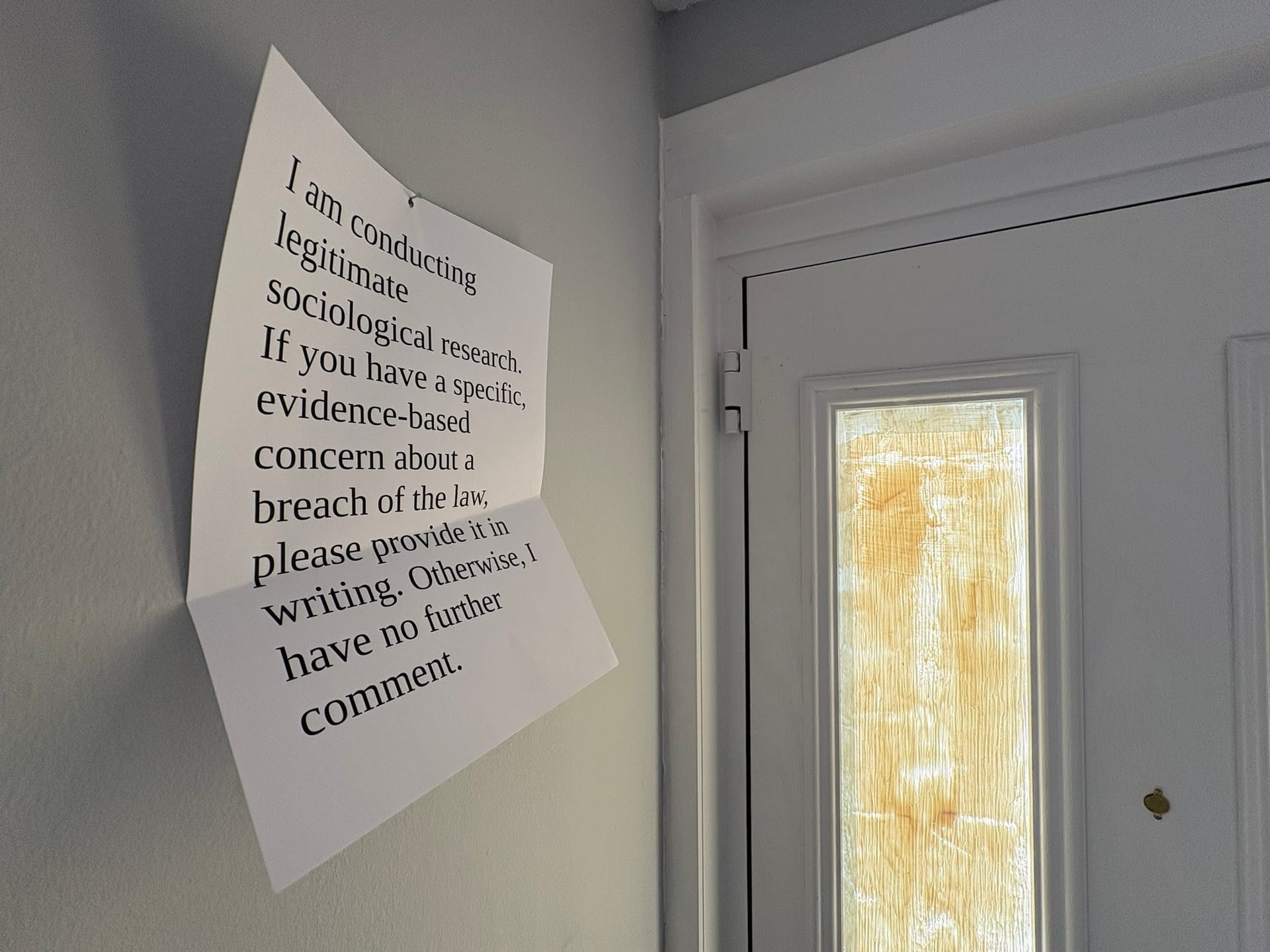
Putting your research basis and legal standing on a clear physical notice or card shifts the dynamic from personal argument to objective reference. Instead of debating motives on the spot, observers and authorities can read the terms plainly—reducing misunderstanding, keeping encounters grounded, and establishing a clear record of what was communicated.
Managing Field Confrontations
When approached, challenged, or questioned in the field, we follow a calm, consistent approach:
- Stay calm and steady: Keep your posture open, your voice even, and your focus on de-escalation rather than matching hostility.
- Point to the printed protocol/notice: Direct the person to the clear written statement of legitimate sociological research and public-space observation so the terms are visible and unambiguous.
- Hold clear boundaries without escalation: State plainly that you are conducting lawful observation in public space, avoid getting drawn into personal or heated back-and-forth, and disengage or move on if a situation becomes unsafe or unconstructive.
IV. Downloadable Field Resources
Below are the printable notices, pocket cards, and reference sheets used in the field. You can print, carry, or adapt them for your own public-space documentation.
V. Disclaimers & Operational Context
The information provided here is for academic and informational purposes only and does not constitute formal legal advice. Laws regarding access and documentation are context-dependent; if you are uncertain about your standing in a specific situation, verify it with official guidance or legal professionals.