Out in the Scottish Borders and across the Kielder Forest borderlands, mobile phone coverage is less a utility and more a rumour. Step off a ridge or drop into a valley floor, and the glowing slab in your pocket becomes an expensive paperweight.
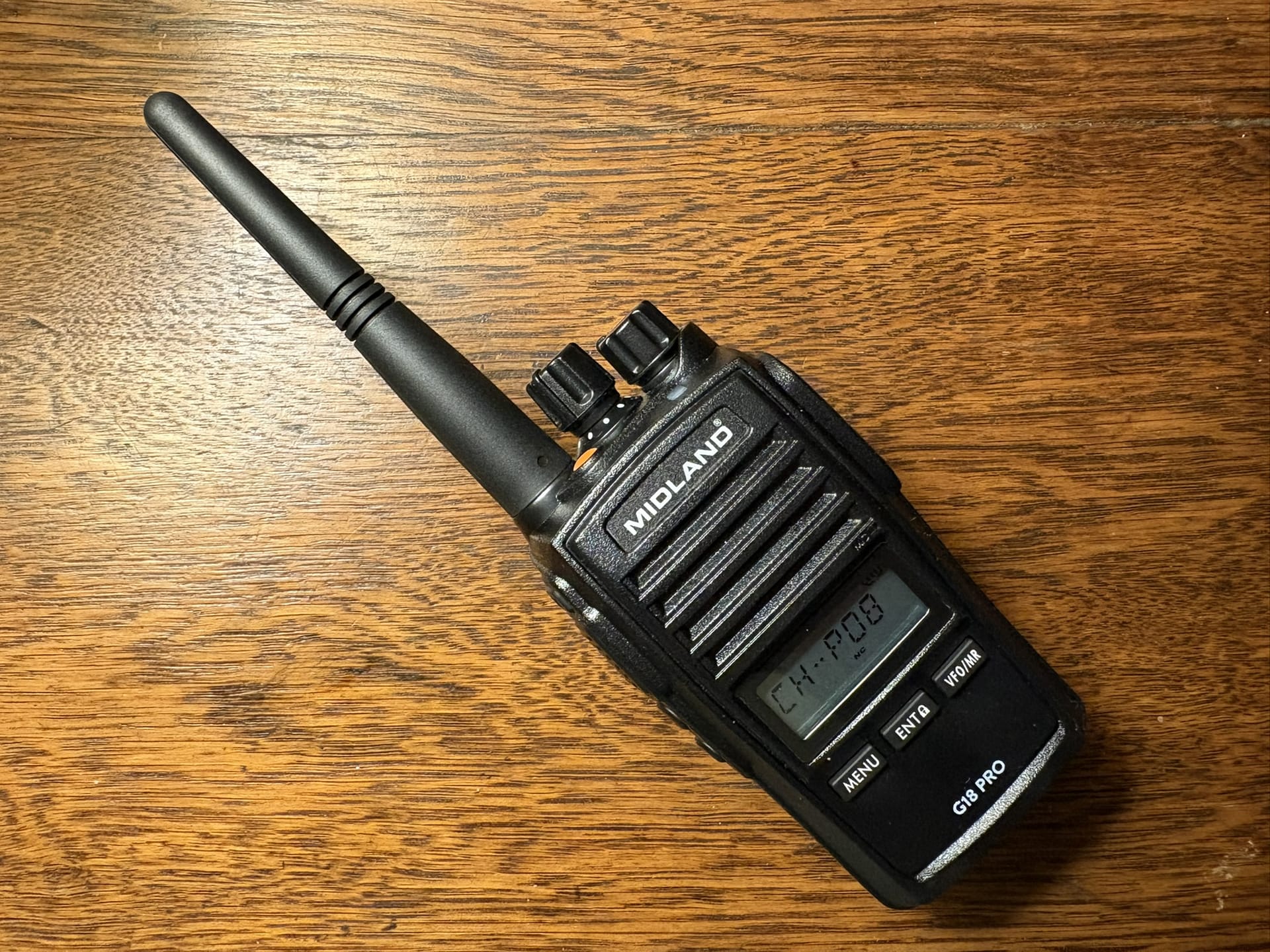
When Charlie and I headed out to Roughside Bothy in Kielder Forest to film "Roughside Bothy + Off-Grid PMR446 Radio", we took two license-free PMR446 handhelds to put through real-world paces: the commercial-grade Midland G18 Pro NC and the recreational Midland G9 Pro. Out of roughly 150 to 300 distinct PMR446 models currently on the UK and European market, these two represent a telling split in how modern outdoor gear is designed—and how we have come to think about open communication.
The Irony of the Bigger Screen
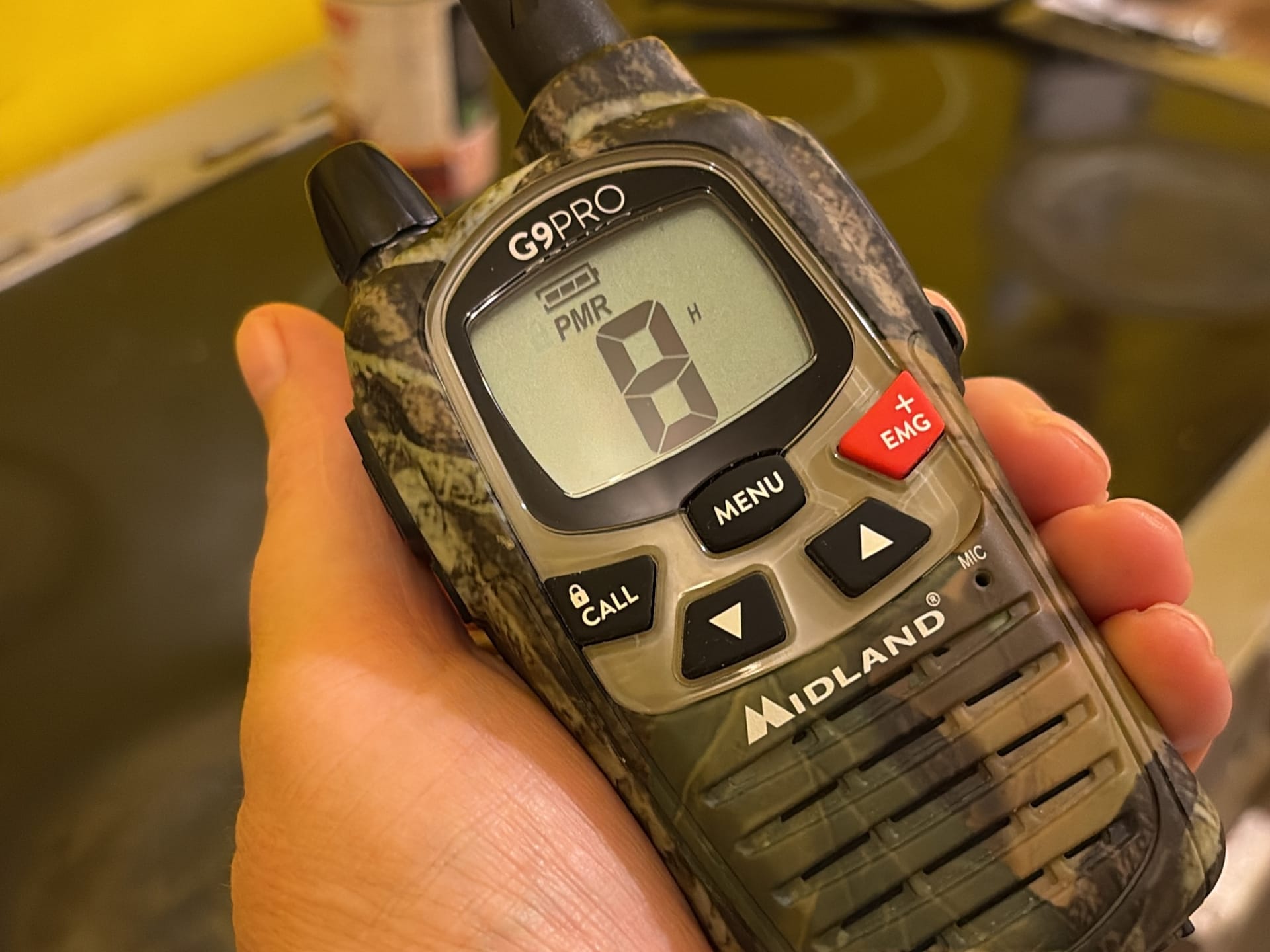
On paper, the Midland G9 Pro looks like the approachable, user-friendly choice. It takes four standard AA Ni-MH rechargeable batteries—useful if you want to carry spare cells in a rucksack—and sports a generous, oversized display.
In the field, however, the G9 Pro reveals a classic trap in consumer product design. Rather than using that extra screen real estate to spell things out cleanly in plain text, Midland crammed the display with every conceivable status icon around the edges at once, paired with a single-button icon-and-number cycle menu and no proper adjustable squelch control. Even its desktop charger keeps a red LED lit permanently whether the batteries are full or not, leaving you watching the blinking bars on the handset's own LCD to guess when a 14-hour trickle charge is finished.
Meanwhile, the smaller, commercial-grade Midland G18 Pro NC—built with an IP67 dust- and waterproof chassis, MIL-STD-810G durability, built-in noise cancelling, and a steady Li-ion pack that holds its voltage far better in cold weather—has a much smaller screen. Because space was tight, the designers kept the main readout clean and used short, readable text labels (SQL, VOX, SCAN) in the menu. Once configured, it behaves like a calm, predictable tool.
Hardware makers would have been wiser to take a Doro approach to outdoor and community radio: high-contrast displays, plain words instead of cryptic symbols, tactile controls you can operate with cold hands, and nothing on the screen that does not need to be there.
Who Gets Left Behind by App-Only Resilience
That simplicity matters far beyond hillwalking and farm work. In rural communities, elderly neighbours and relatives are routinely nudged toward smartphones and app-based check-ins that rely on fragile masts, monthly contracts, and touchscreens hostile to arthritic fingers or failing eyesight.
A stripped-back, Doro-style PMR446 handset—set to a fixed channel with a physical volume knob and a single push-to-talk button—offers something a mobile network cannot: zero ongoing cost, zero menus to navigate, and instant voice contact across a village or farmstead when a landline is out or a mobile has no signal.
Why Are We Suddenly Afraid of Analogue?
Whenever open two-way radio comes up today, the immediate objection is almost always privacy: "Anyone within range can listen in."
There is a striking cultural irony here. Back in the 1970s and 80s, CB radio was completely open, unencrypted analogue, yet nobody treated the medium itself as an inherent threat. People understood what kind of room they were stepping into. You used a handle instead of your legal name, kept home addresses and daily routines off the air, and treated an open frequency as the electronic equivalent of talking across a garden fence or a village square.
What has changed is not the physics of radio waves, but how digital culture has conditioned us:
- The illusion of the private bubble: Encrypted messaging apps have trained people to expect every conversation to take place inside a locked, one-to-one room. Stepping onto an open analogue frequency feels jarring simply because we have forgotten how public space works.
- Strangers framed as default threats: Decades of online stranger-danger narratives have eroded everyday social trust. An unknown voice breaking in on a channel is no longer assumed to be a neighbour, a lorry driver, or another walker—it is immediately imagined as an intruder.
- Forgotten radio etiquette: Because fewer people grow up around open-air comms, basic habits—using call signs, keeping broadcasts brief, and never sharing vulnerable personal details on an open channel—have quietly faded.
Choosing the Right Room
Open analogue PMR446 still does something no closed app can replicate: on a hillside in bad weather, or during a local power cut, you want anyone within range to hear a call for help.
At the same time, when communication involves a vulnerable or elderly person sharing daily routines, health updates, or living alone, safeguarding concerns are entirely valid. That is where digital PMR446 (dPMR446 / DMR Tier 1) bridges the gap—keeping the license-free, mast-independent reliability of walkie-talkies while supporting group call IDs, clearer audio at the edge of range without loud static hiss, and protection against casual scanning.
Whether analogue or digital, off-grid radio is a reminder that resilience does not require complexity. Sometimes the most reliable technology is the one that strips away the clutter, ignores the network, and lets two people simply speak.