
Rubers Law, often called Ruberslaw by locals, is a well-known conical hill in the Scottish Borders of southeast Scotland. It sits on the south bank of the River Teviot, between Hawick and Jedburgh, just south of Denholm.
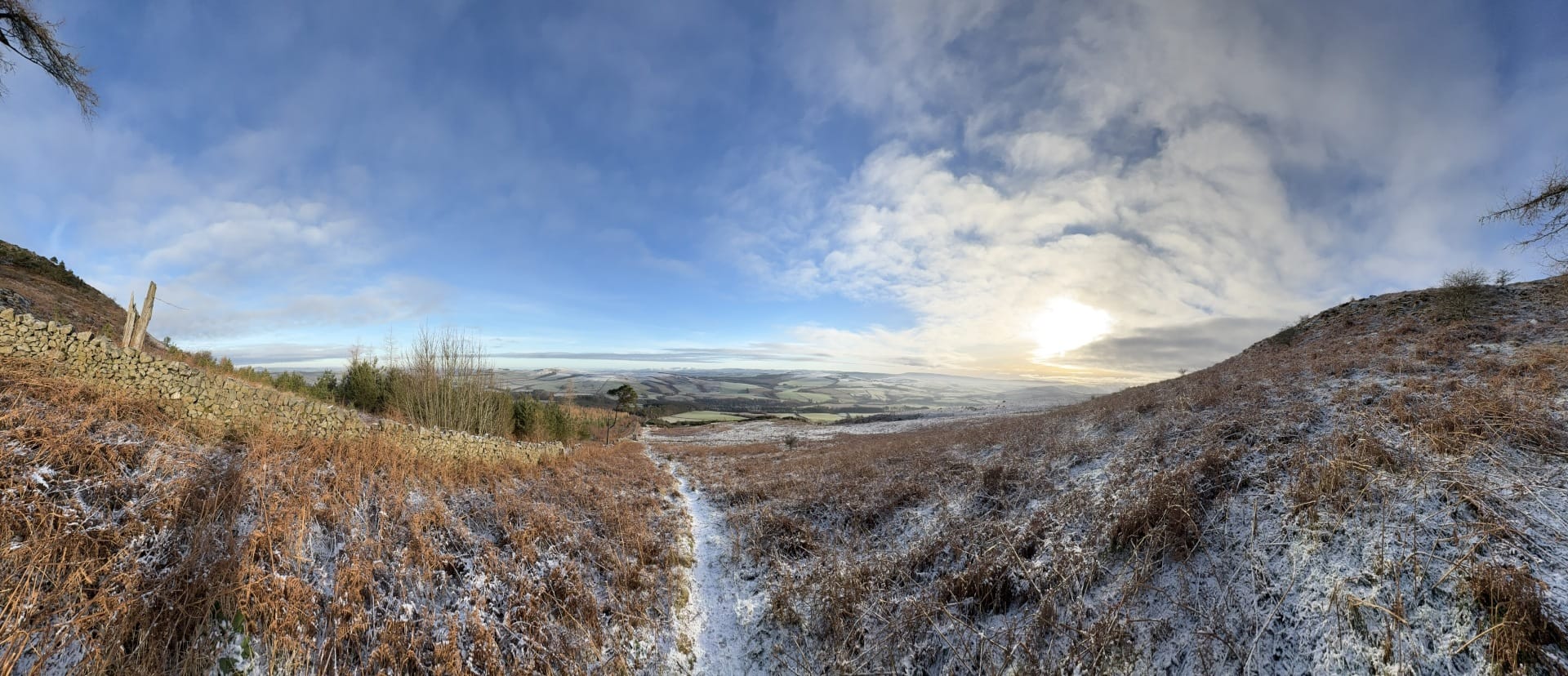
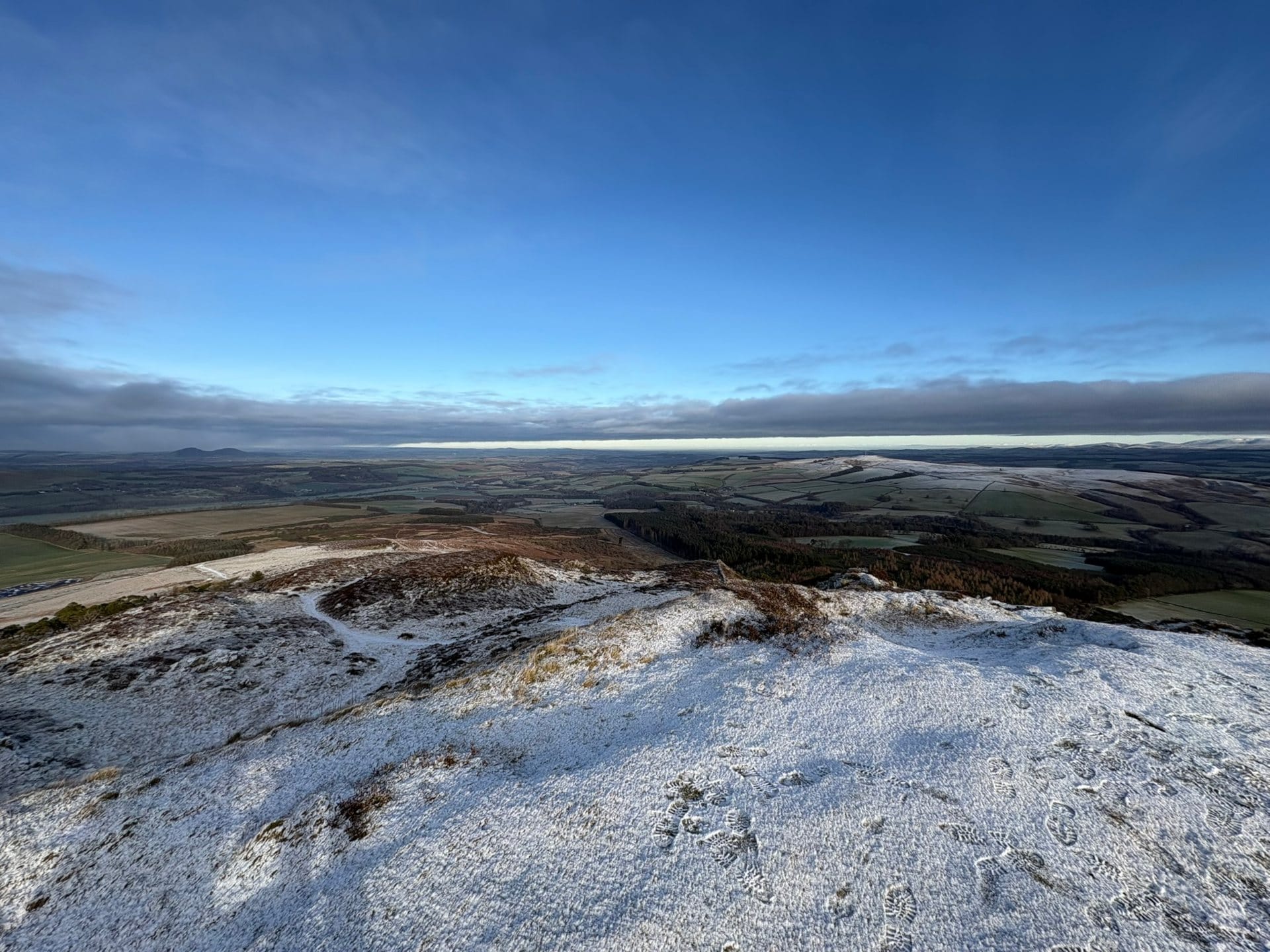
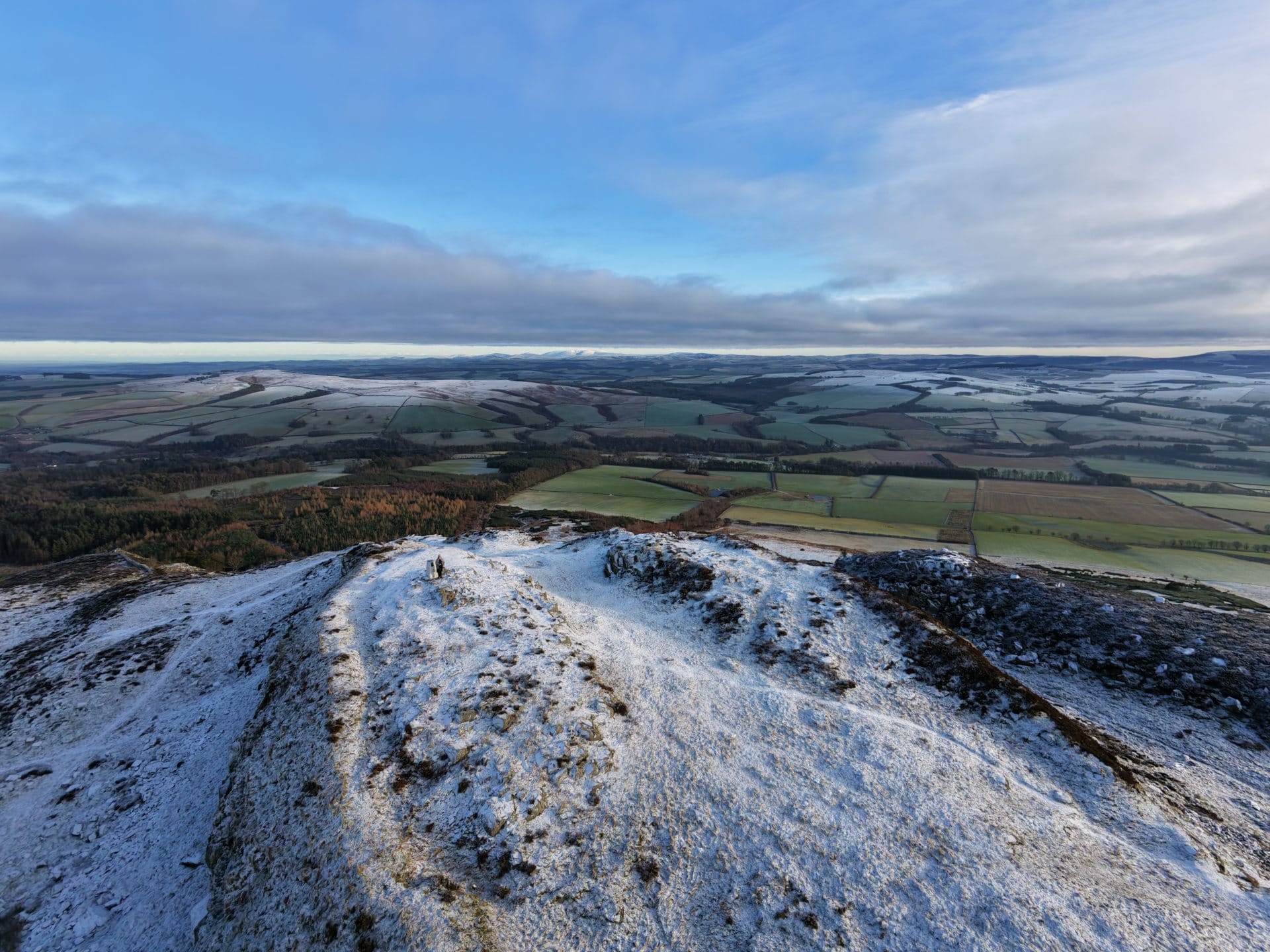
Several walking routes lead to the rocky summit, which offers panoramic views. The summit rocks are remnants of a volcano formed by an eruption during the Carboniferous Period, about 330 million years ago.
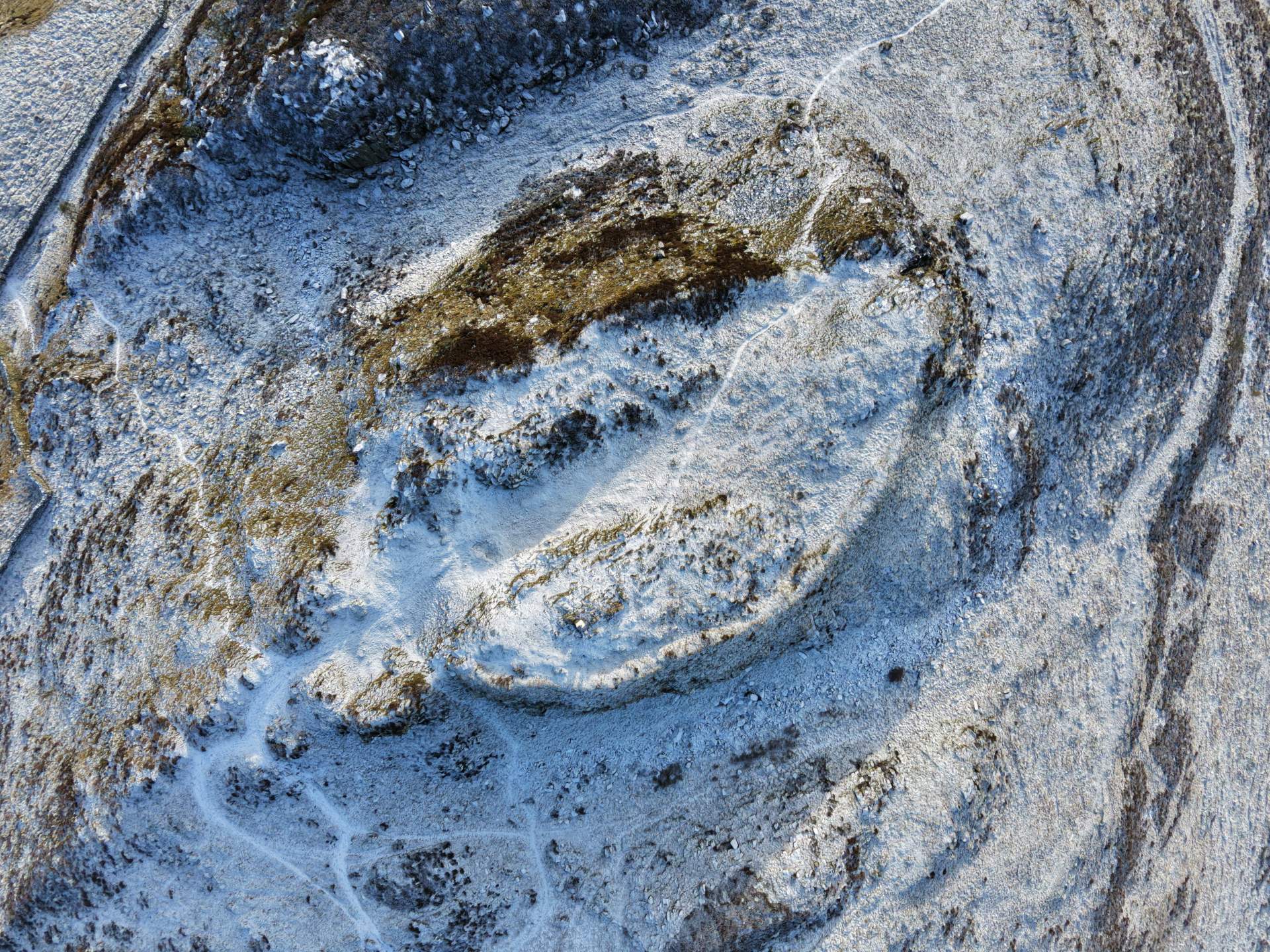
Near the summit, you can find the remains of several historical structures. These include an Iron Age hill fort, a Roman signal station, and a "nuclear fort" from the Early Middle Ages.
In south-east Scotland, particularly in Lothian and The Borders, 'Law' commonly refers to a hill. The term derives from the Anglo-Saxon word hlāw, meaning tumulus or hill. The origin and meaning of 'Rubers,' the first element of the name, remain unknown.
The Scottish romantic poet Dr John Leyden (1775-1811), who was born in Denholm, described going up Rubers Law in his poem Scenes of Infancy (1803).
Dark Ruberslaw, that lifts his head sublime,
Rugged and hoary with the wrecks of time!
On his broad misty front the giant wears
The horrid furrows of ten thousand years;
His aged brows are crowned with curling fern,
Where perches, grave and lone, the hooded Erne,
Majestic bird! by ancient shepherds stiled
The lonely hermit of the russet wild,
That loves amid the stormy blast to soar,
When through disjointed cliffs the tempests roar,
Climbs on strong wing the storm, and, screaming high,
Rides the dim rack, that sweeps the darkened sky.
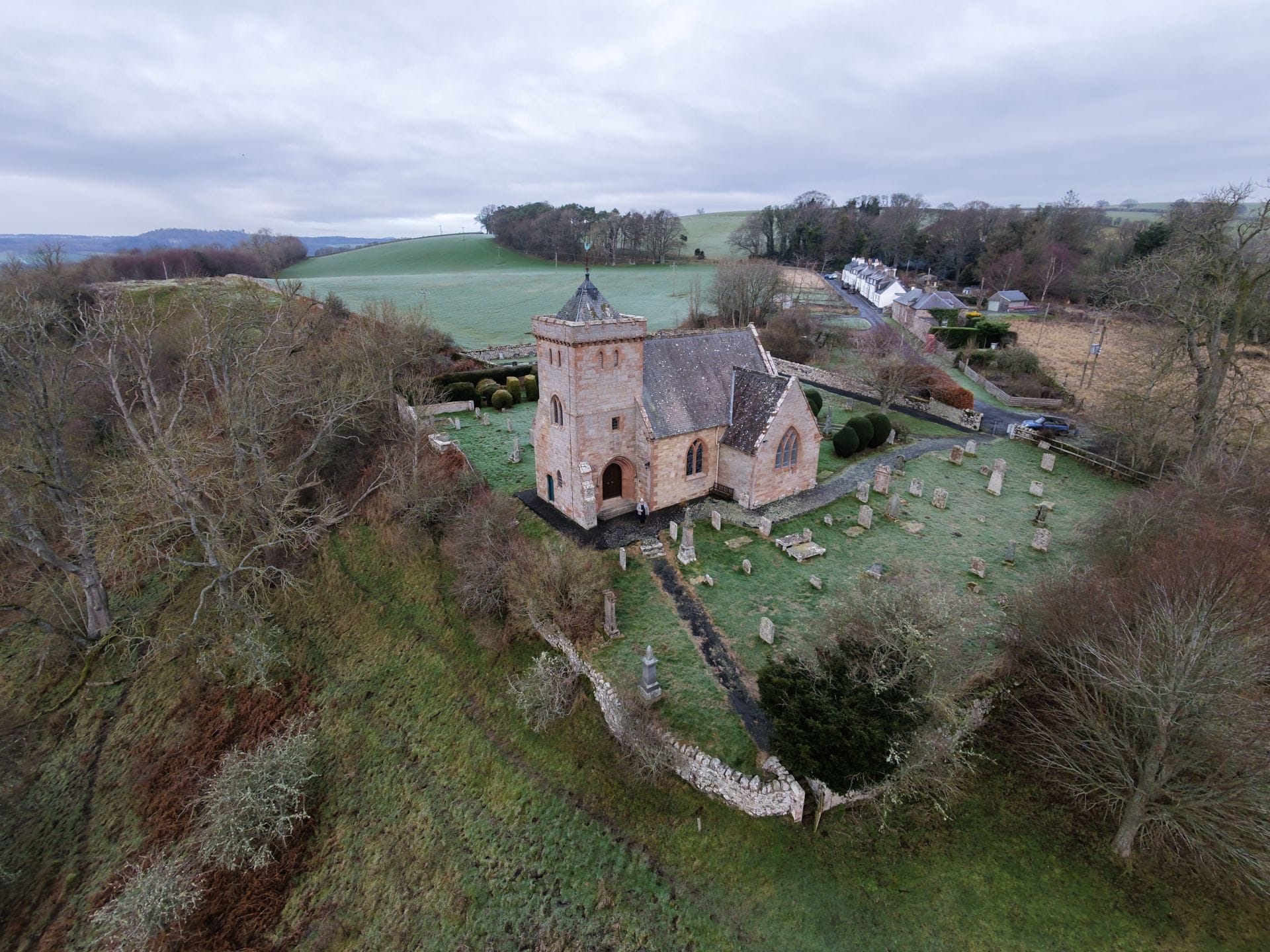
Bedrule is a hamlet and civil parish in historic Roxburghshire, within the Scottish Borders. It is located on the east side of the Rule Water, about 4 miles west of Jedburgh. The village takes its name from the river.
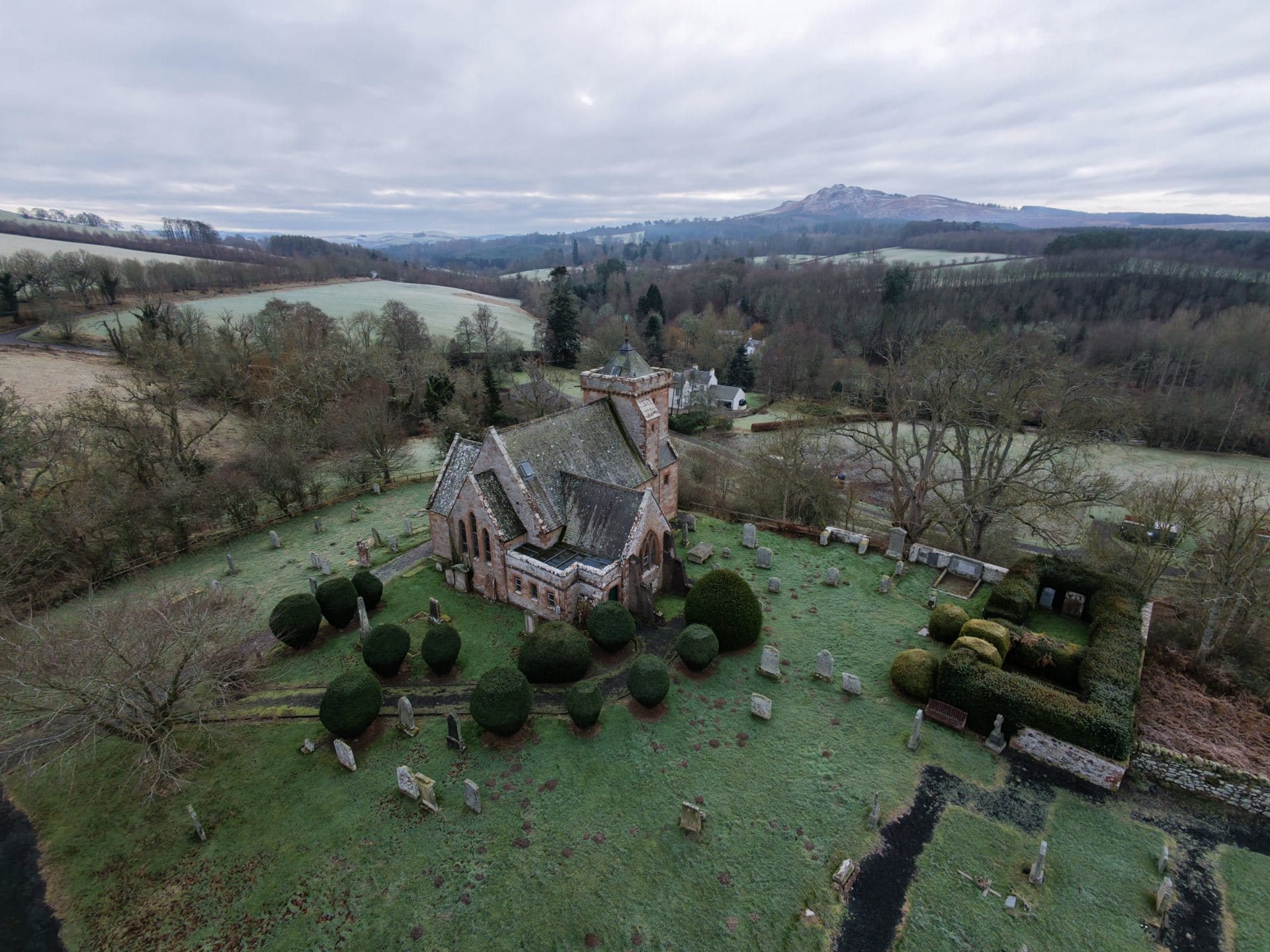
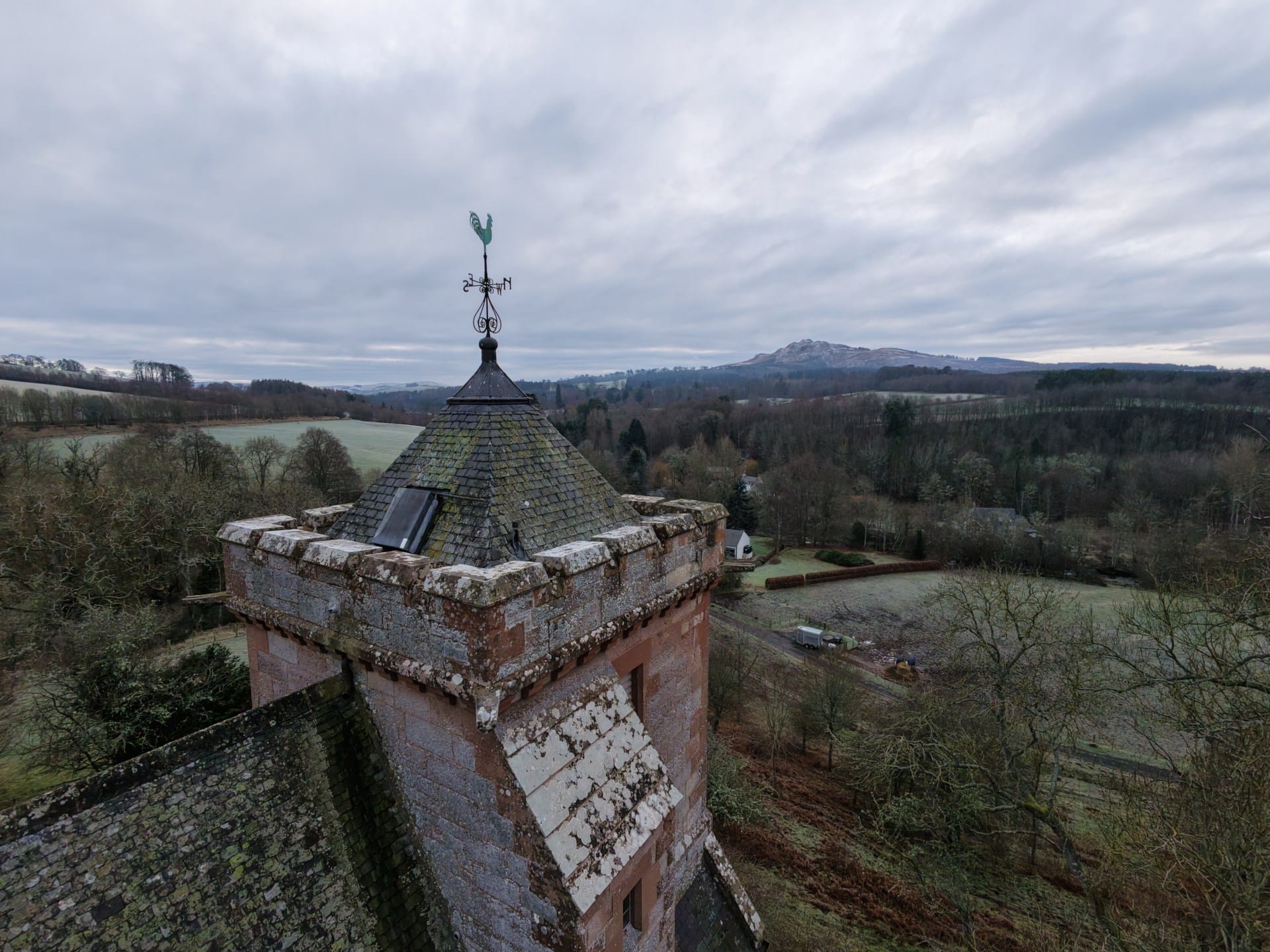
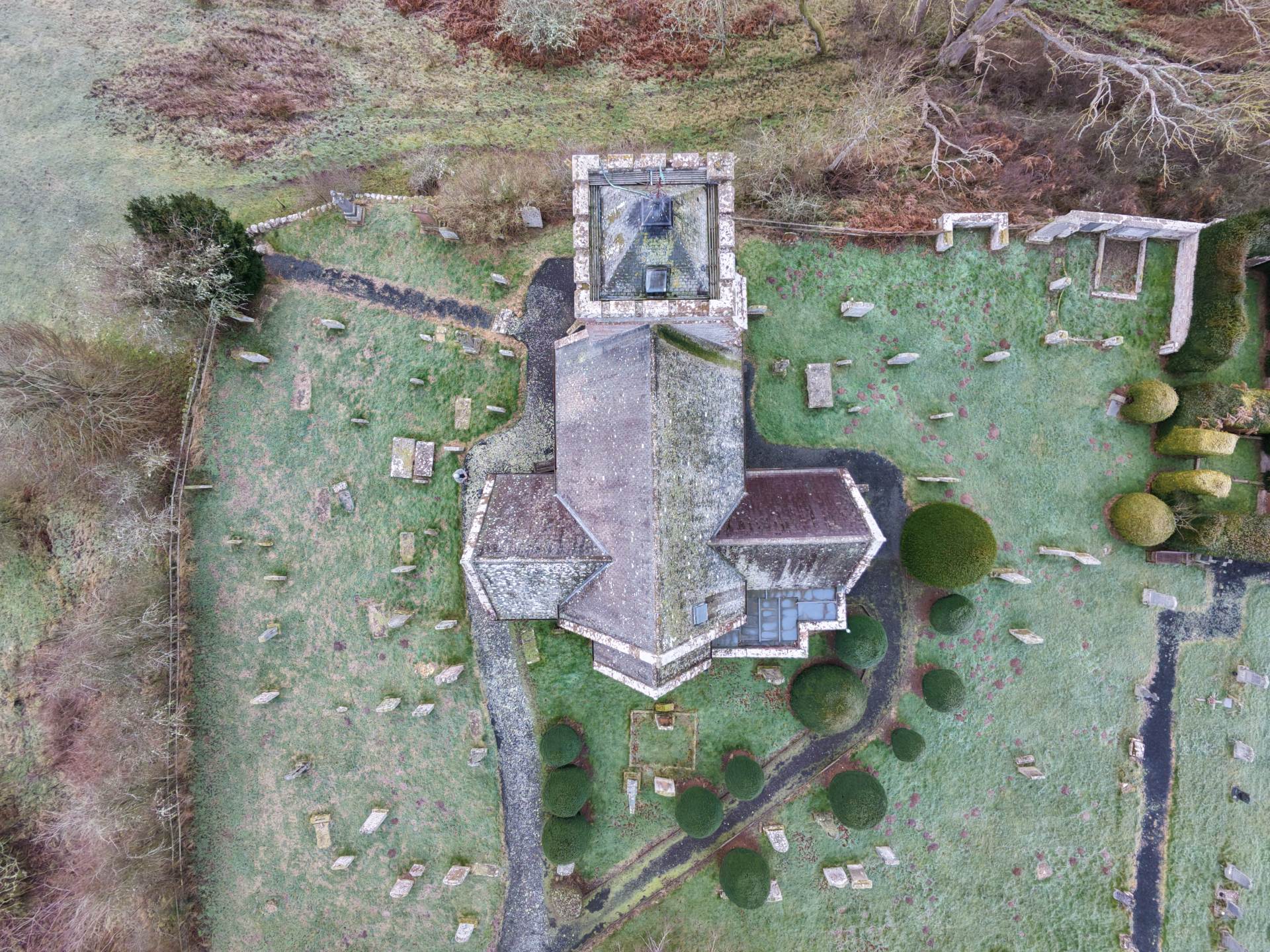
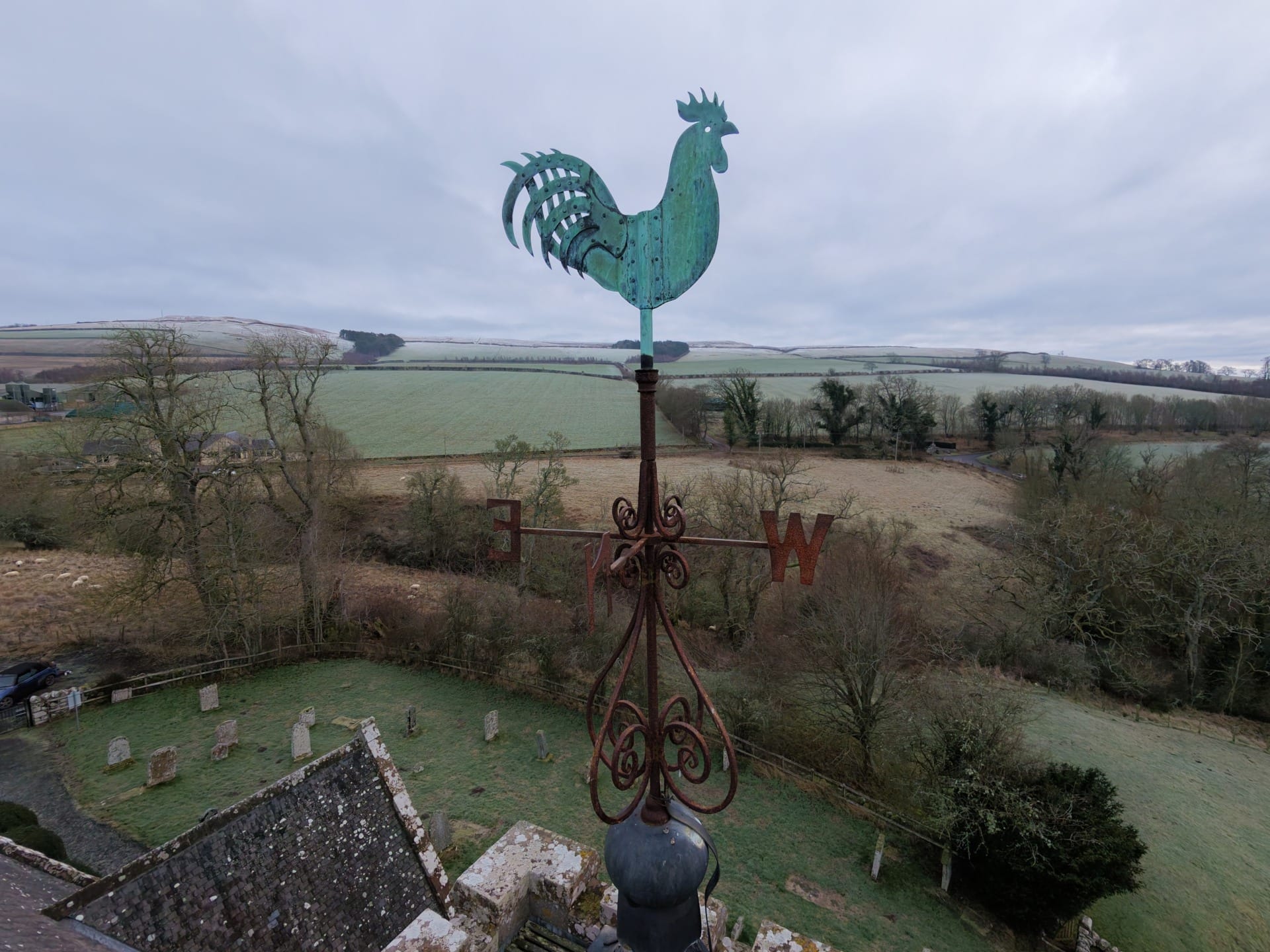
The church underwent external remodelling in 1803 and internal renovations by Thomas Greenshields Leadbetter in 1914, when additional sections were added to form a cruciform plan. The stained glass features work by Douglas Strachan. The church is located on the southern edge of the village, with the manse situated approximately 100 meters to the south-west.