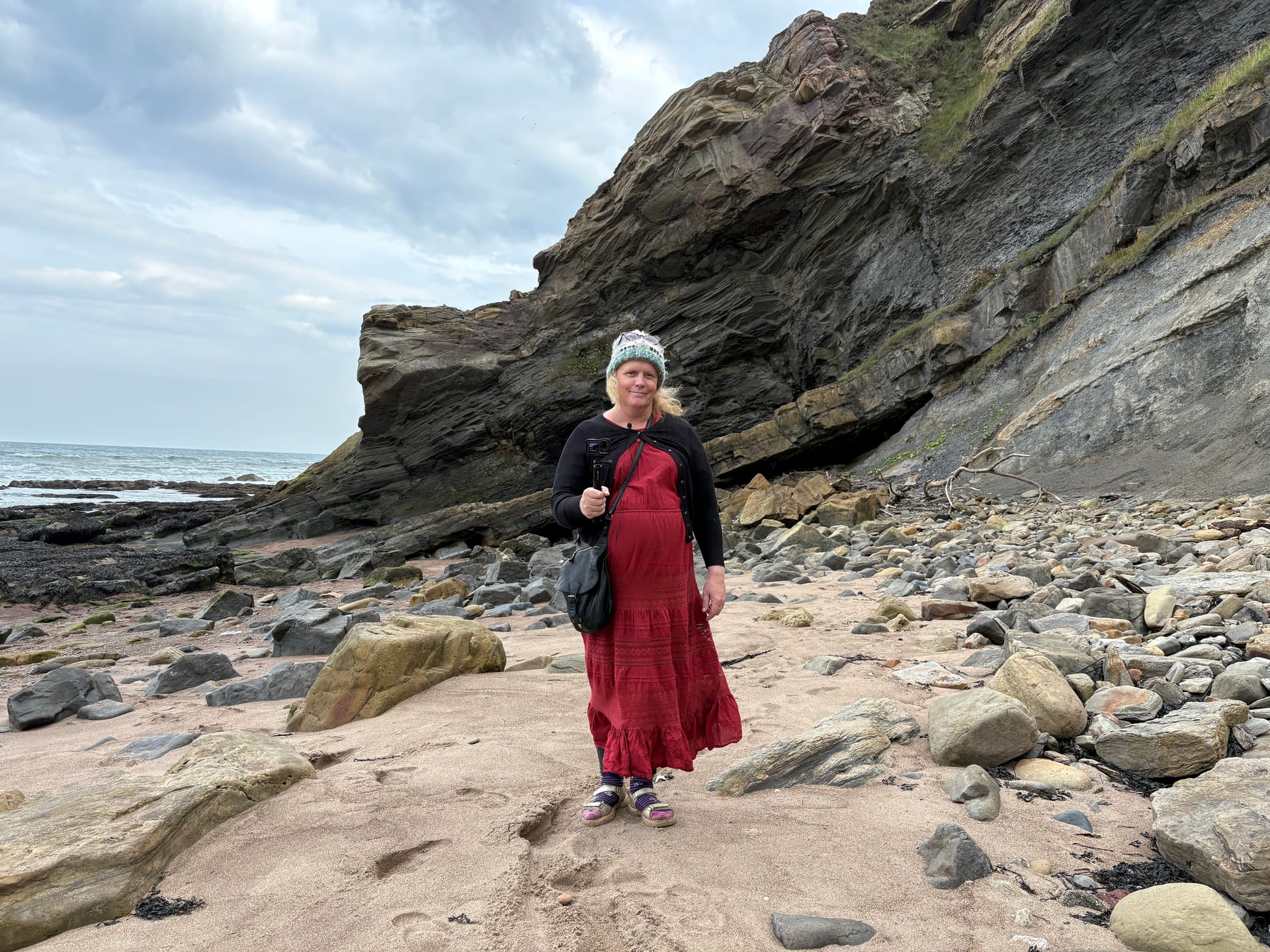
I was born in Loughborough and raised in Shepshed, Coalville, and Leicester. My childhood was difficult. From the time I was four until I turned eleven, I was raised by my mother, who was a single parent and struggled with paranoid schizophrenia. My father worked as a printer’s clerk at Ladybird Books. While he was there, he wrote a children’s book called “Flying Models.”. Between the ages of 11 and 15, I was a full ward of the court and lived with foster parents and in children's homes. My only brother hasn’t spoken to me in 14 years, and I don’t have any contact with the rest of my family, they've completely snubbed me.
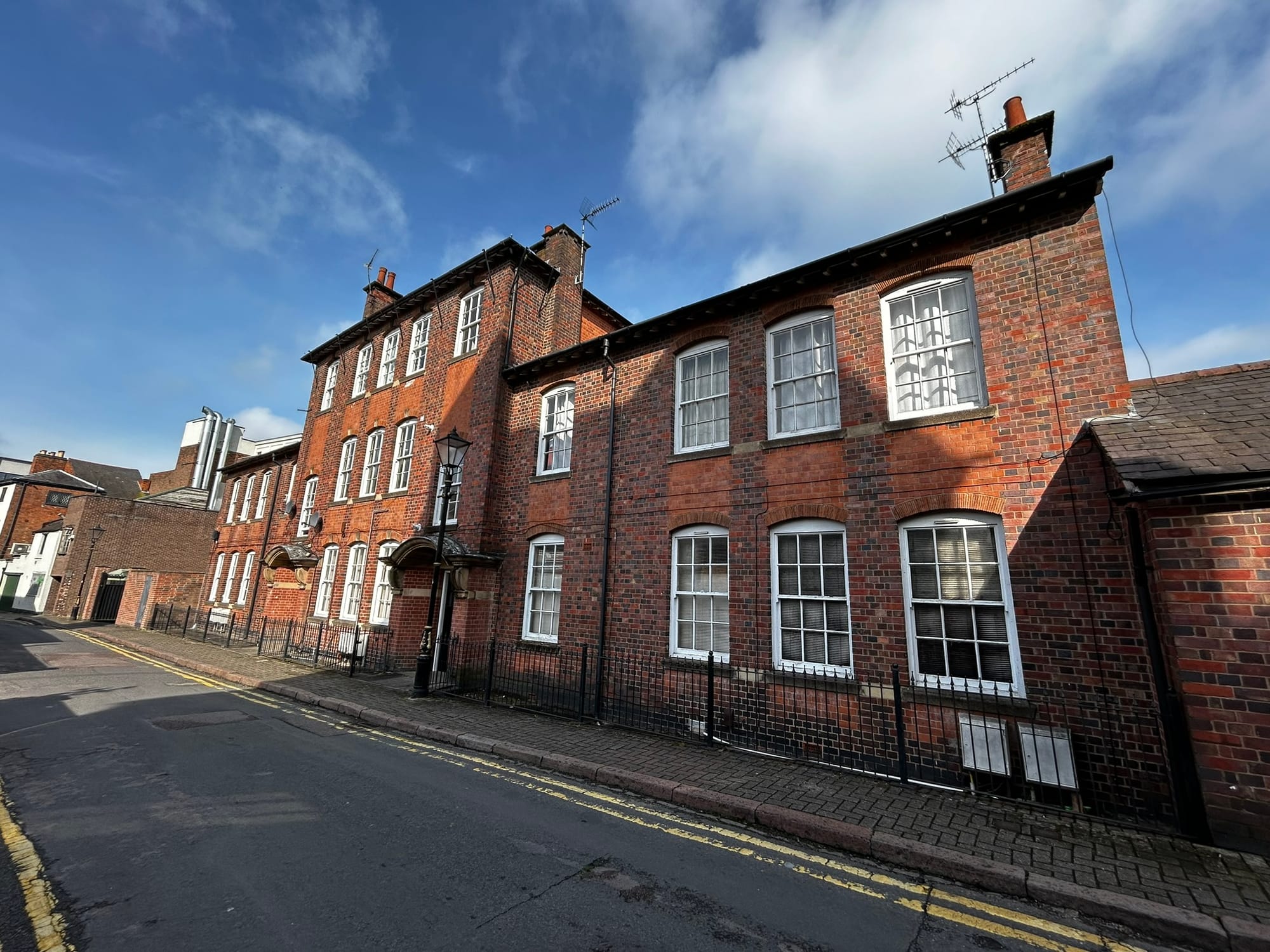
My brother became friends with the people who hurt me, and because of that, they were able to come into our home. I experienced abuse in the street, at school, and at home. These people called me a “freak” and an “alien.” The bullying got worse whenever I was with friends, which only made me feel more isolated. One afternoon at home, my brother invited some friends over to watch the film “A Clockwork Orange.” When the movie finished, one of them came into the kitchen and cut my hand with a box cutter, copying the riverside “false reconciliation” scene. The cut split the skin between my index finger and thumb, and I needed four stitches. I was thirteen at the time, and the scar is still there thirty-eight years later. The clinic contacted the police, but because no one spoke up, nothing was done. When she was healthy, Mother celebrated our birthdays and Christmas, took us on pre-booked coach holidays, and baked us cakes.
When she was unwell, she accused my brother and me of letting a man named David into our home. She claimed he poisoned our food and assaulted her at night, which left us without food and caused us to face violent outbursts early in the mornings. For a time, the neighbours believed what she said. Spending time in nature meant I ended up with the second-worst attendance record at school. A Baptist church became involved in my mother's delusions. They removed our personal belongings from the house, gave her a white glove to wear, and she would draw a chalk circle on the floor and stand inside it to protect herself from what she called 'demons.' They said my connection to the countryside was pagan and also criticised my taste in heavy metal music, especially bands like Black Sabbath. In front of my uncle, they blamed me, told me that I was going to hell.
My parents were married when I was born. Five years later, my father, who worked as a Mills and Boon representative, had an affair with another rep. After divorcing my mother, he married her. She couldn’t see how deeply we were traumatised, so she called us zombies and we were left out of their wedding day because we looked so unhappy. When my mother was in the mental hospital, our uncle and aunt took care of us. My uncle wanted to help me feel more alive, so he took me to join the Army Cadet Force. I performed well on the rifle range and took part in two training exercises at Yardley Chase and Catterick barracks. I felt drawn to the army’s mental conditioning, likely because my own trauma had left a mark on me, and I was searching for a father figure. Changing from one foster home or children's home to another made it difficult for me to stay in touch with the ACF.
Apart from sometimes staying with family friends, I lived in several children's homes, such as the Holt in Birstal, Dunblaine Avenue in Rusheymead, and the Oaks in Highfields. I was also moved frequently to foster homes in a small mining town called Coalville. Several major coal mines operated in and around Coalville until they closed between 1983 and 1991, with one of my uncles also being a minor, at Whitwick Colliery. When I was 15, I would drink really strong lagers before school, and during lunch breaks, I smoked pot with small-time criminals in a flat in the Agar Nook area. I was expelled from two schools, and my work experience includes time at a slaughterhouse and a bouncy castle factory. When I was a teenager my favourite bands back then were ACDC, WASP, and DEF LEPPARD. I saw Whitesnake perform live at Castle Donington back in 1990.
In the 1990s, my music tastes shifted to bands like Stiff Little Fingers and Crass. I became a direct activist, campaigning against Britain’s road-building projects such as the M11 Leytonstone, M3 Tyford Down, and A34 Newbury Bypass. During this time, I worked with Earth First! and Pirate TV to make short environmental films, which SchNews later published on a CDROM. Coldcut, through Ninja Tune, also asked me to illustrate a set of control cards for their single "Everything is under Control." I’ve spent much of my life moving between alternative communities and living off-grid, so I often find myself agreeing with John Zerzan’s ideas, especially his views on Anarcho-primitivism. I spent two years living in an autonomous collective and housing cooperative in Easton, Bristol. The place had an anarchist library, a vegan cafe, a bike workshop, and an allotment garden near Snuff Mills. I often had coffee there with investigative journalist Tony Gosling.
Robbin Woods, Road Alert / Pirate TV 2008
During the 90s, I grew closer to nature by spending time with the druids. I joined in and led Gorsedd and Eisteddfod ceremonies at places like Avebury, Bath, Glastonbury, and Stonehenge. Throughout the South West, I held remembrance, naming, and hand-fasting ceremonies. In 2002, I became a full member of the Council of British Druid Orders at a formal meeting hosted by Steve Wilson above Holborn's Atlantis Bookshop and chaired by Douglas Lyne, a pivotal figure in the 20th-century Neo-pagan revival, specifically within the development of modern Druidry and the preservation of mystical Anglican traditions.
I first became interested in Buddhism in 2006 and began attending meditation sessions with the Friends of the Western Buddhist Order at Brockwell Lido. Later, I became more involved by joining a Mahayana Buddhist group in Soho, led by Dirk deKlirk and guided by Ringu Tulku Rinpoche. About a year later, I joined the Karma Kagyu Buddhist tradition, took the bodhisattva vows, and received the name Pema. As my interest in dharma grew, I started to learn more about Hinduism. I visited several South Indian Hindu temples around London, but I went most often to the London Sri Mahalakshmi Temple or the Muthumari Amman Temple.
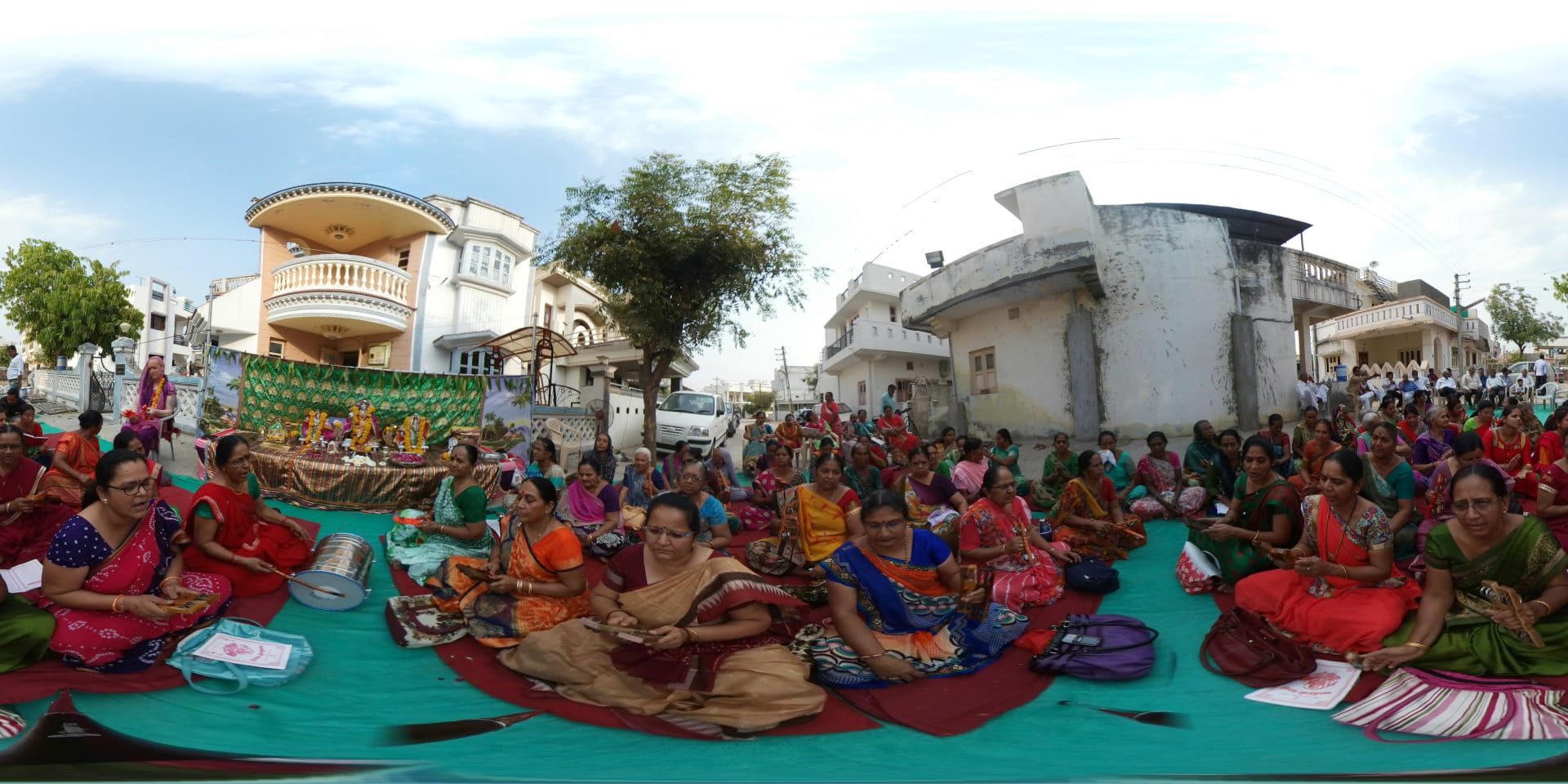
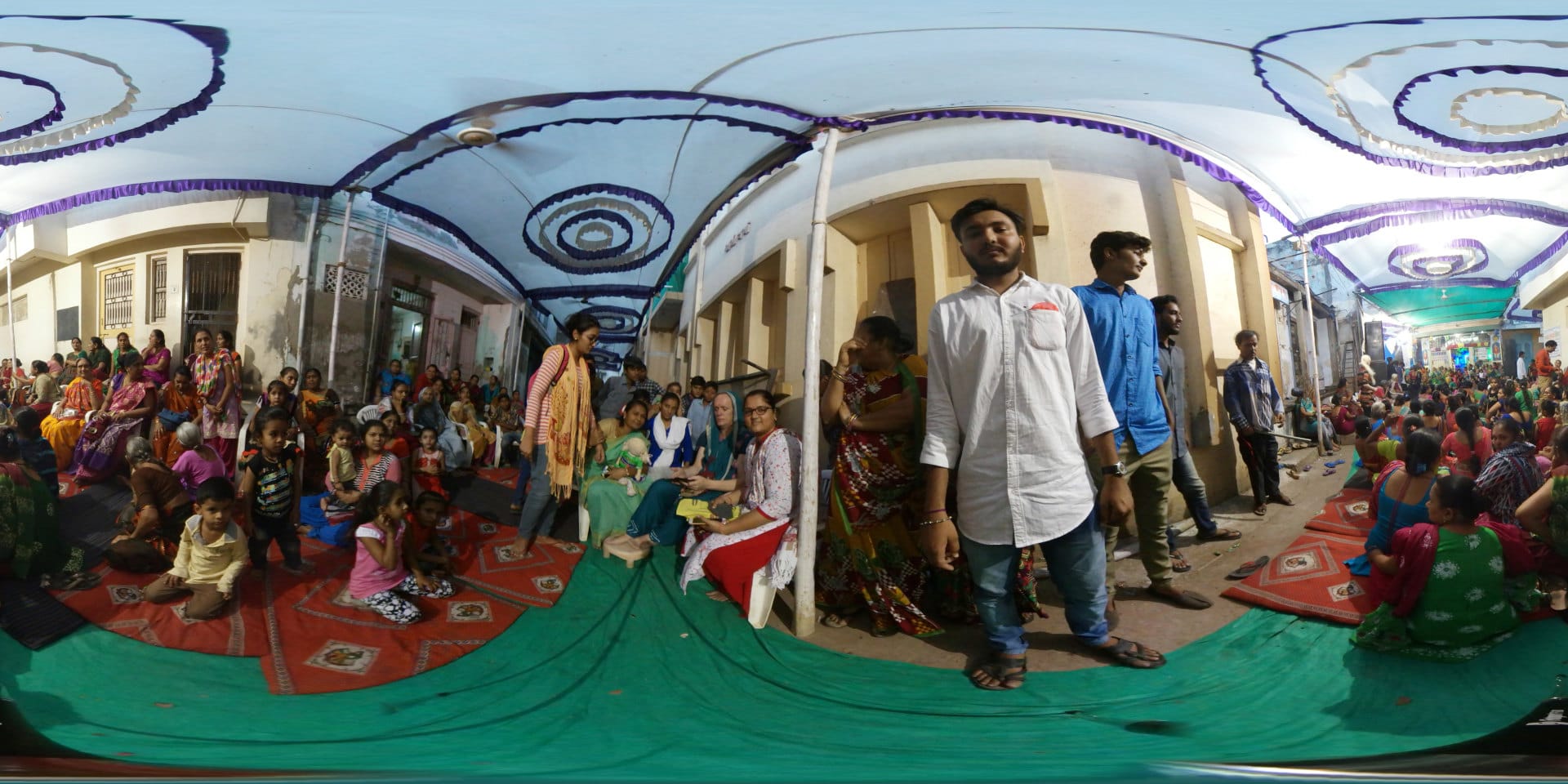
My experience with Hinduism changed deeply when I visited Gujarat, India. Visiting roads less travelled had a profound impact on how I see Hinduism. During three trips over two years, I met and became formalised with more than 100,000 Hindus. Hinduism is very important in this Indian state, and more than 160 million people visit its temples each year. I visited several Shakthi temples, including Charmunda in Chotilla, Ambaji, Kali in Pavagadh, Kodiyaar in Rajpara, and Bahucharaji in Becharaji and Shankhalpur. Additionally, I visited the Surya temple in Modera, Ranki Vav, Birla Mandir, and the Hanuman temple in Sarangpur.
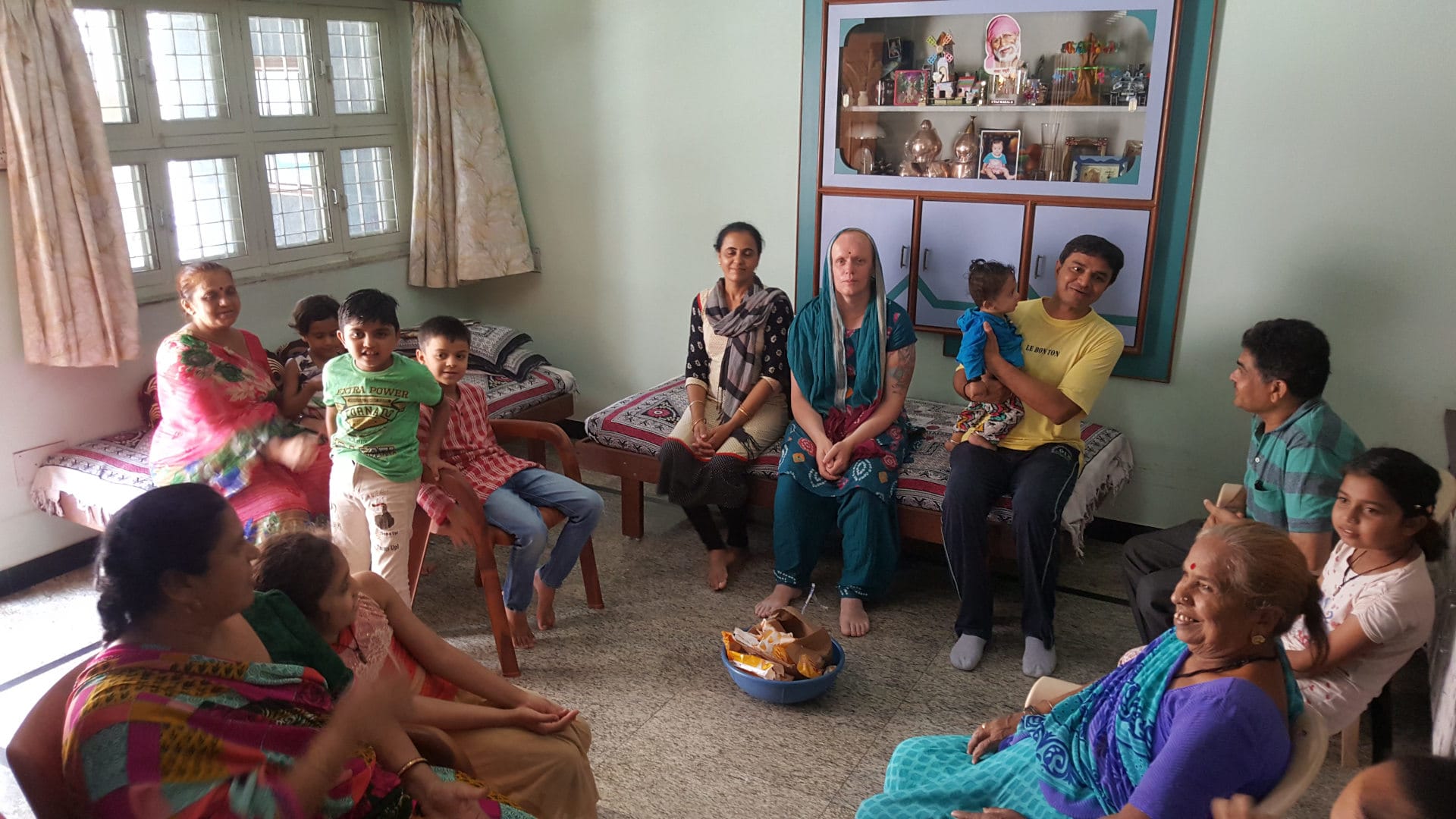
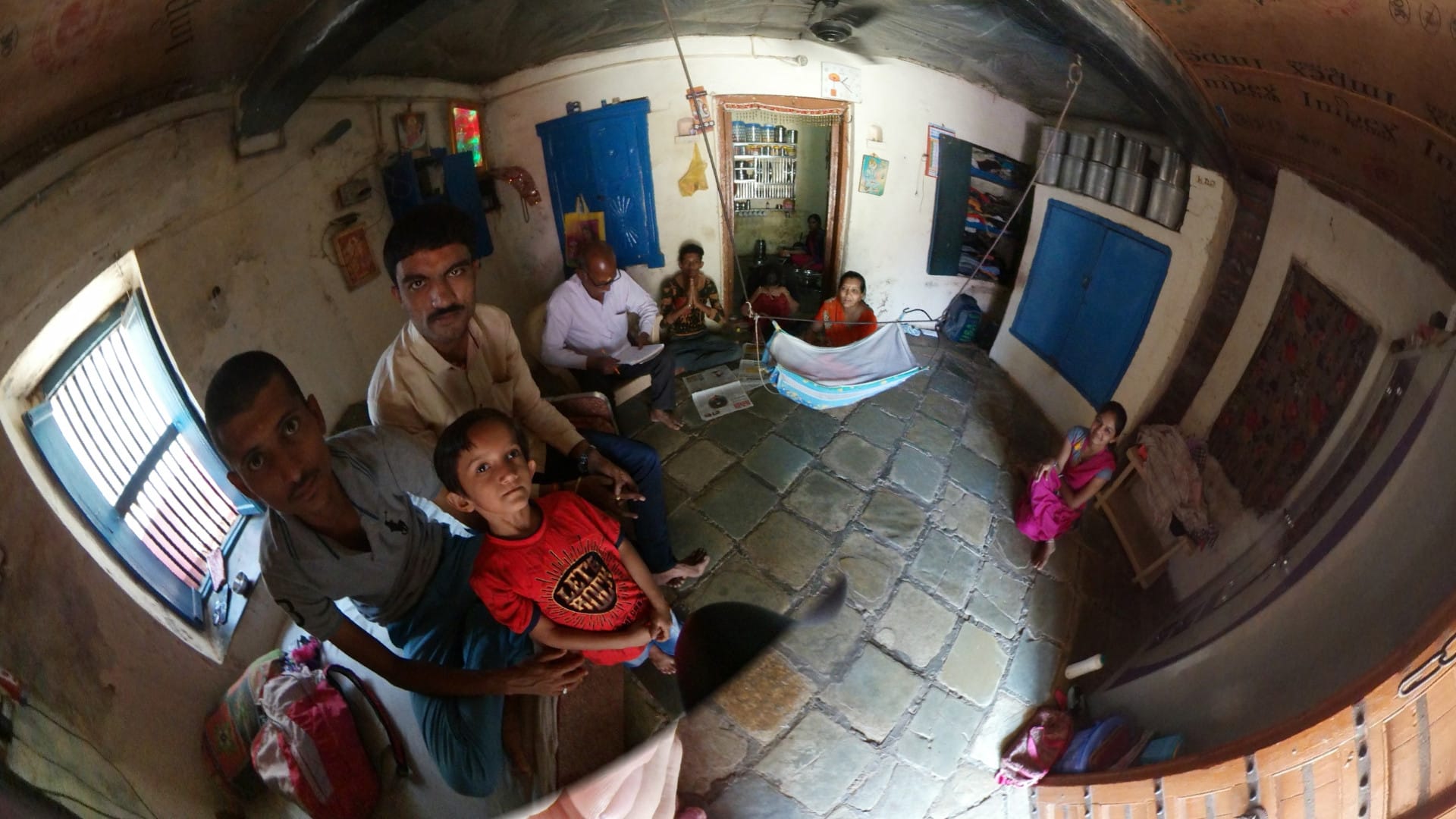
When I was in India, Brahmin priests supervised my interactions with Hindus and arranged visits to homes and temples. During my time in India, Brahmin priests guided my interactions with Hindus and set up visits to homes and temples. At these homes, I was served traditional Gujarati vegetarian food, introduced to family members, took part in pooja, and often met the whole neighbourhood. While I was in Gujarat, India, I did not directly experience any form of racism at all.
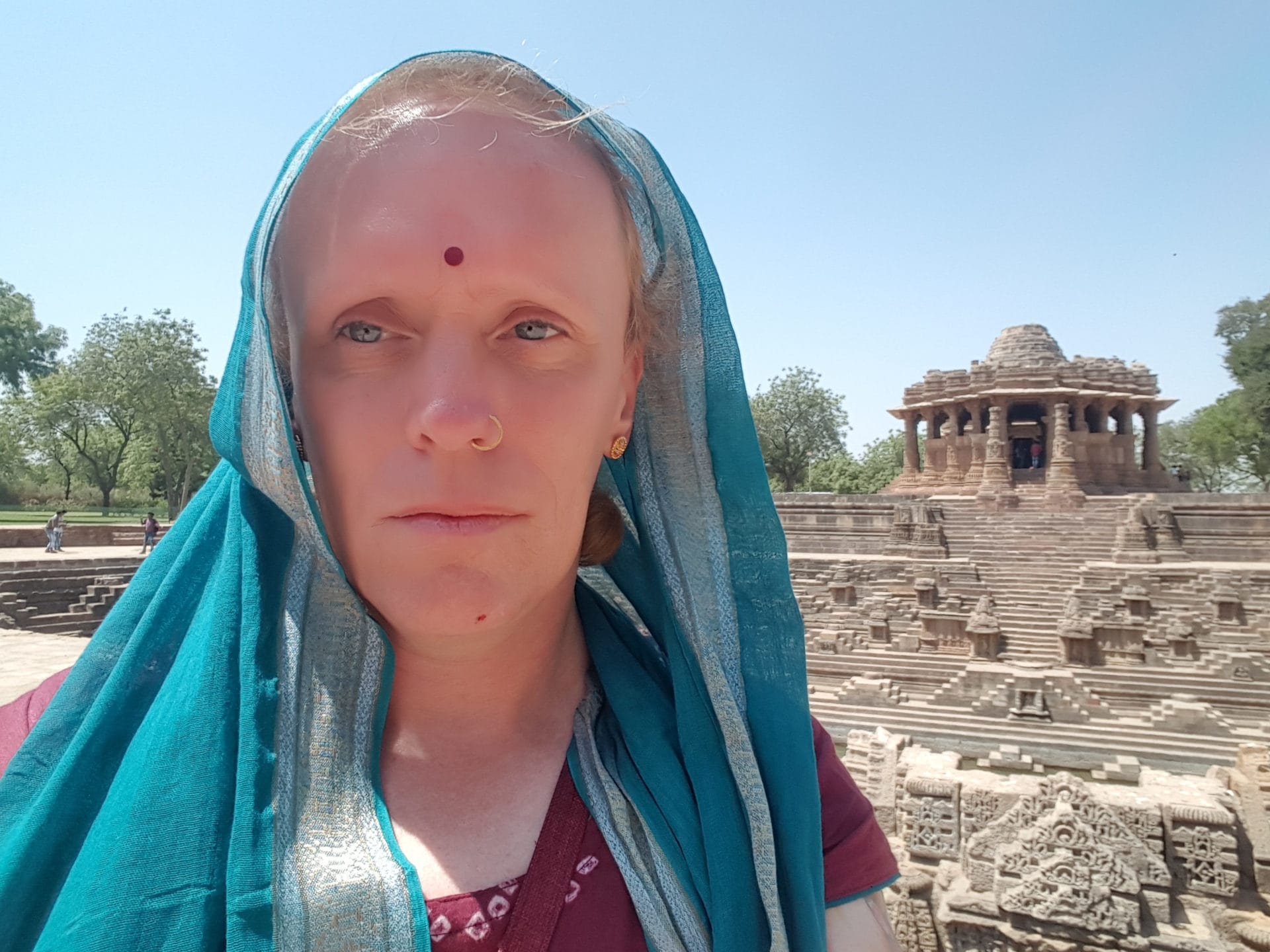
When I visited temples, I was usually given a guide, often a priest or a prominent community member. I travelled to India on my own, and people respected my trust. Hindus in India treated me very differently from Hindus in the UK. In the UK, I felt despised and shunned, as if I were a cruel joke, an insult or a mistake. A Sri Lankan eye surgeon was the only person in the UK to invite me to their home, and the invitation came whilst I was inside the Muthumari Amman temple.
In 2010, I became homeless. Stranded on the streets of Westminster, I experienced severe sleep deprivation, hunger, and thirst. Hyper-vigilance compelled me to walk for up to fourteen hours each day, eventually leading to a debilitating foot condition named plantar fasciitis. After the London Pride Parade, I stepped into a shop doorway in Bayswater to escape the heavy rain. While I was there, someone attacked me. The person kicked me in the face and broke my nose. When I tried to protect myself by raising my arm, they broke my radius bone. I lay in a puddle of blood for hours until an ambulance finally arrived, followed by CID police. They put a cast on my arm, but did a poor job. Before a nurse sent me back out onto the street, he just told me not to get my plaster wet.
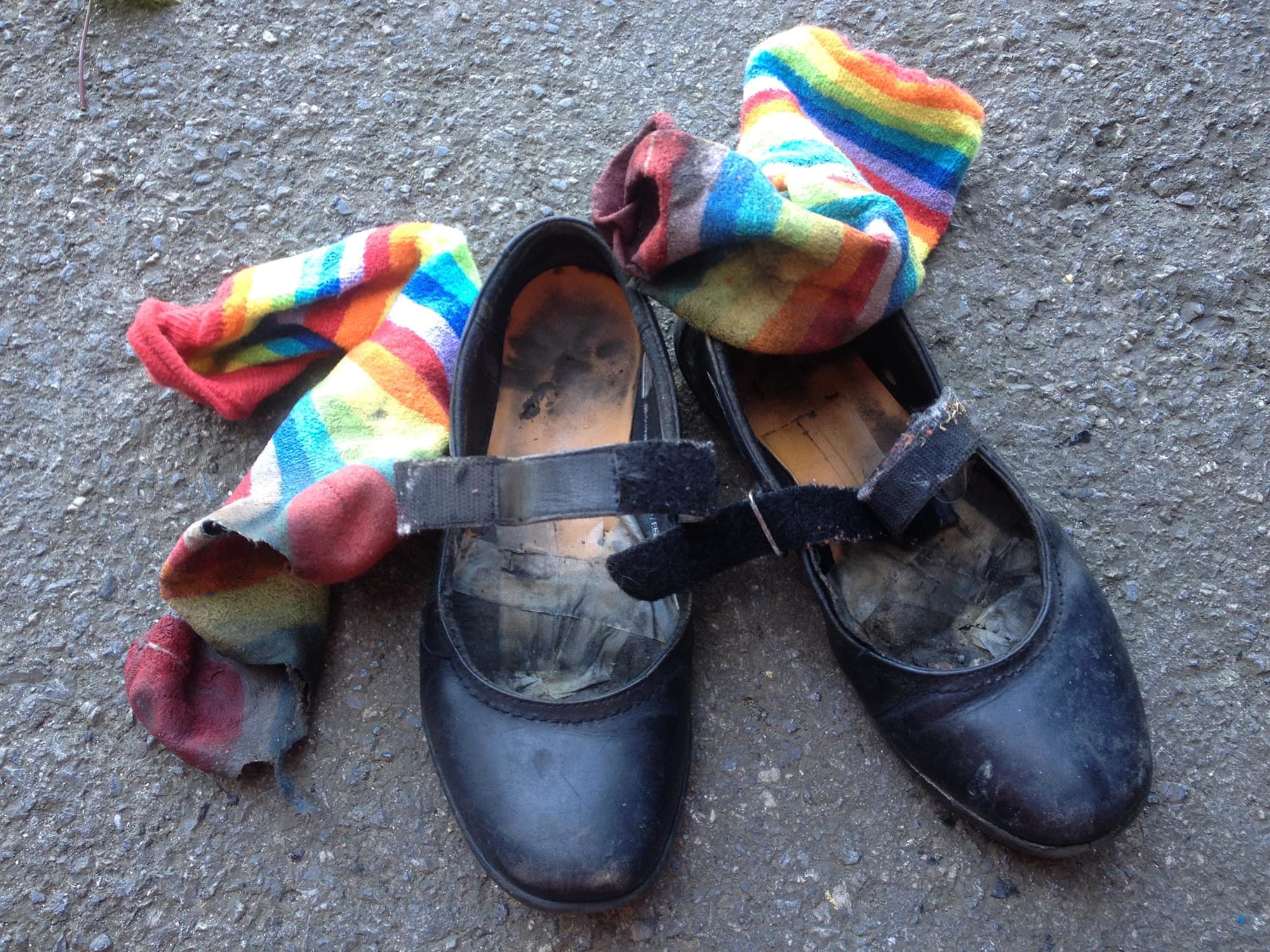
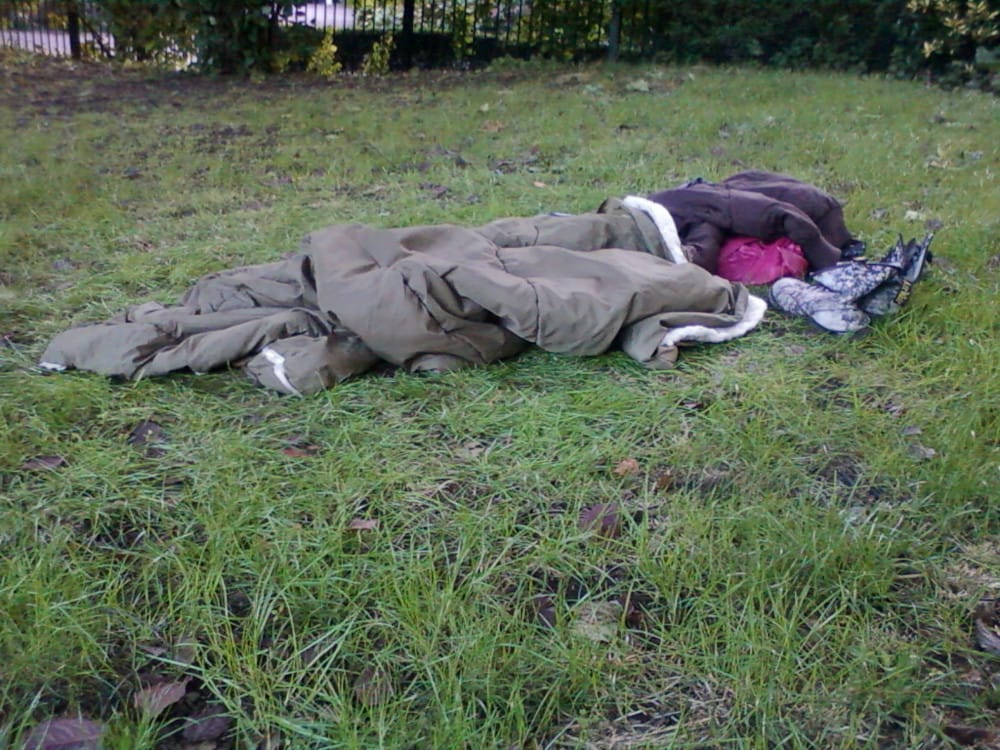
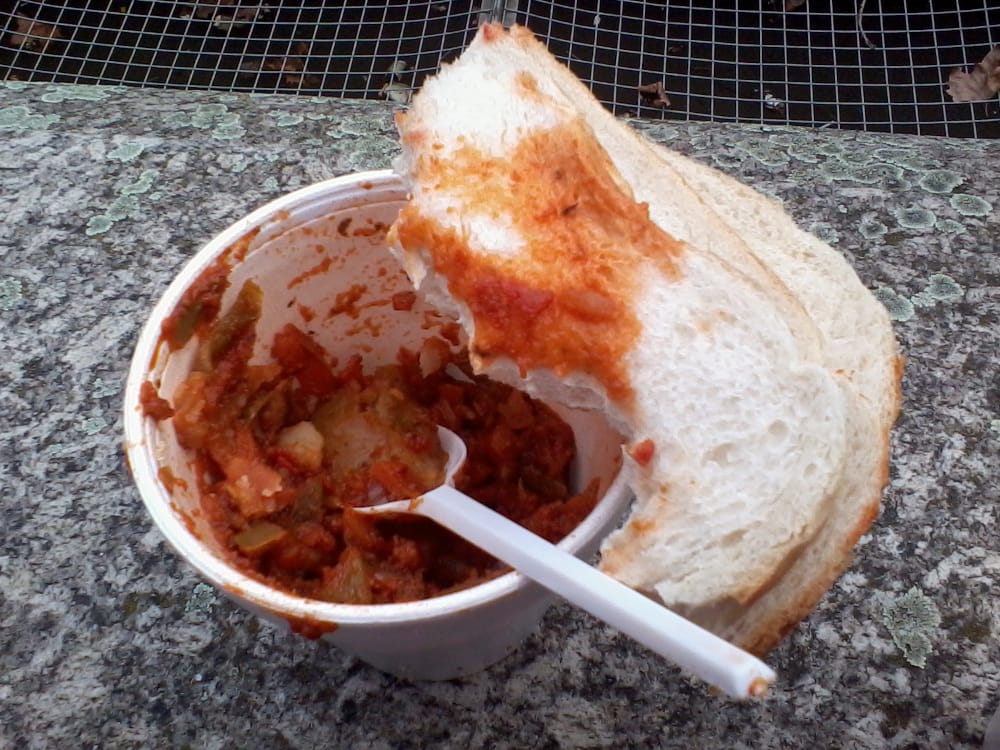
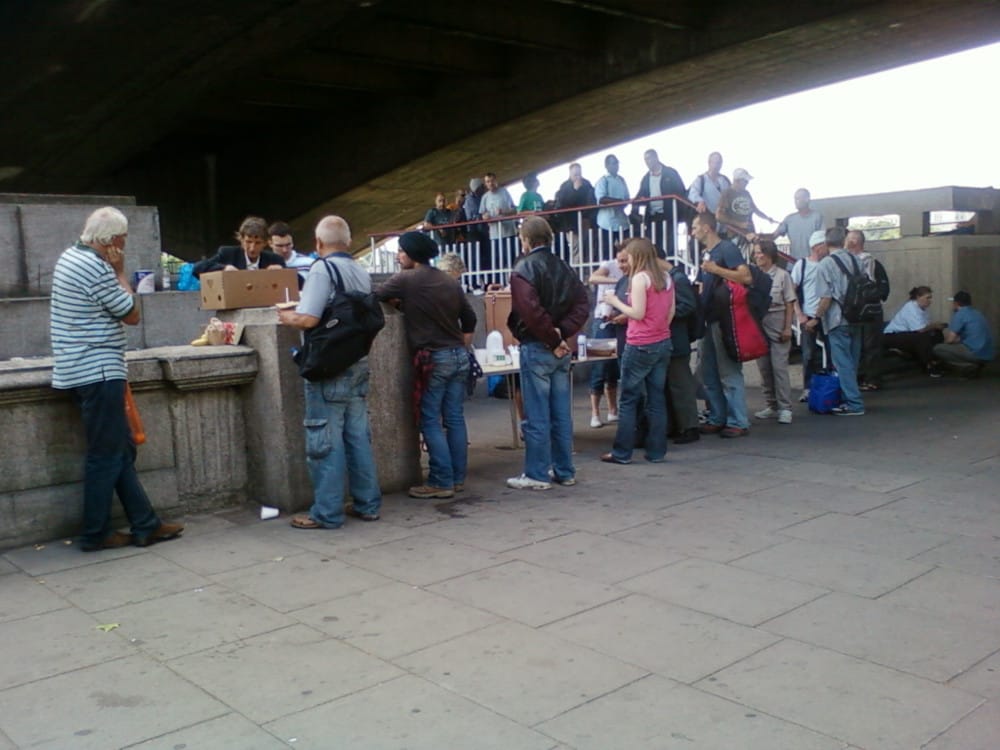
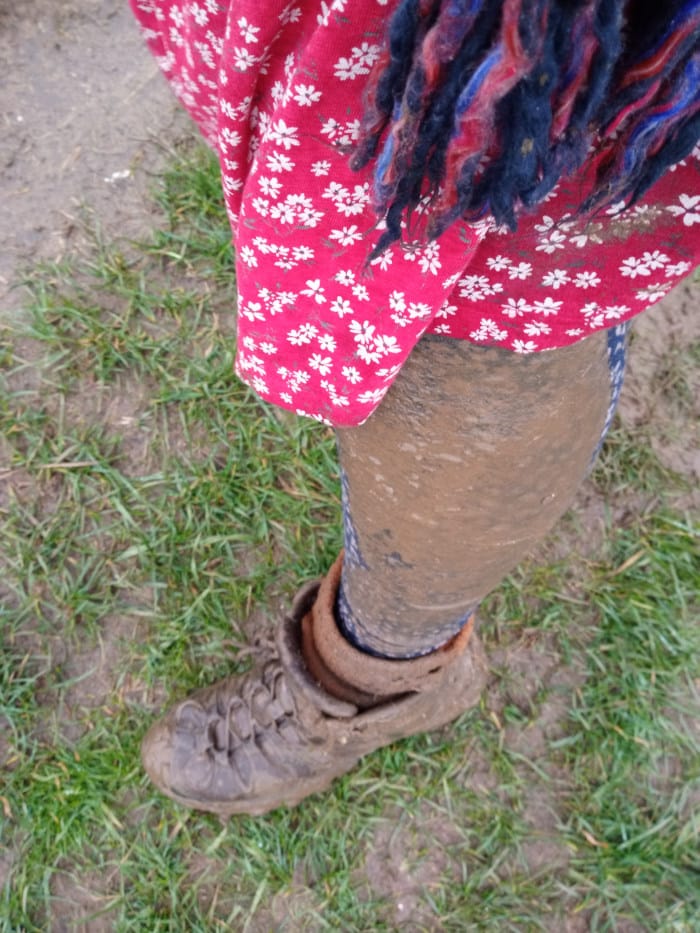
Each step in these shoes picture above, sent a fresh wave of agony through my feet, the pain of plantar fasciitis relentless and sharp. I rest on the musky grass of Bishops Park, tucked just behind the walls of Lambeth Palace. Unable to claim state support and refusing to ask for handouts, I scraped by on whatever the soup kitchens could spare.
I experienced several assaults, including one time when some young people spat in my face as I slept on a bench along London’s South bank. Sleeping rough was awful. In Bishops Park behind Lambeth Place, the musky smell of fox urine would get into my clothes. My friend and I were sexually assaulted many times near the hot air vents behind the Stand Hotel. She spoke Mandarin fluently and worked in China as a TV presenter. She was later deported because she refused to insult the Dalai Lama. I became friends with her after I told Outreach workers that I had been attacked and robbed. They suggested we team up to help keep us safe. After I protected her from a serial attacker, I was banned from their day centre.
After spending forty-two nights on an army bed in a night shelter, I finally received a local connection and was offered emergency housing at a hostel called Lookahead. While I was there, I had terrible nightmares and flashbacks. People insulted me, and someone destroyed my artwork. It became so hard to go back inside that I eventually just stopped returning. The police found me on Hampstead Heath, buried in snow. I was extremely dissociated, so they detained me under the Mental Health Act and transported me to an amber ward at Highgate Mental Health Unit. Between 2012 and 2014, I was detained under mental health act more than 74 times, often in Section 136 units, hospitals, or police stations, where I experienced significant mistreatment from patients, nurses and the police.
As autumn settled over Saint Martin's Fields in central London, doors swung open for the homeless, only to close again with the first blush of spring, their fleeting welcome choreographed to the pulse of fundraising drives. Soup kitchens, often led by faith communities, received thousands of pounds to share donated food with those in need. The mouse dies in the mouse trap because the mouse doesn't understand why the cheese is free. Within these charitable organisations, certain individuals disregard the principle of individual human dignity. Instead, they perceive their participation as an opportunity to challenge the privileges of the dominant class by instrumentalising society’s most vulnerable members as political chess pieces. Once they discovered my connection to Hinduism in India, all eyes seemed to turn my way. I have endured two decades of mental suffering.
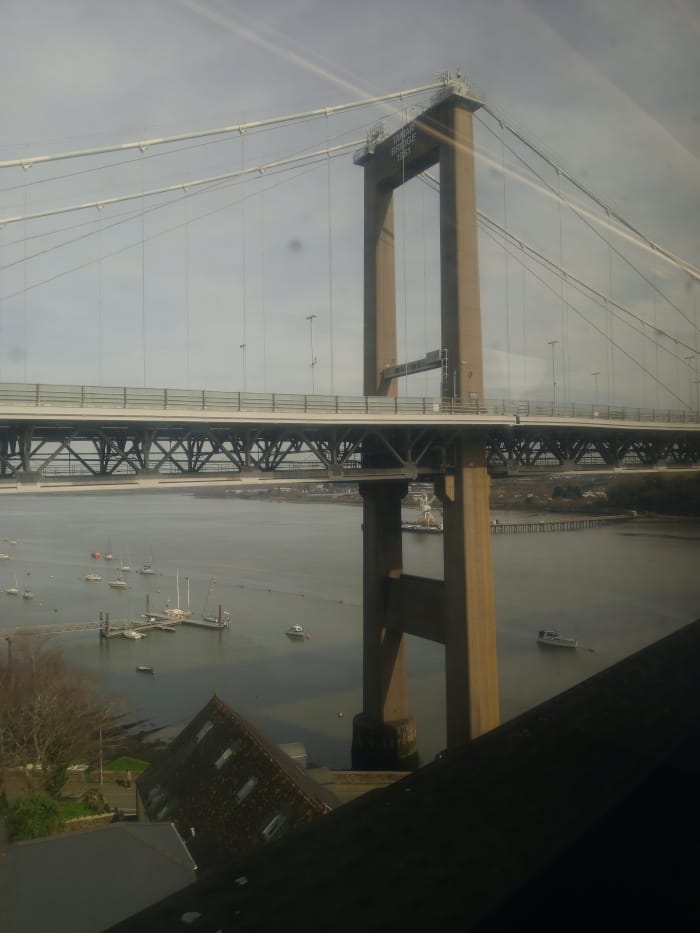
For the first eight months of the COVID-19 pandemic, as lockdowns dragged on, I found myself homeless, spending my nights beneath the open sky in a tent. Living rough and scraping by each day during the pandemic felt chaotic, as if I had stumbled straight into the set of a horror film. At first, I fled to the Scottish highlands, hiding from the virus in lonely bothies scattered across the wild landscape. But the crushing isolation soon wore me down, so I hitched rides south to Cornwall, hoping to find help. While camped by the coast near Falmouth, I was lucky to meet a homeless outreach worker. He told me he could help me get off the streets by using emergency legislation. Two days later, while I was walking to Truro and met the police, I got a phone call from Cornwall Council offering me emergency accommodation at Monkey Tree caravan park near Goonhaven.
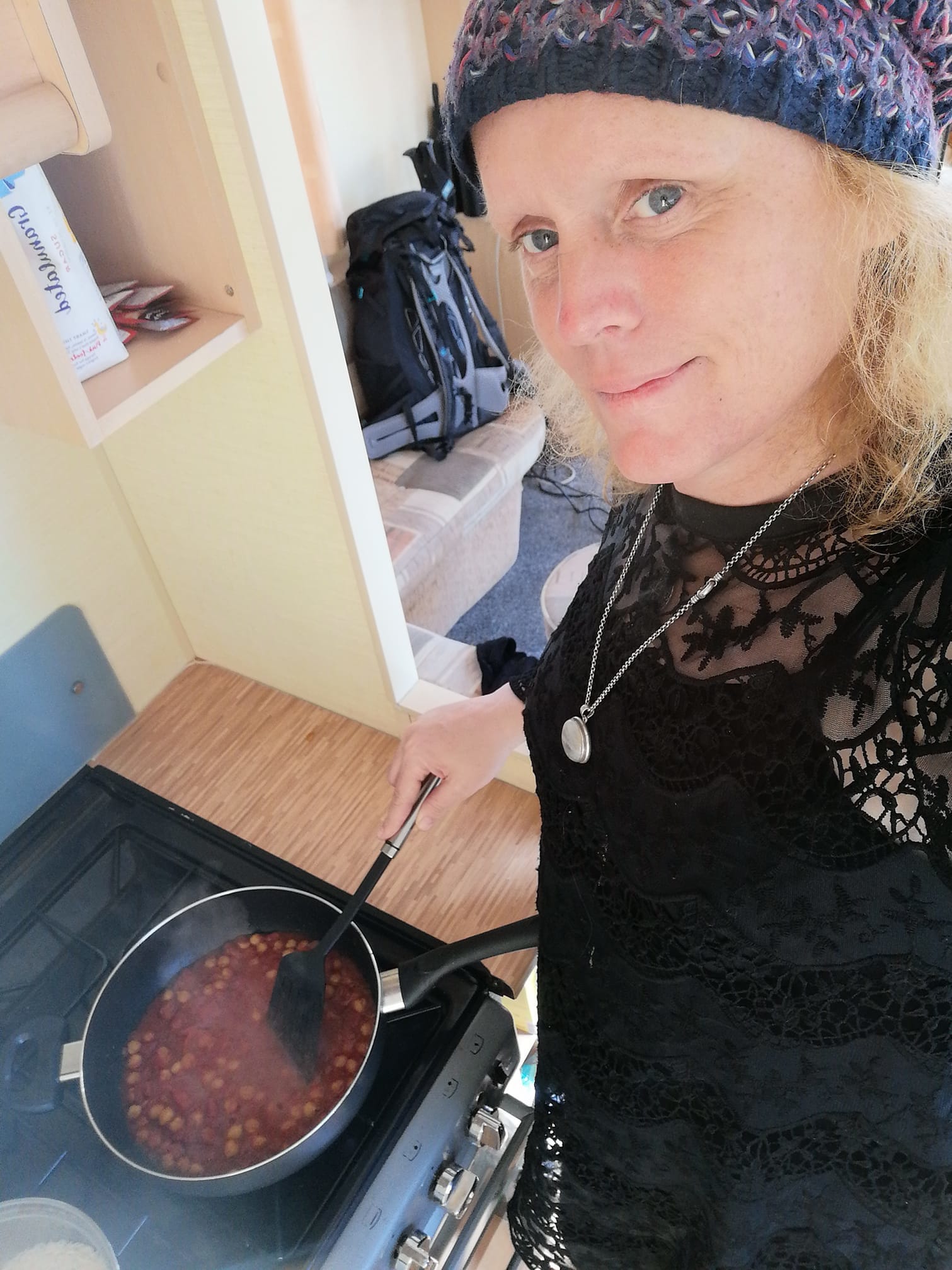
They gave me a large caravan to live in for two months before moving me into a self-contained flat with support in the city of Truro. Before I got to Truro, I bought a BMX bike. Riding it helps me deal with the intense anxiety that often makes it hard for me to go from one place to another. I would pedal twenty miles atop this quirky little bike, its tiny wheels and low gears turning every stretch into an adventure. Anxieties about whether to stay or go sent me off course. I often found myself far from where I wanted to be, without any plan. It felt like I was moving through a place without time, but the act of moving helped lift my depression. I liked the sense of freedom I got from riding BMX, so I decided to upgrade my bike with help from a local BMX shop. Yet the shadows of trauma kept tripping me up, leading to one mishap after another until I decided to donate the bike to charity.
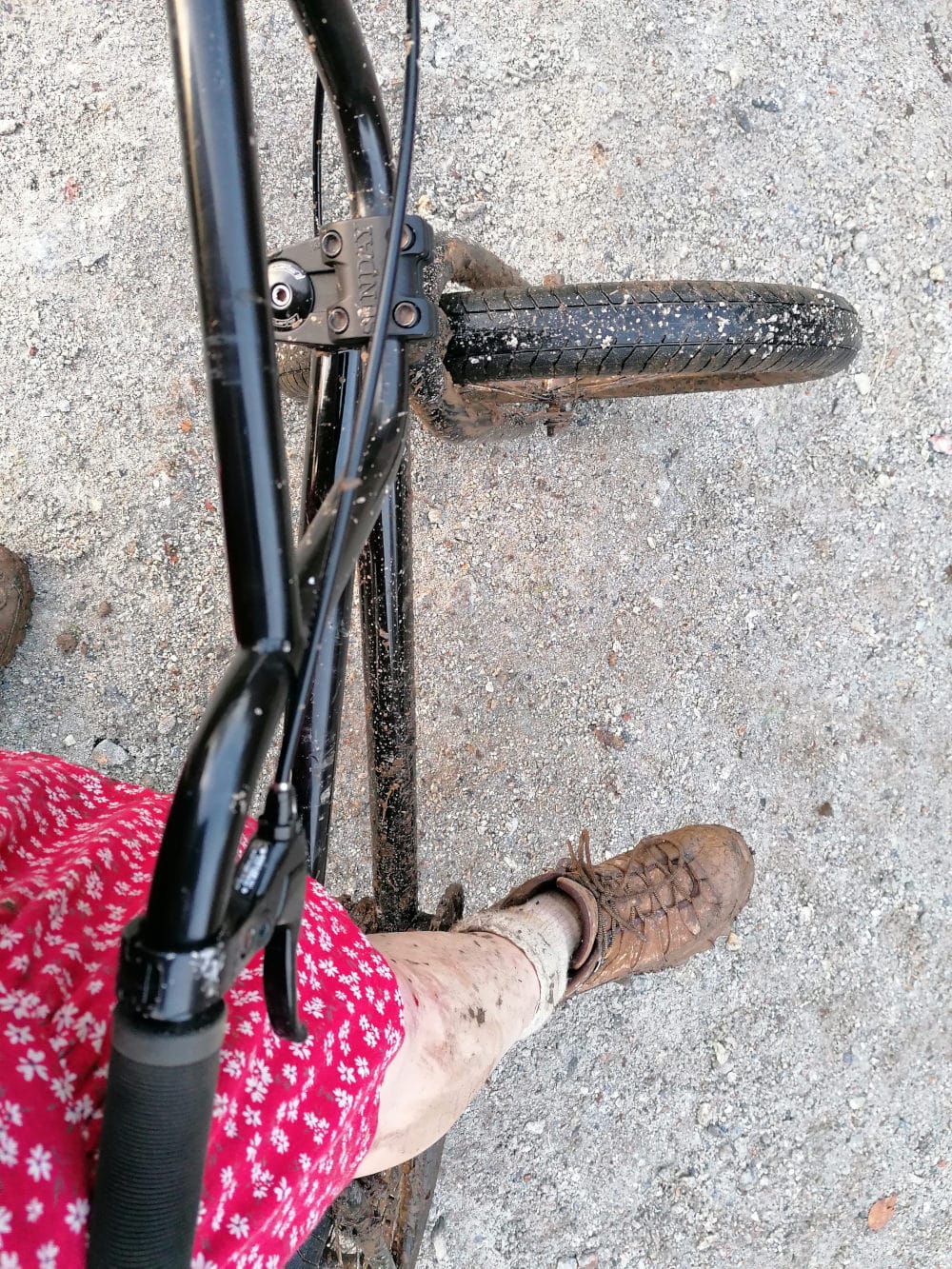
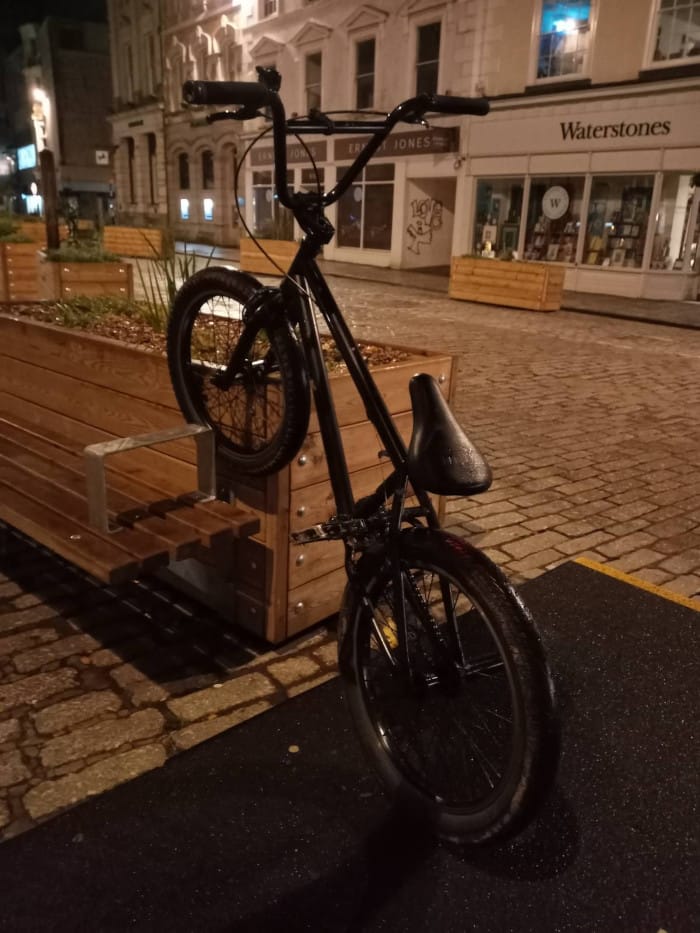
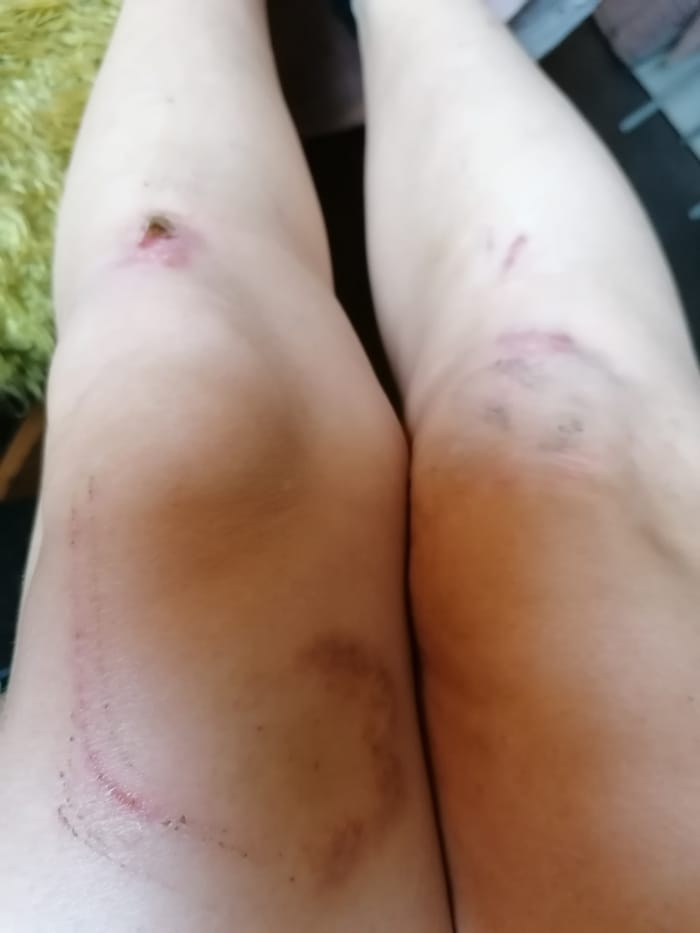
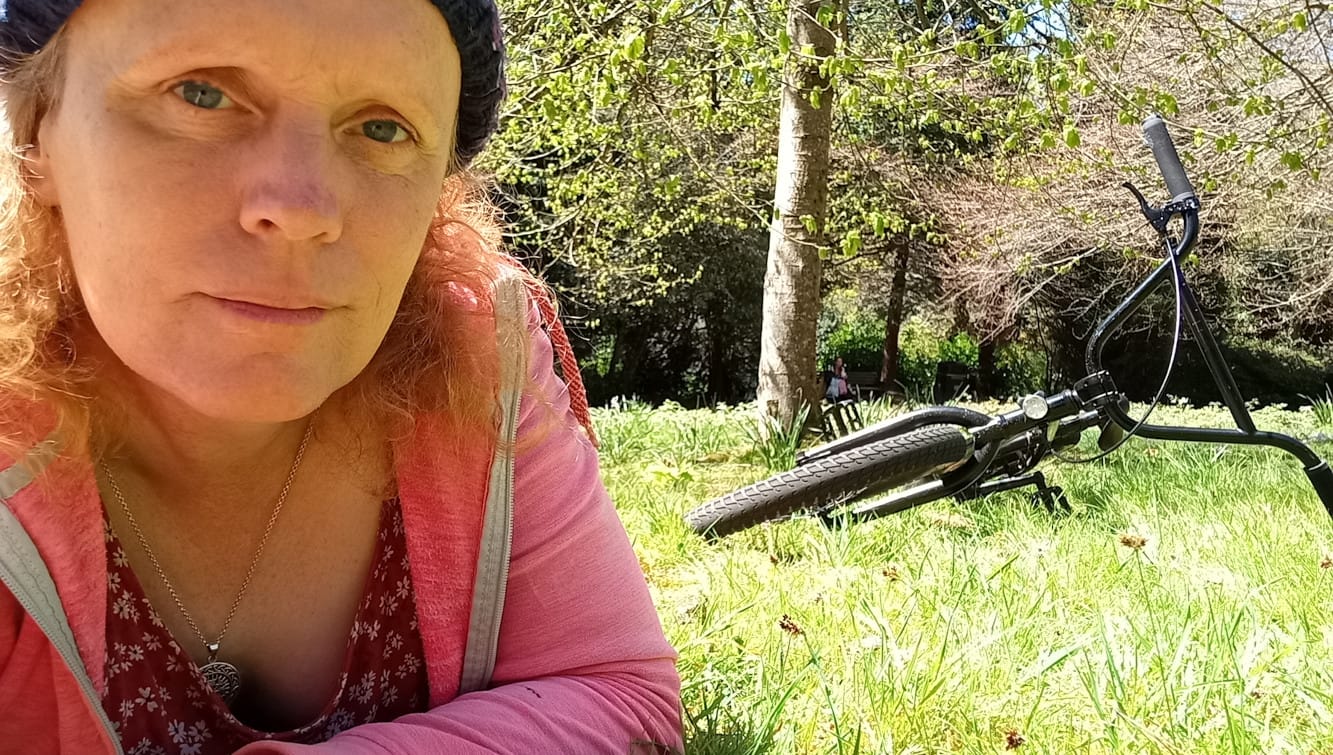
BMX riding lifted my spirits, but the crashes kept piling up.
I lived at Truro New Start, a project for homeless people over 18 who need support, including help with mental health, alcohol, or drug issues. The full-time staff were supportive and helpful throughout the eighteen months I stayed. While I was there, they supported me by enrolling me in an accredited tenancy course and covering the cost of counselling to support my mental health. The staff really tried to help me, but some of the other residents didn’t like me. One person kept provoking me, and even though I avoided him for two months, he still wrote letters about me. As a result, I was eventually evicted. Still, the support workers paid for my train ticket so I could leave Cornwall. Residents struggled with severe personality disorders, leaving many, particularly the women, vulnerable to predatory outsiders. One woman was even whisked away from the premises by a man who called himself a Satanist. Even after chasing property that came up on the waiting list, my hopes of starting fresh in Cornwall slipped through my fingers.
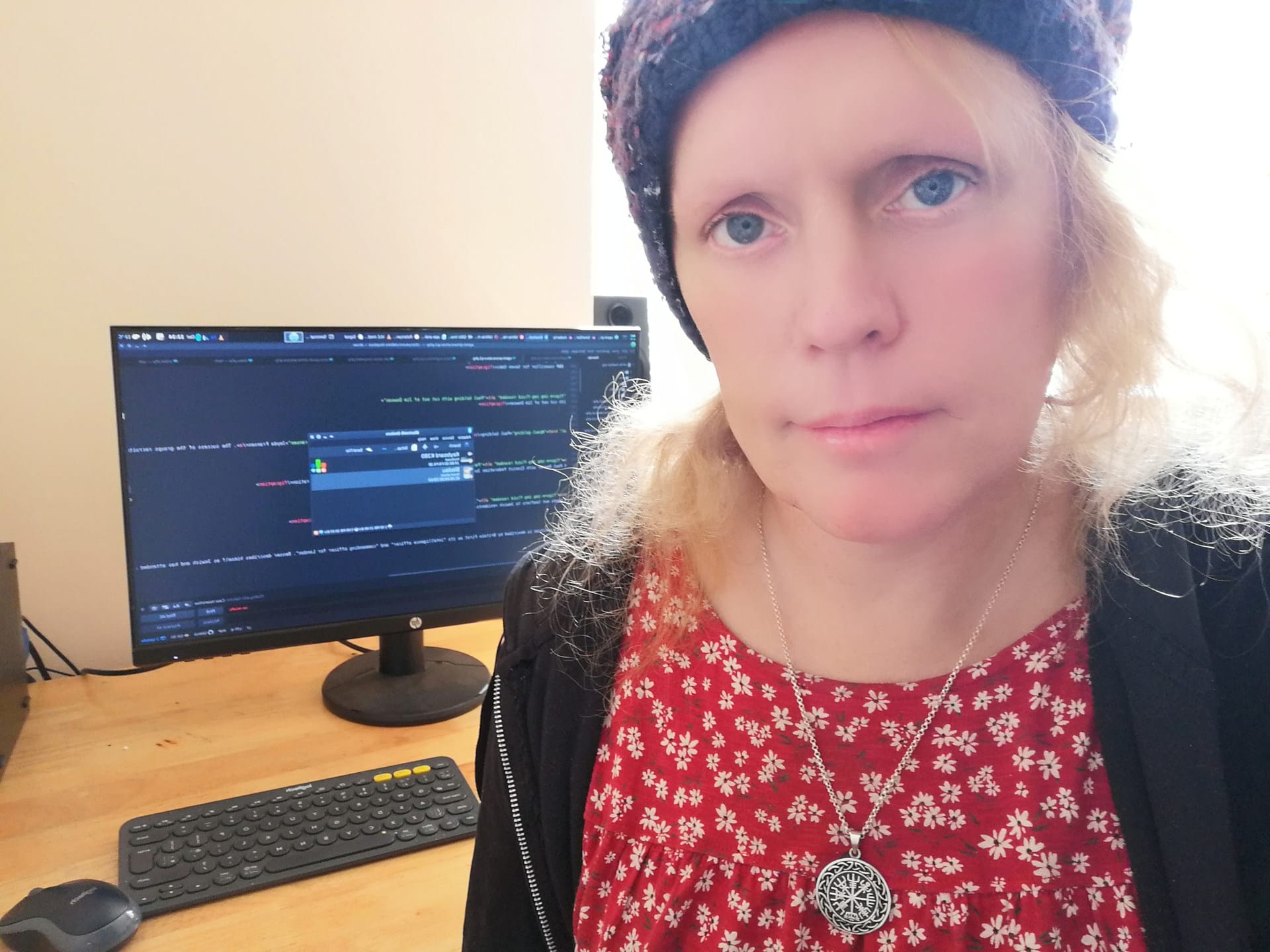
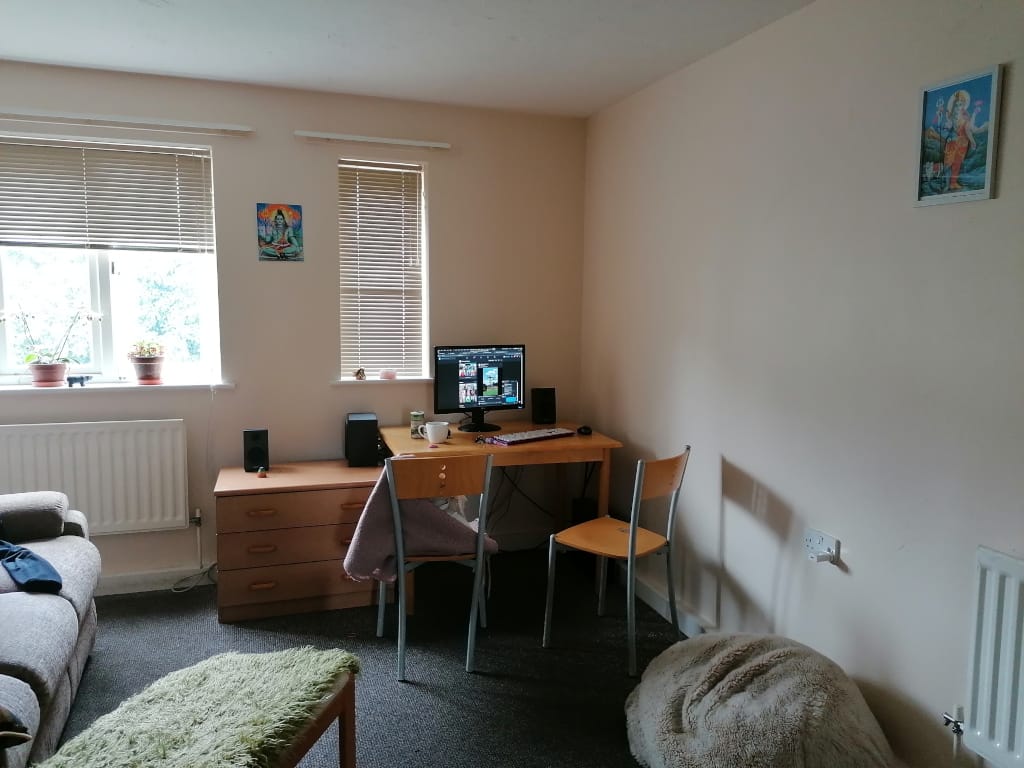
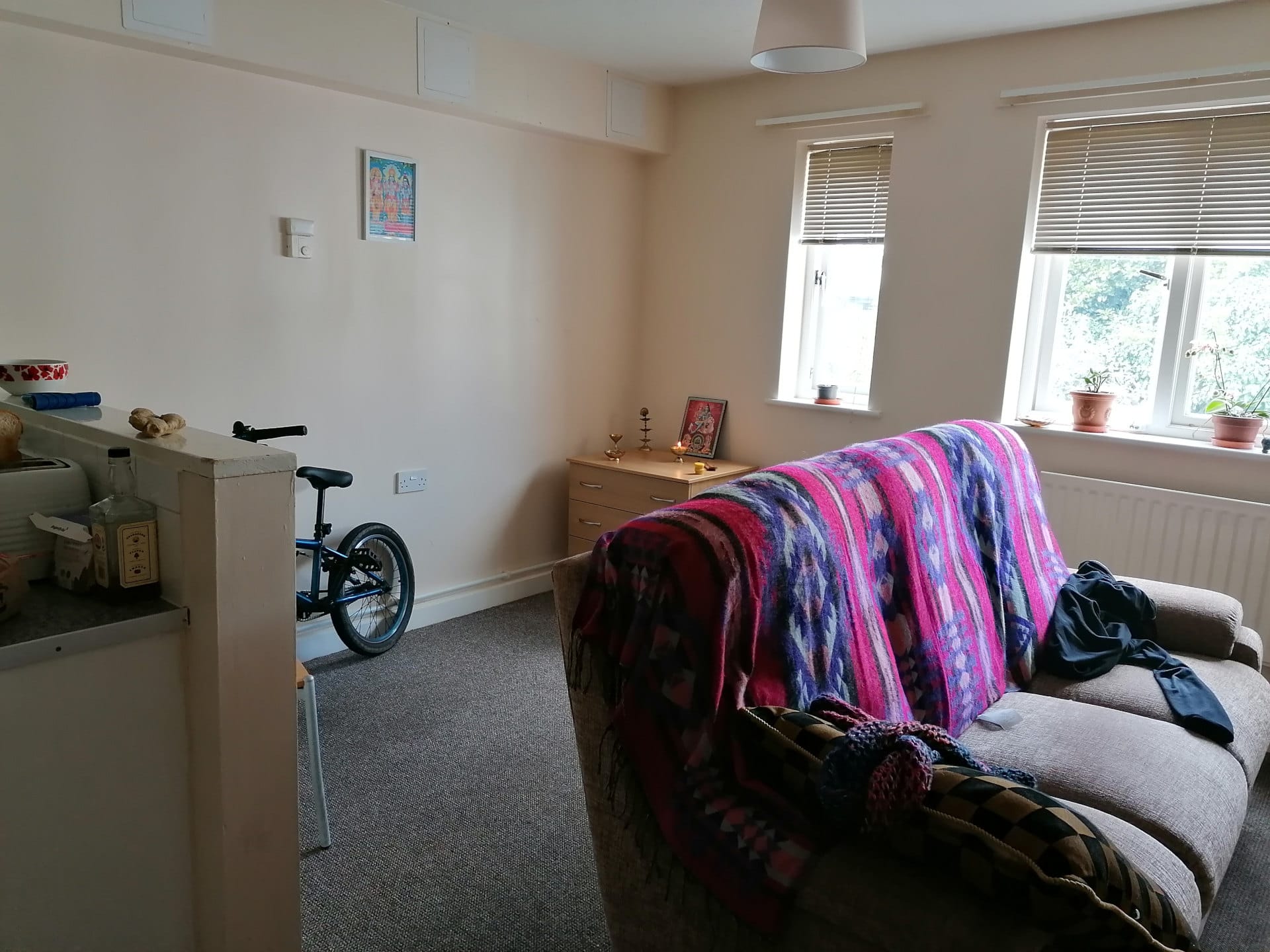
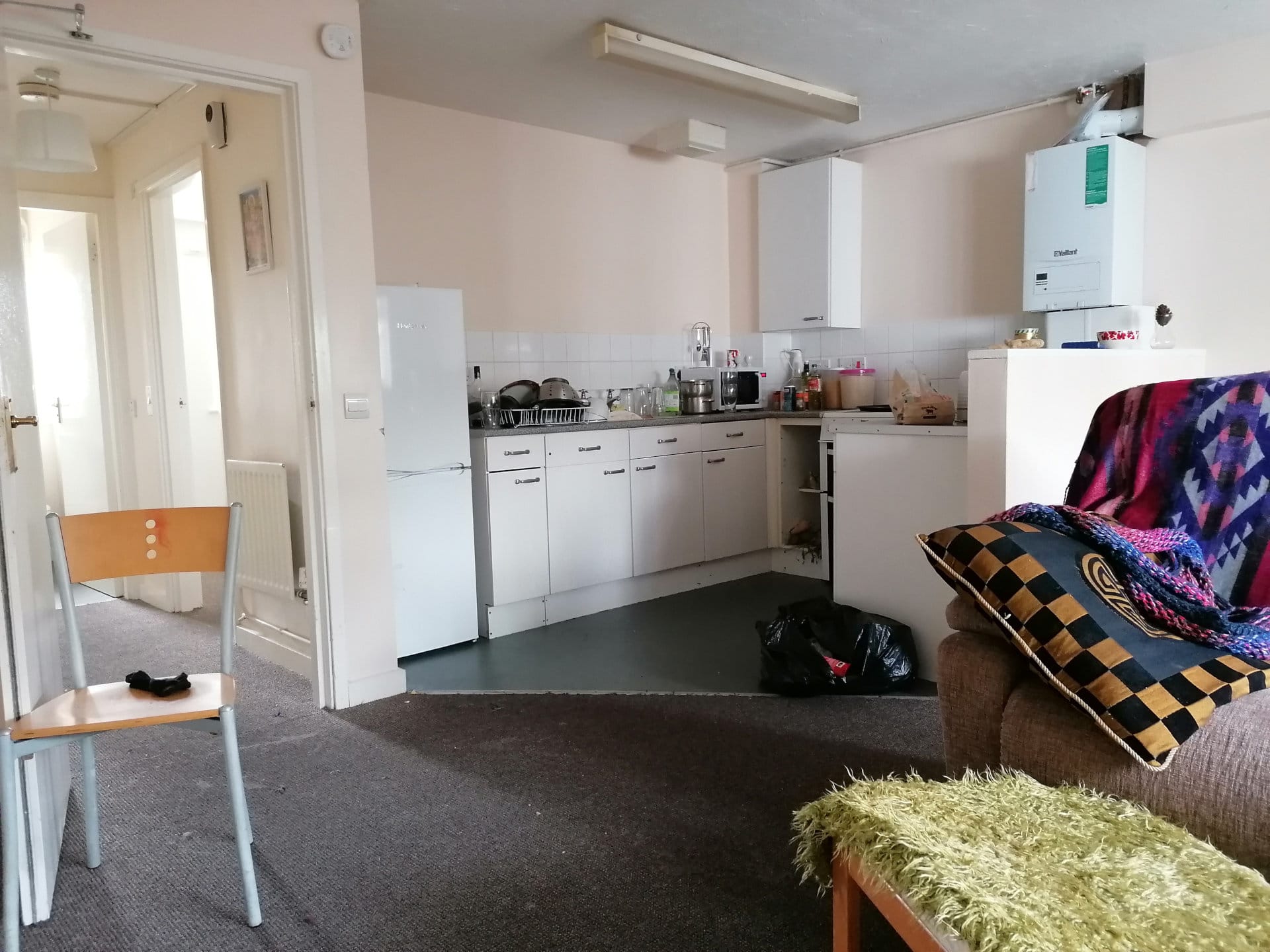
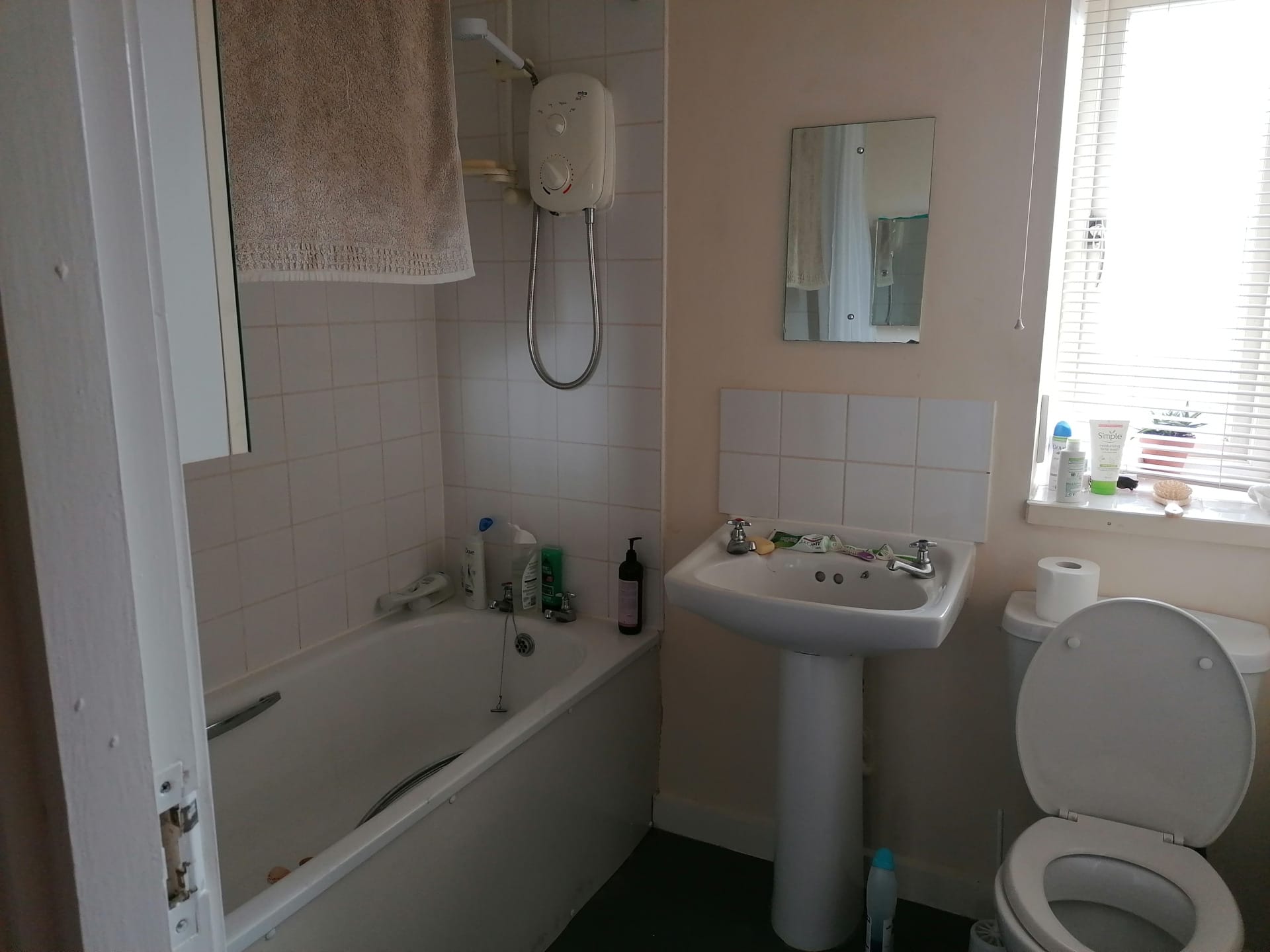
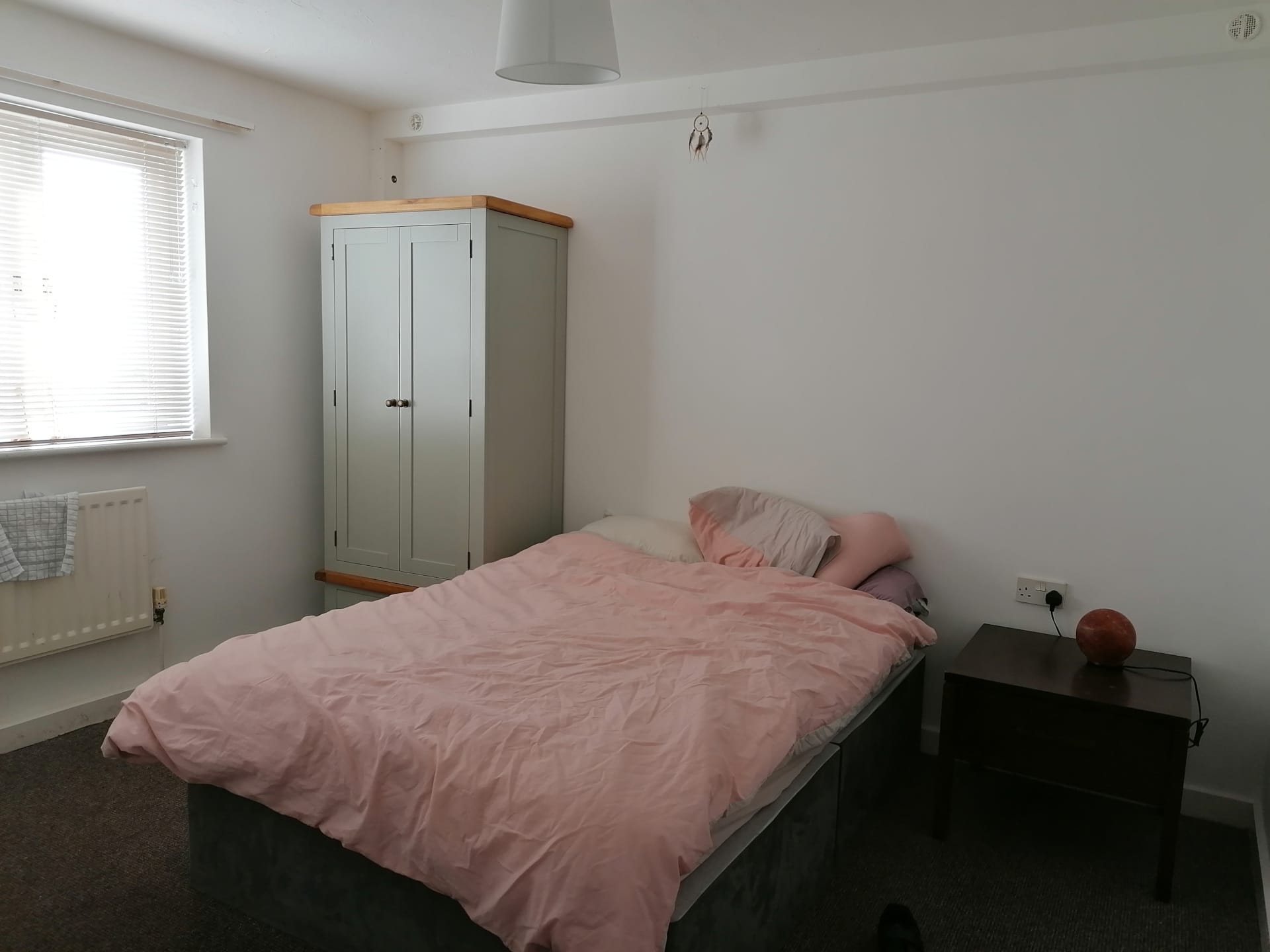
I lived in a self-contained flat at New Start, which was supported housing accommodation.
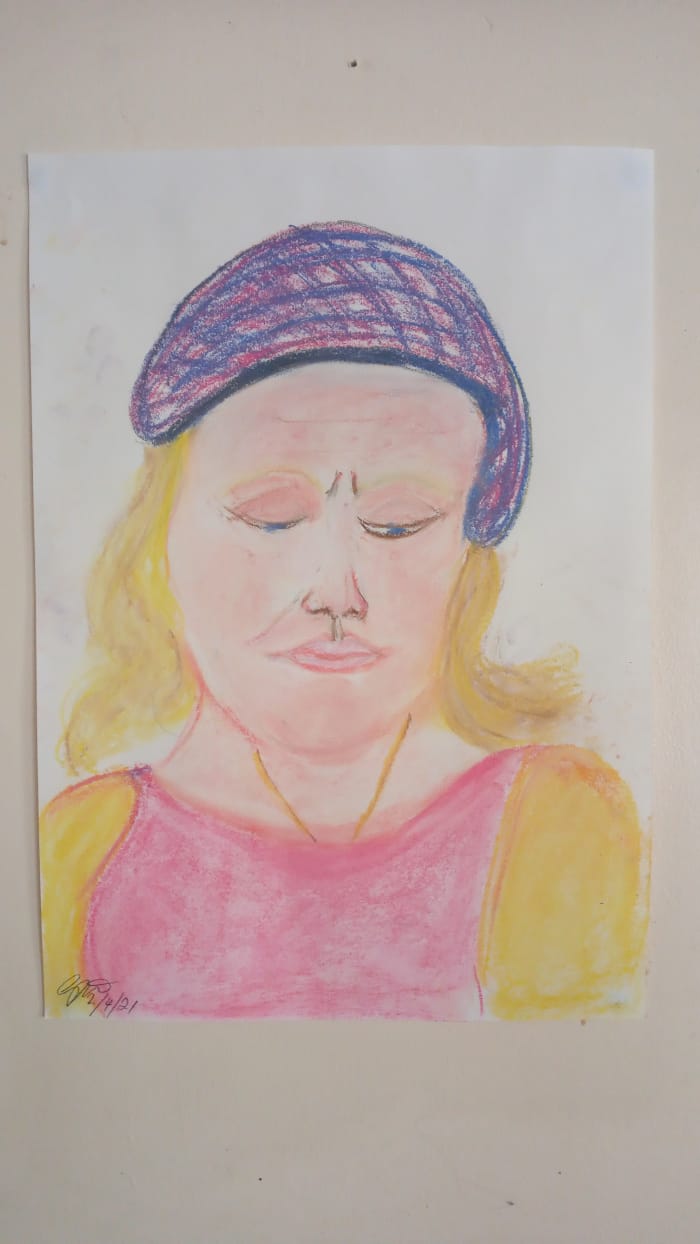
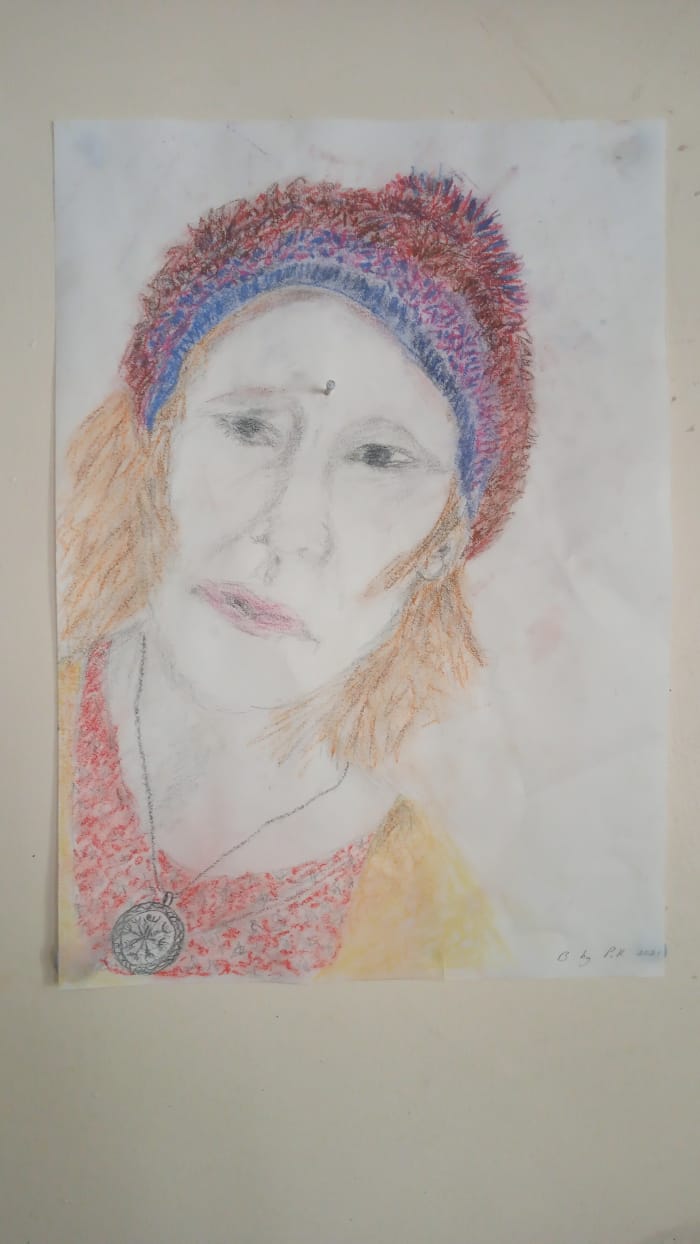
Here are two portraits of me, each drawn by a different support worker at New Start.
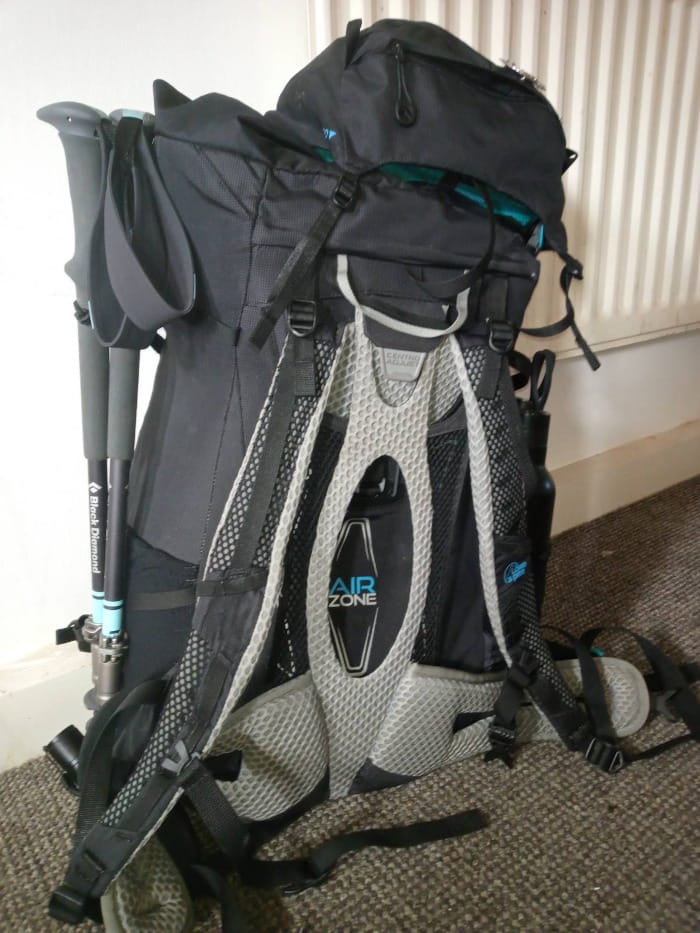
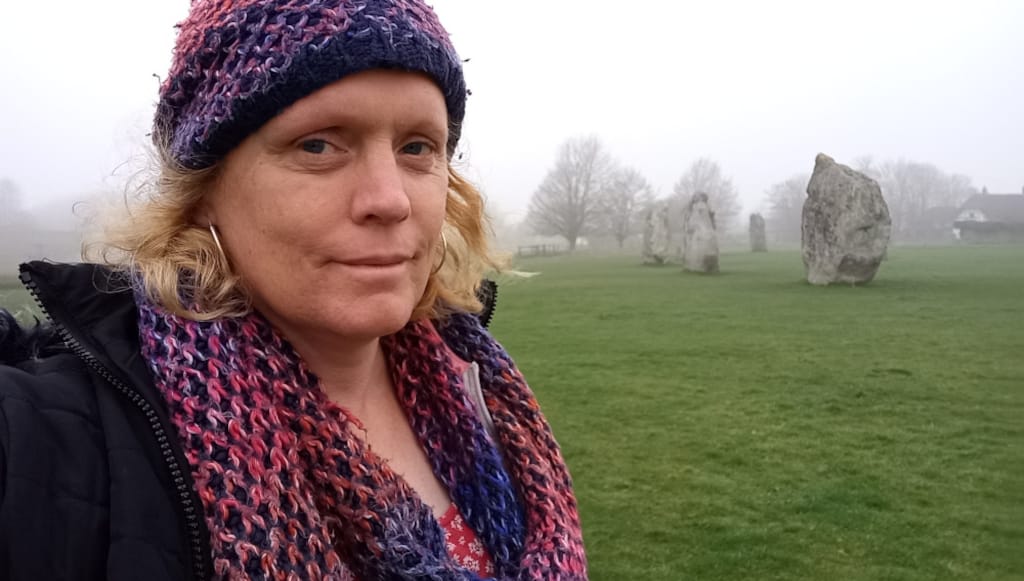
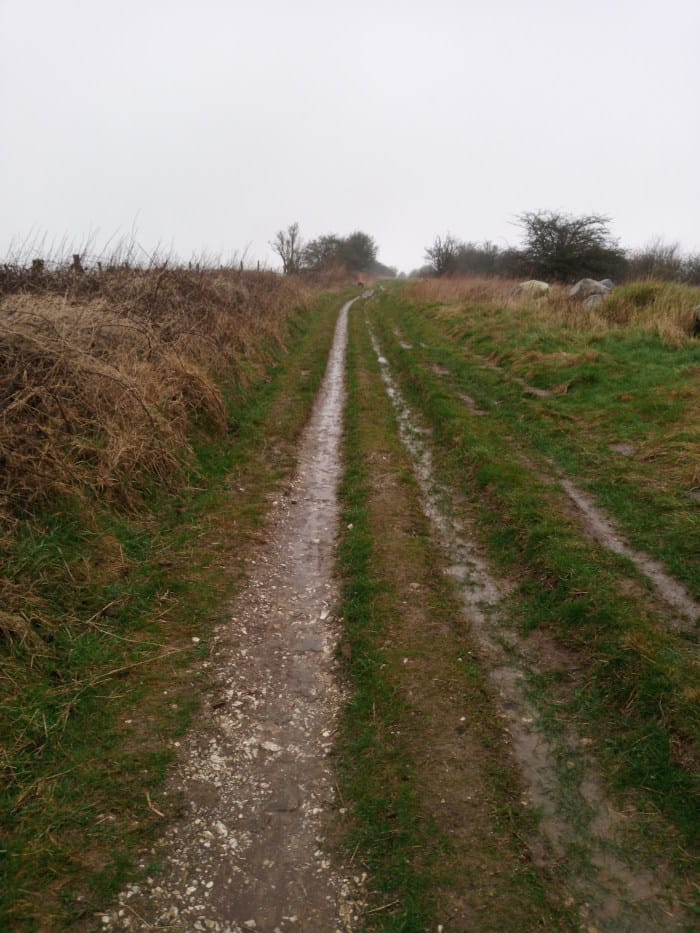
Right before I left, I went to a gathering in Penzance where I talked about my trauma-related auditory hallucinations. That experience taught me things I didn’t see coming. I gathered my hiking gear, the same trusty items that had accompanied me on trails during the early days of the COVID-19 pandemic. The manager at New Start accompanied me to the railway station, bought my ticket, and sent me off with a warm goodbye. I was ready to rekindle my hiking adventures along the ancient Ridgeway, a national footpath that, for me, began in Wiltshire. I stepped off the train at Chippenham, hopped on a bus to Calne, and wandered through the evening light along a quiet footpath toward Avebury.
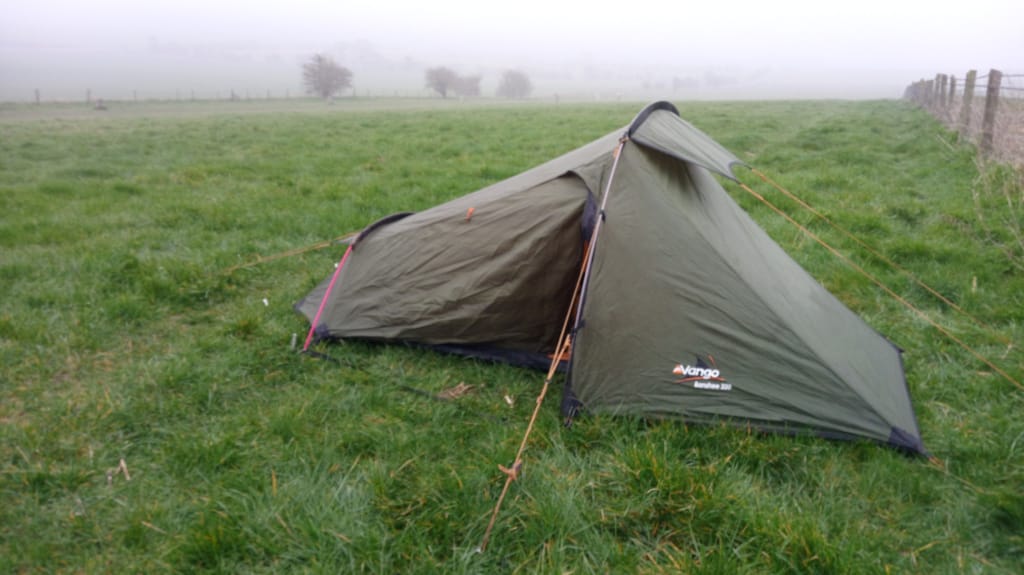
One morning, while camping on Ladhope Golf Course, I decided it was time to stop living a transient life and went to the Scottish Borders Council to ask for help. After I spoke with someone from their homeless team, I was given emergency housing in a “crash pad” flat in Church Square, Galashiels, while they started an investigation into my situation. At first, they told me I had to go back to Cornwall and said they’d be giving me a train ticket to Truro in the morning. However, after a telephone call, Cornwall Council later wrote to them, confirming in writing that I did not have a local connection. While in Galashiels, Cafe Recharge kindly washed my clothes, and helped me with food. At first, I was supposed to go to a hostel in Kelso, but I ended up in a flat in Silverbuthall, Hawick. With trembling hands, I unlocked the coded key-deposit box, slid the key into the lock, and turned it, feeling the first spark of hope that my days without a home were finally numbered. A warm, safe bed, fresh clothes, hot meals brought tears to my eyes.
Before I moved to the Scottish Borders, I had been homeless for nearly 33 years. Charlie welcomed me into his life and helped me finally settle down. We met when I was hitch-hiking out of Selkirk. He picked me up and drove me right to the door of my emergency accommodation in Hawick. I asked if he needed a friend, and he said, "Yes." I invited him in for coffee, and later he invited me to visit his farm. For six months, we were just friends, but over time, we grew closer and found that we balanced each other's lives. I spent two years living in emergency accommodation before I was resettled in Ancrum. During that time, the only people I saw were Charlie and a friendly, housing support worker named Sam. I started farming with Charlie in November 2022. Before that, my only experience with farming was walking along public footpaths through fields. At first, all the poo made me want to avoid farming, but after some time, it really isn’t that bad. Besides making Charlie hot meals every day and cleaning his farmhouse, I also help with his sheep whenever I can, i.e lambing between February and March.
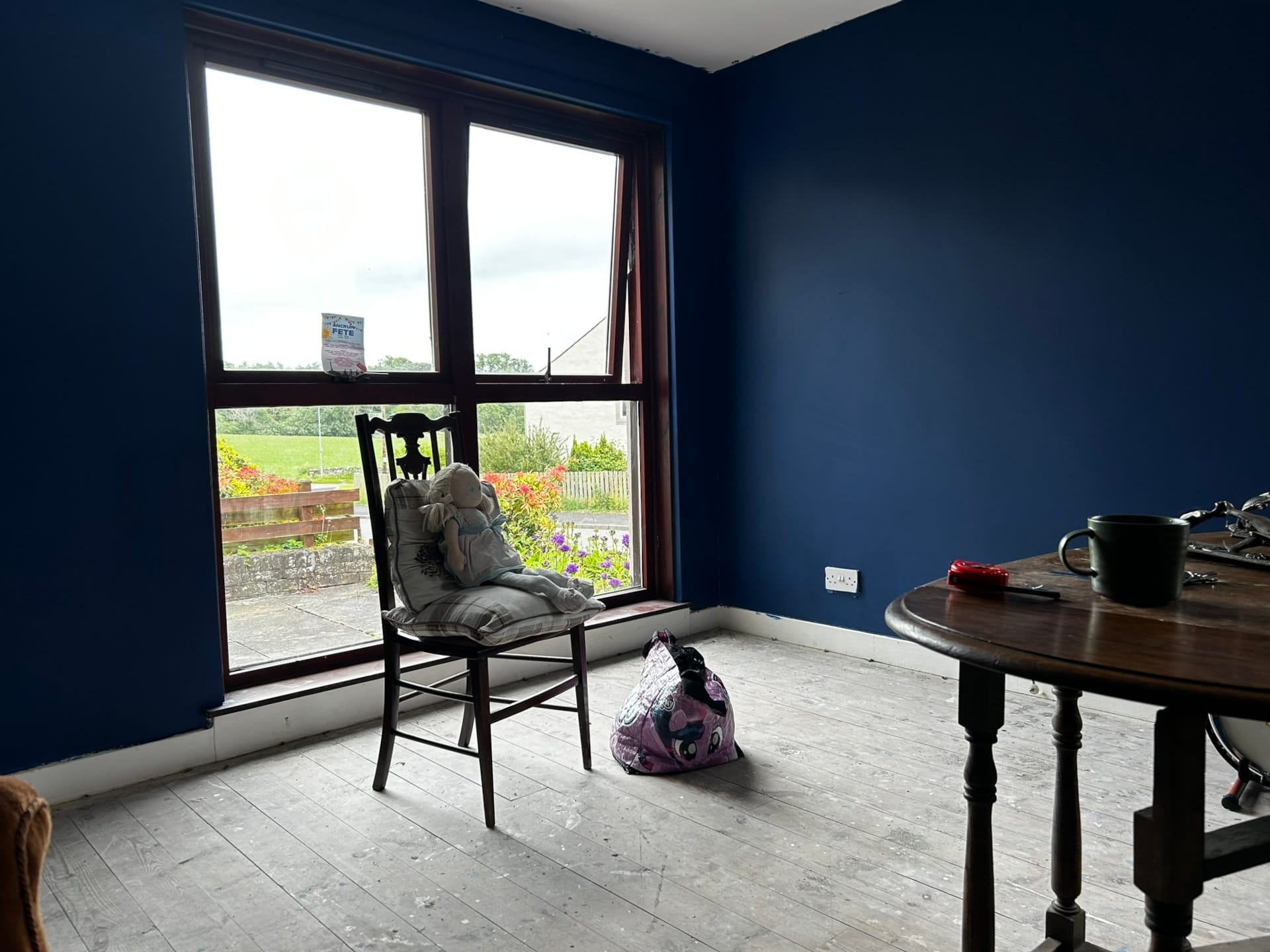
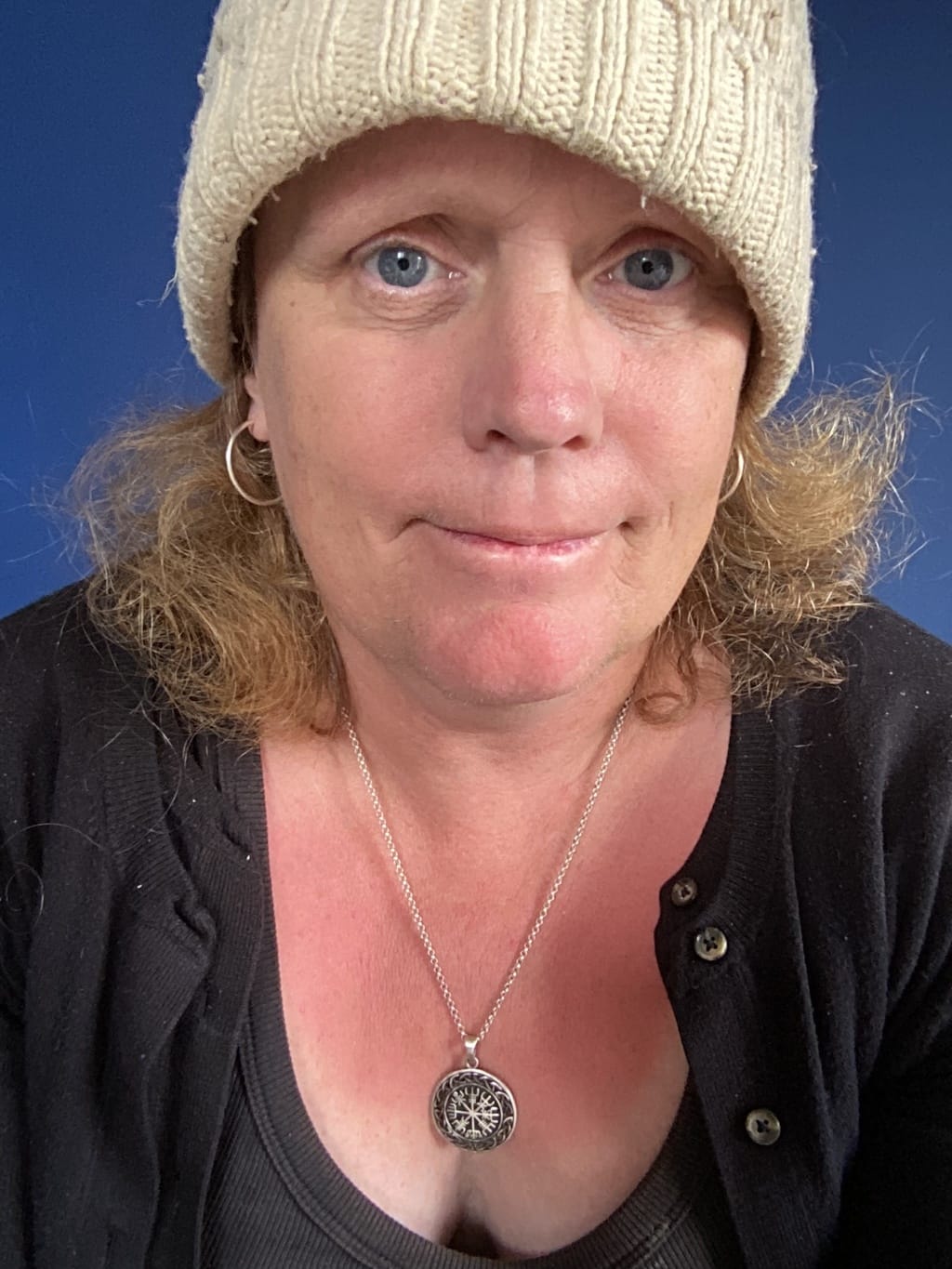
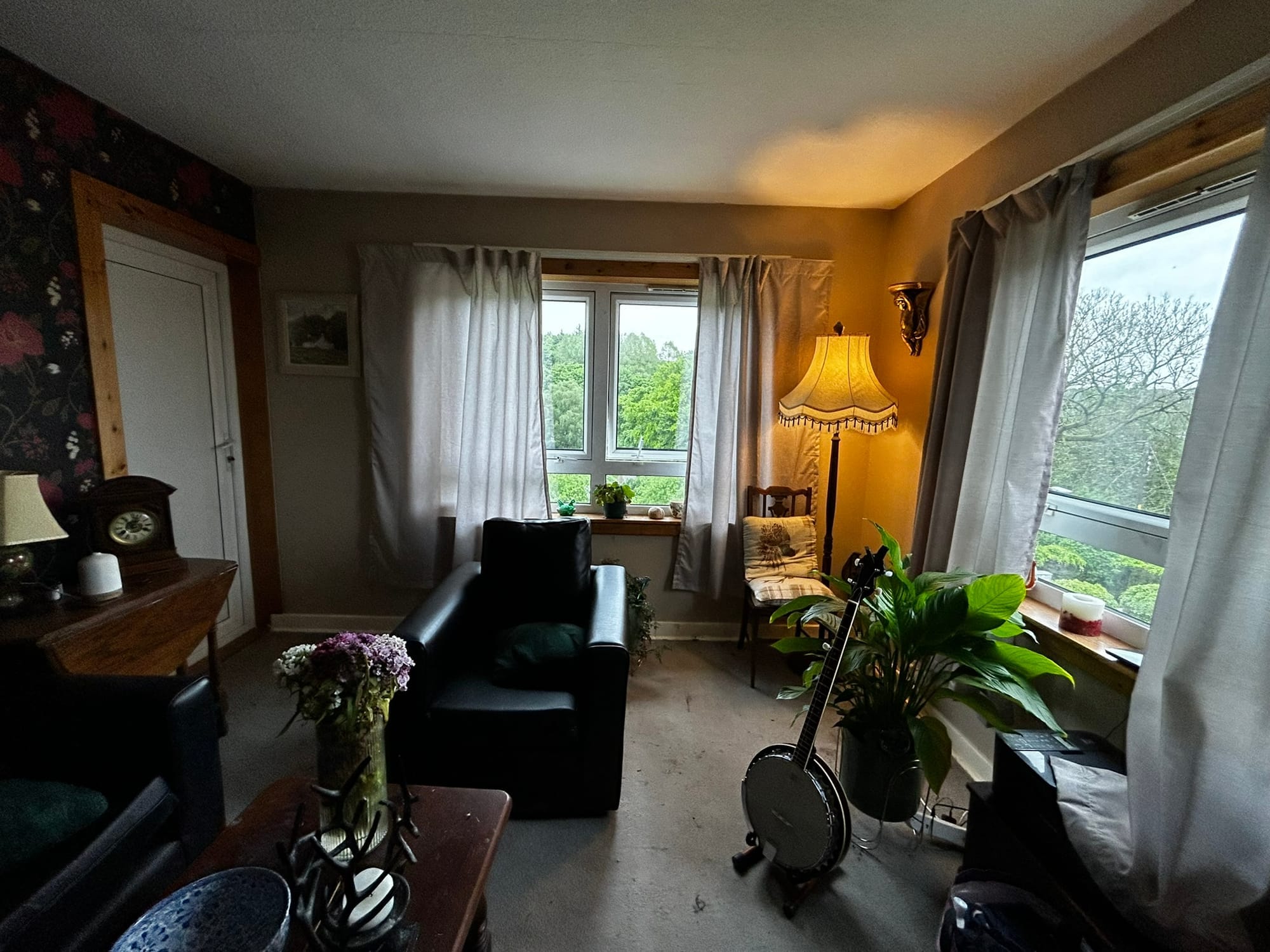
I waited an additional three months to move in because the house was damaged by a water leak.
On the morning of June 3, 2024, my decades of homelessness ended in Ancrum when I signed a secure tenancy agreement with the Scottish Borders Housing Association. Sometimes I found the people in Ancrum a bit unsettling, but I still made myself at home in my little house. I’m always surprised by how the happy families in this small, overwhelmingly white and privileged village find ways to push me out of their community. Life in Ancrum presses on me, each day dropping invisible stones that I carry in silence. The villagers seem to hurl their own secret fears at one another, and I am left feeling like an unwelcome blot on their picture-perfect world. When I first meet someone, they arrive carrying a blank canvas. By the time they return, that canvas is covered in harsh slurs and cruel attacks, all painted by the hands of this village. Even after two years here, friendship remains a far-off shore, always visible but never within my grasp.
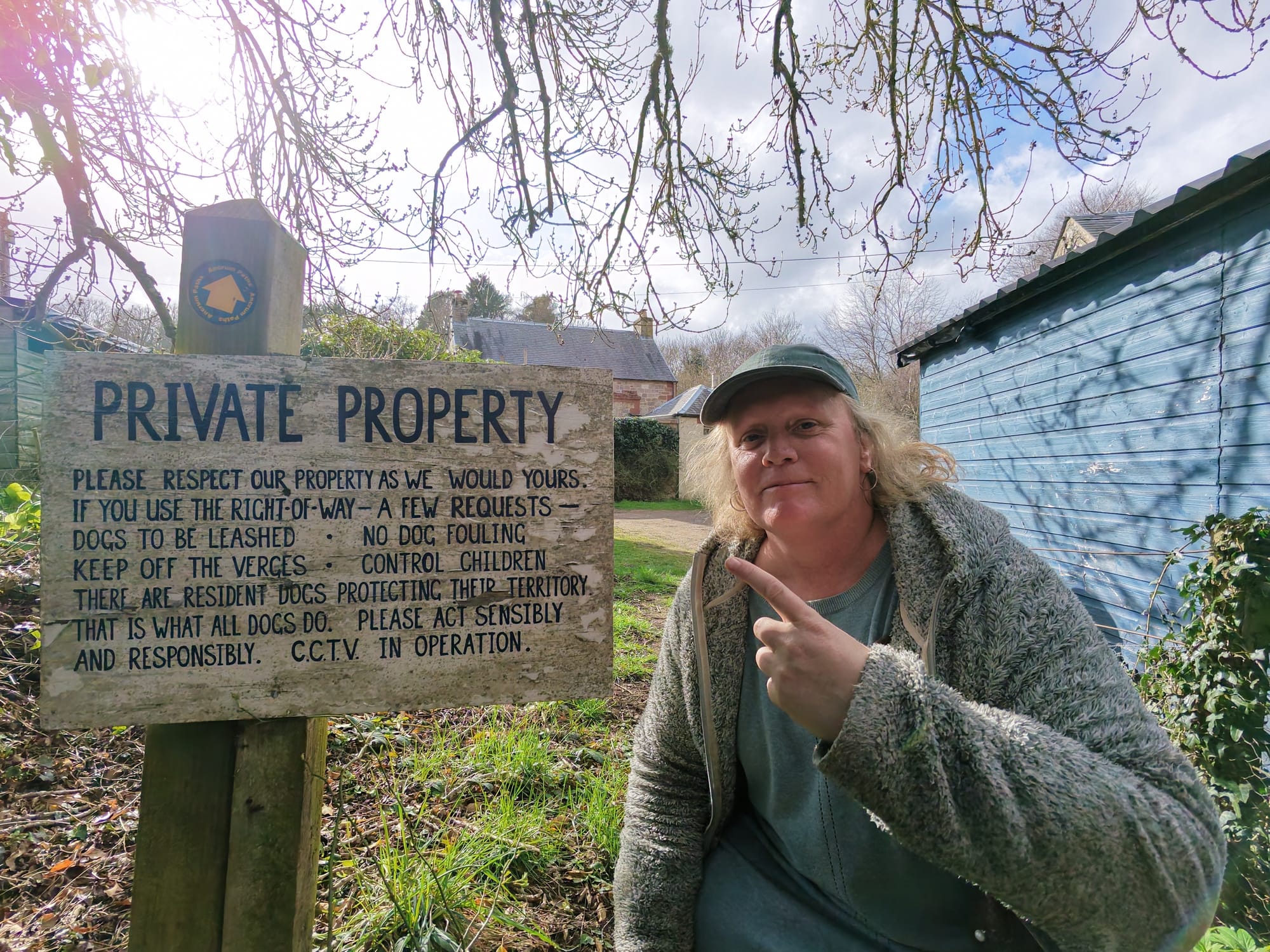
Ancrum's only pub the "Cross Keys" stayed closed after the Christmas holidays, leaving locals puzzled and in the dark. During my visit to the pub, a ginger-haired local spat out his loathing for pronouns. Nearby, another man's wife and daughter begged a husband to return home to their warmth, but he turned away, choosing instead to linger in the cold company of resentment. On the pub's website, it is written that a passing writer wrote: “I took up my lodgings that night in a small, miserable inn in the village of Ancrum, of which people seemed alike poor and ignorant”. Local ministers wrote about Ancrum in their 1841 Statistical Account of Roxburghshire, complaining that the “influence on the morals and circumstances of those in their immediate neighbourhood, who are in the habit of frequenting them, is very injurious.”. My stint at this last chance saloon ended when a regular loudly objected to my tartan scarf, stigmatising me with cultural appropriation.
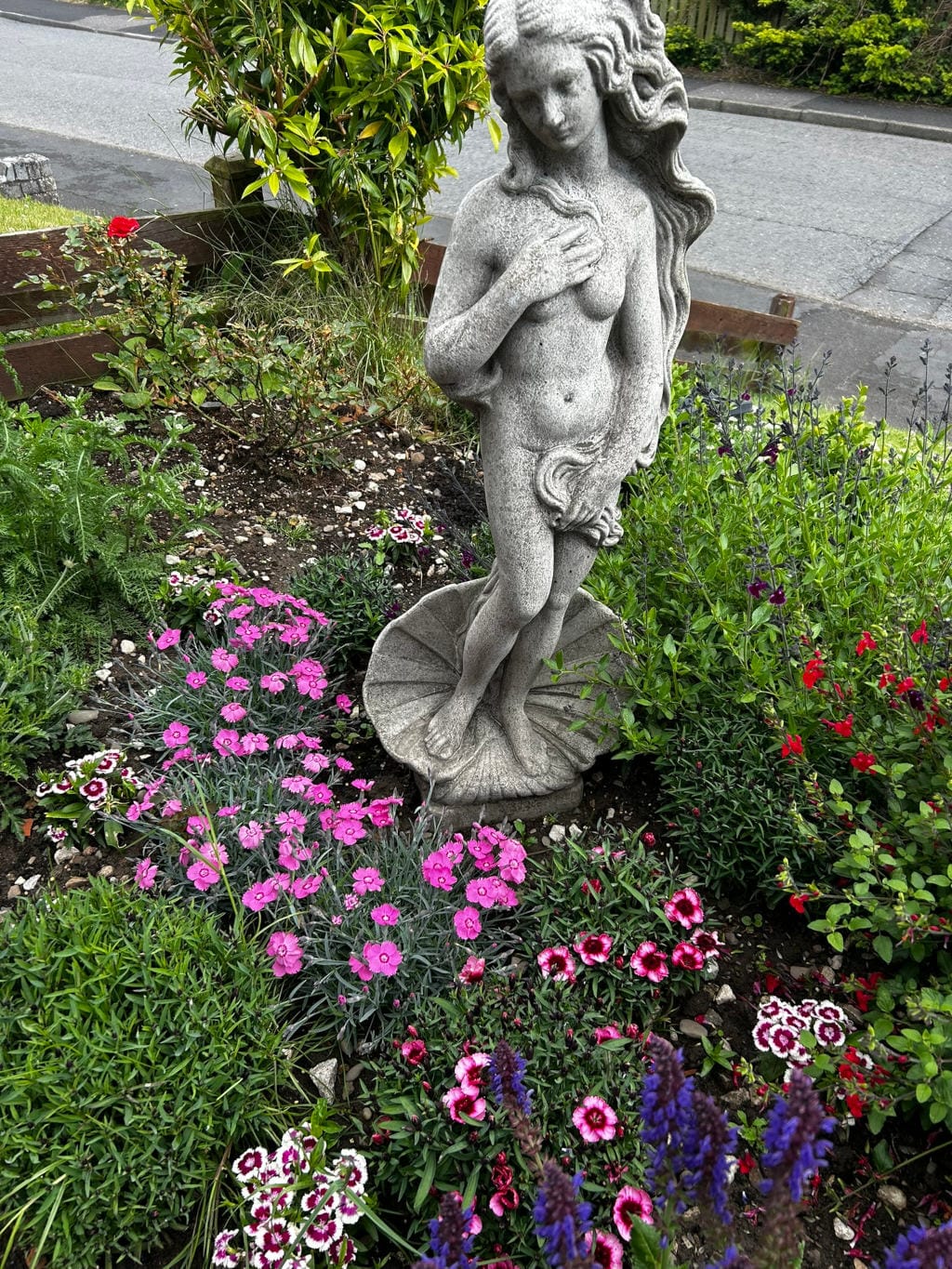
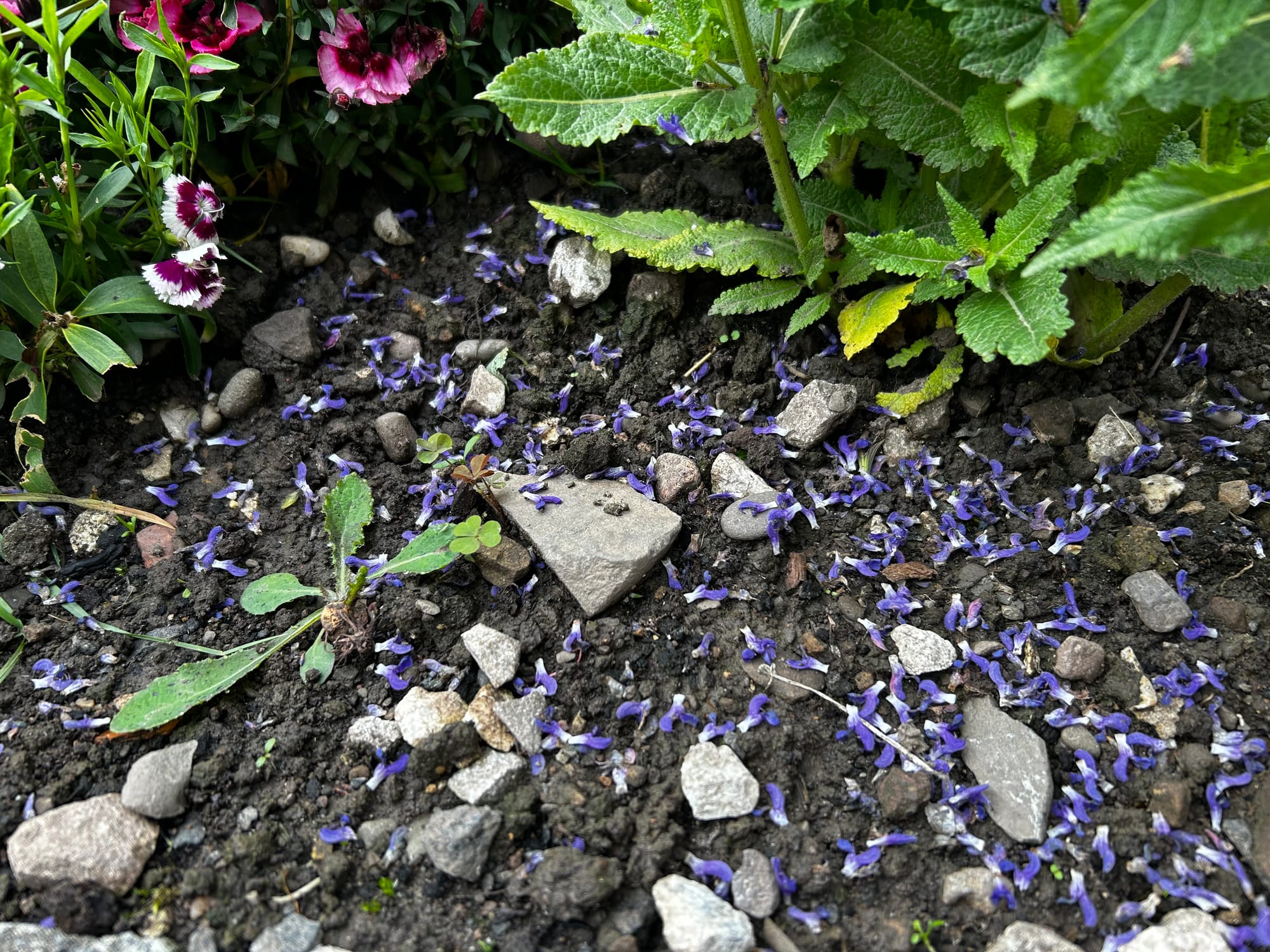
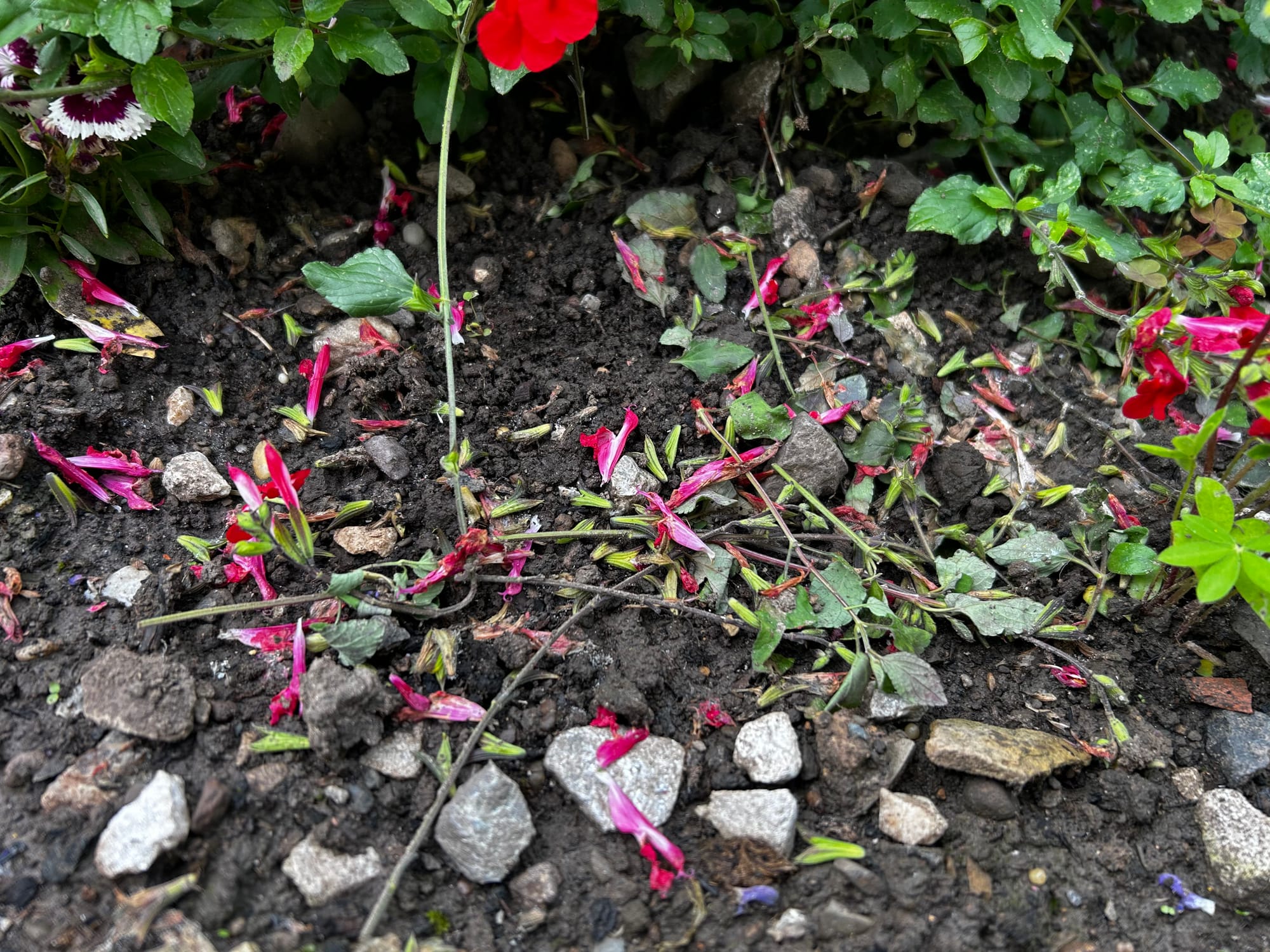
Shattered petals have slipped away from the innocence of my first garden.
I still hold onto a fragile hope that not everyone in this village harbours xenophobia, but it grows harder to believe when those who seem friendly and polite turn out to be masters of disguise. I've tried to stay positive with my neighbours, but it's a real challenge when one of them insists on slamming a plant pot onto the paving stones, sending shock waves that leave my poor flower petals in distress. Some older residents still remember the Ancrum annual gardening competition, even though it no longer takes place. I set out to chat with my neighbour across the street, but she almost ran me over instead. When she first moved to Ancrum, a neighbour said she was friendly. But after a while, something changed. I am sure she put a microphone outside her top window to listen to our conversations. She was upset about where we parked our car. People in Ancrum have argued about parking for a long time. At one point, the bus service even threatened to stop coming to the village because cars were blocking the roads.
Did you catch how the van zigzagged dangerously close to our parked Mini?
After the meeting, that guy sped past my house again and again, each time faster than before.
Worried about cars speeding on our residential road, I reached out to Ancrum Community Council. They invited me to talk about the issue at a meeting in Ancrum Community Hall. I felt uneasy the moment I walked into the room, as if I were at a dress rehearsal. During my part of the meeting, I spoke about speeding. However, I was interrupted when a large group of people entered the room. Just a few days after the local “hand ba” event, they crowded the meeting to ask that goalposts be set up on the village green. I raised my objection, and a hush swept through the room. I pointed out that Ancrum already boasted a sprawling football pitch, while the village green was barely big enough for a casual kick about. I was told my part was done and thanked for taking part. But that morning, new goal posts were announced on Facebook. When I shared my reasons for disagreeing, I was met with a wave of criticism. One person insisted, “You just don’t get it, it's what everybody wants”. As the hateful replies piled higher, my disgust grew until I vanished from the page entirely. To know of cruelty, scroll through social media.
Thank you to everyone who supported me during the hardest years of my life. I truly don’t know where I’d be without your help. It has taken me a long time to accept what has happened to me, but I feel that God is near.